Techbridge – Elementary Girls Visit Lab

Techbridge is a program that inspires girls to discover a passion for technology, science and engineering. Through hands-on learning, they empower the next generation of innovators and leaders.

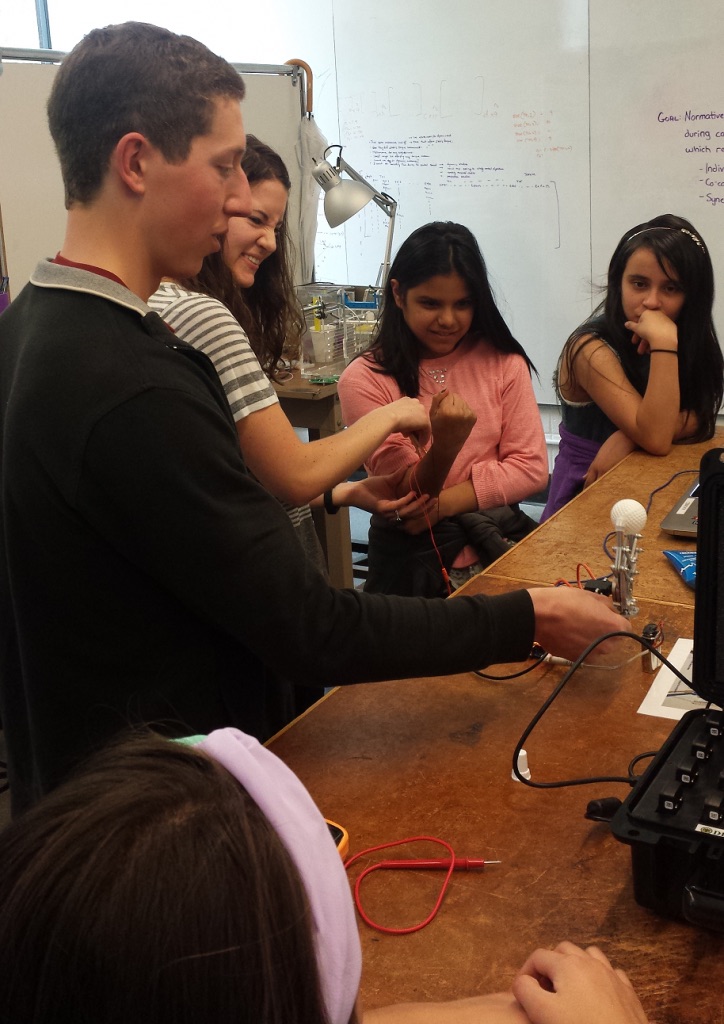
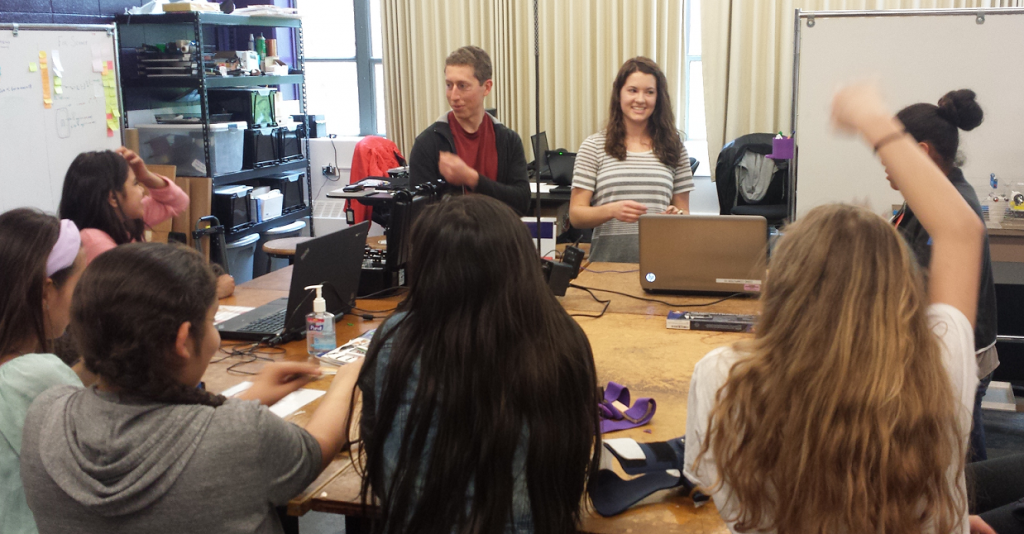
We had two groups of young women join us in our lab to talk about mechanical engineering and how we use engineering principles to help individuals with movement impairments. To demonstrate the human body’s ability to control devices, the girls took turns moving a robot gripper using the electrical signals read from their own arm muscles (read more about this neat application here).Elementary school girls surround a large demo-filled table during a visit to the Ability and Innovation Lab.Three look on as a young girl controls a robotic gripper using electrical signals generated neurologically from her brain to her bicep brachii arm muscle.
Engineering Discovery Days

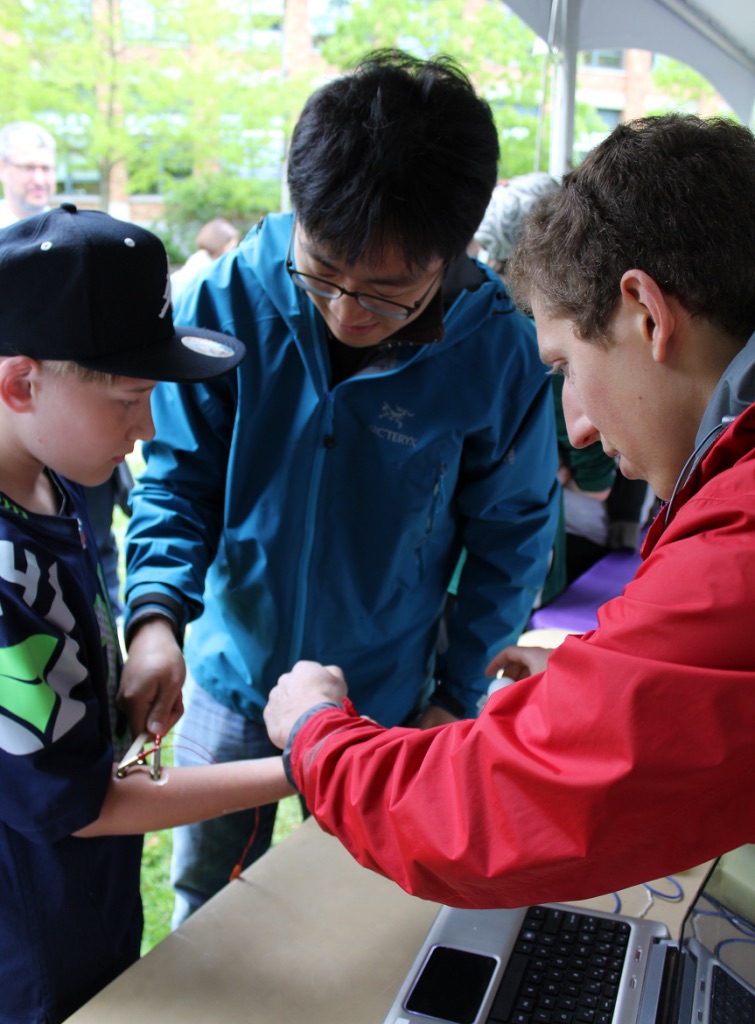
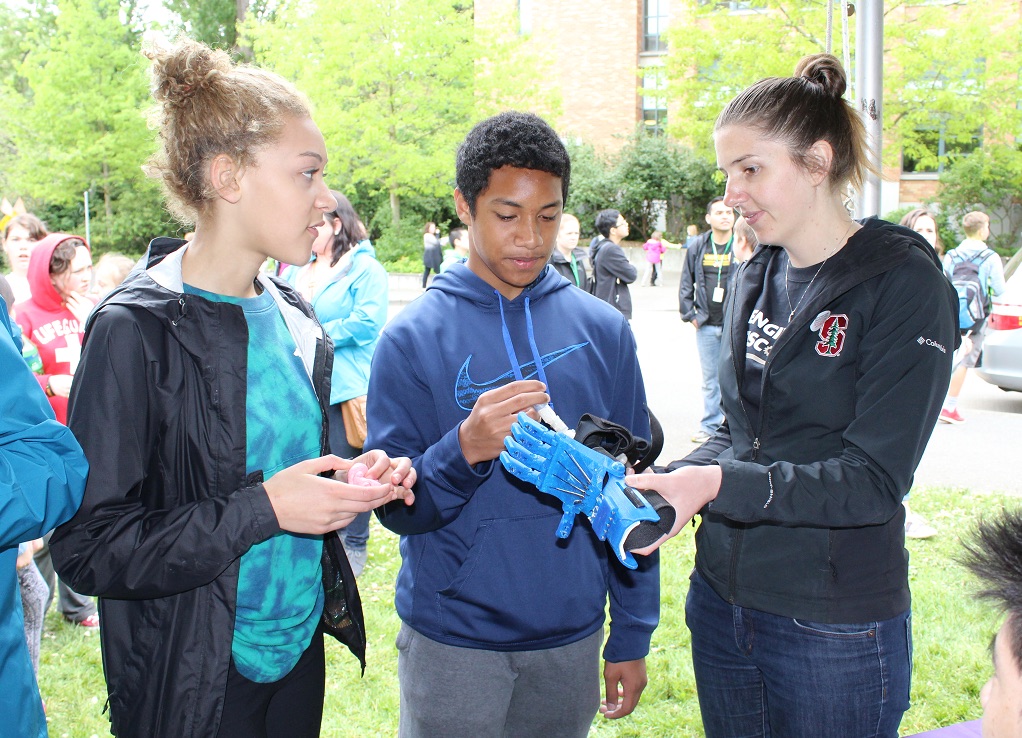
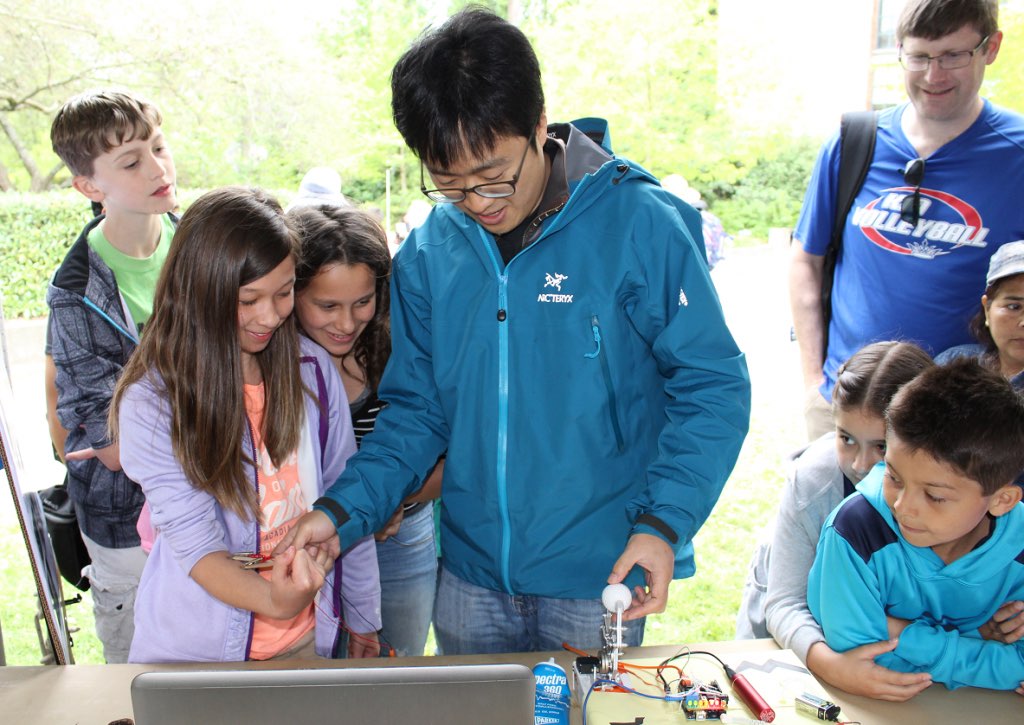
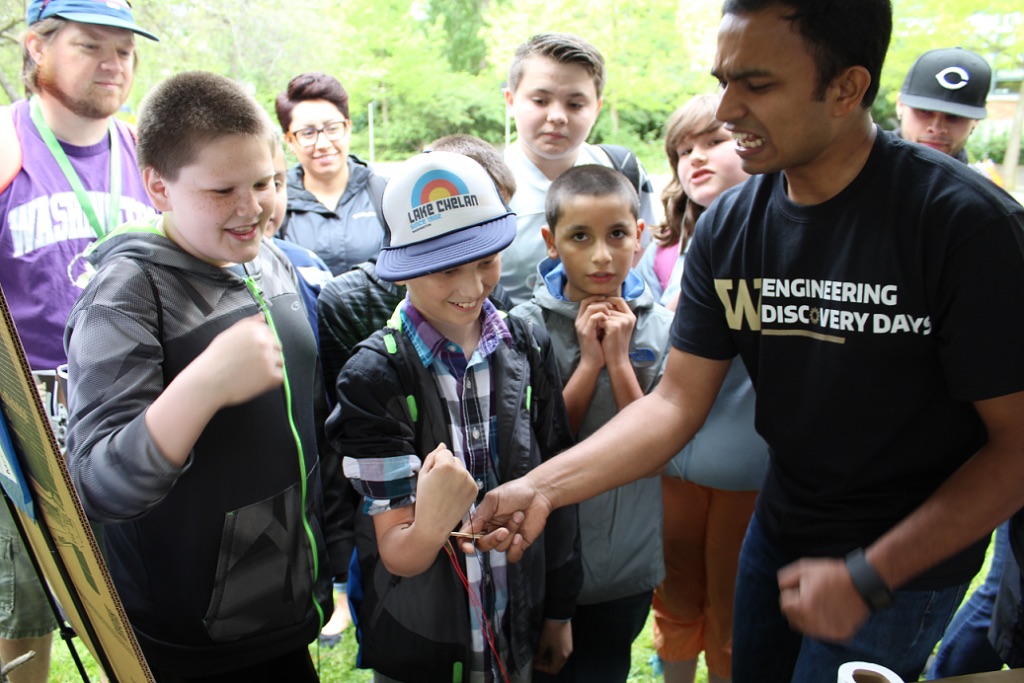
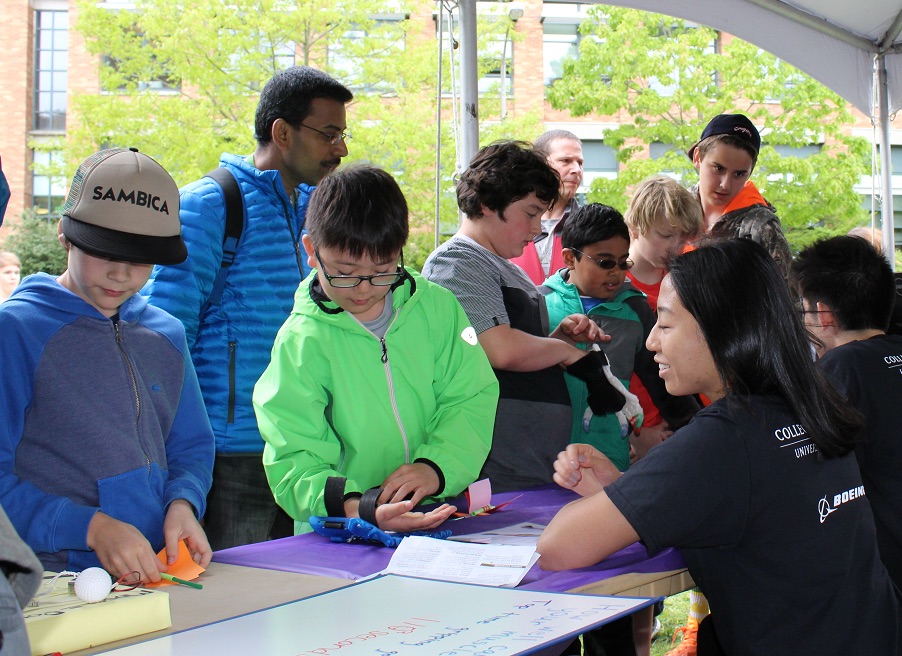
Our lab had a great time sharing our research at the College of Engineering Discovery Days. Our booth was entitled, “The Ultimate Machine” because we think of the human body as a complex system with our brain as a controller/computer and our muscles as our motors. Elementary and middle school students used their neural pathway, from brain to muscle, to control a robot gripper by either relaxing or activating their muscle.  A student activates his muscle to hold a golf ball with a robot gripper Our lab director, Kat Steele, explains why ankle foot orthoses are used and what we are doing to optimize the device. Another student tries her luck at holding a golf ball with a robot hand. The record hold time was 170 seconds. A group of students cheer on their peer as he activates his muscle to hold a golf ball with a robot gripper Elementary and middle school aged students try on 3D printed prosthetic devices

Seattle’s MESA Day (Mathematics Engineering Science Achievement)

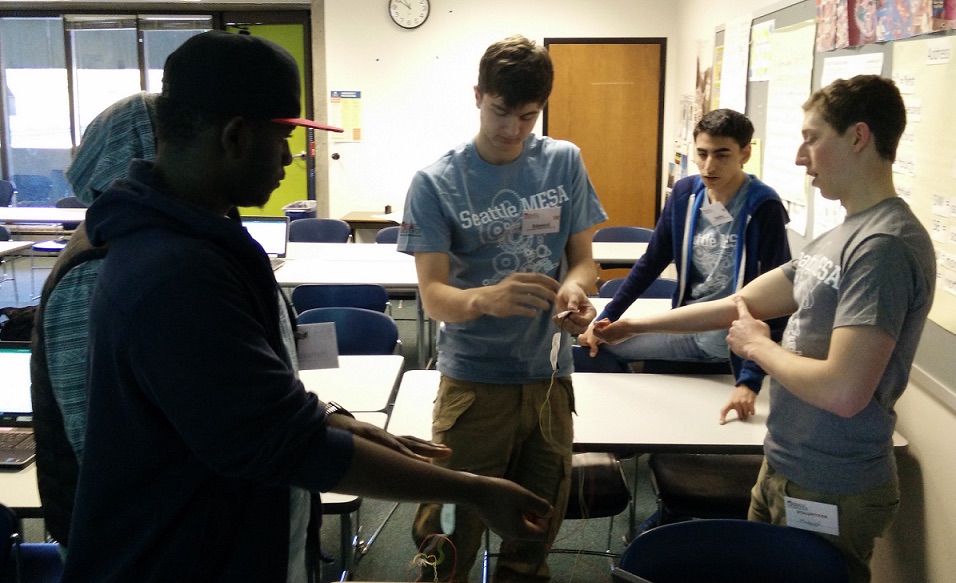
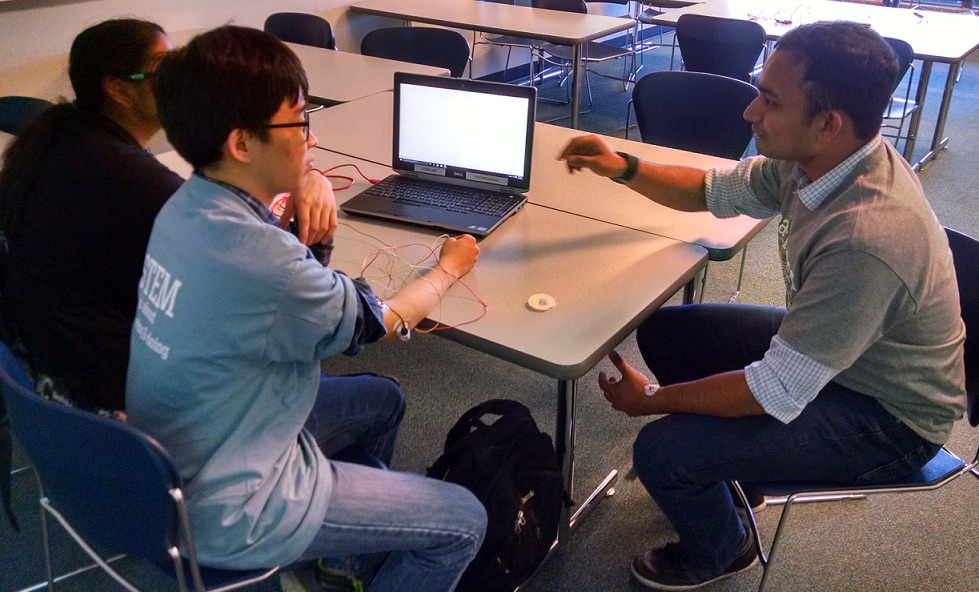
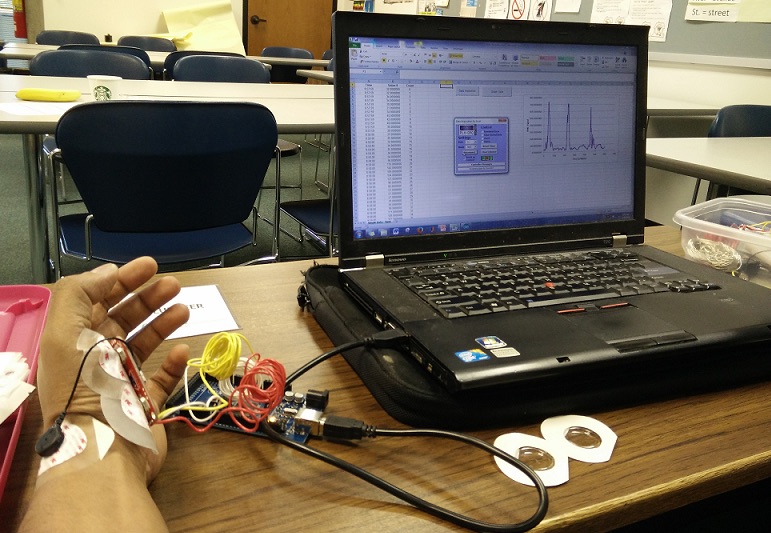
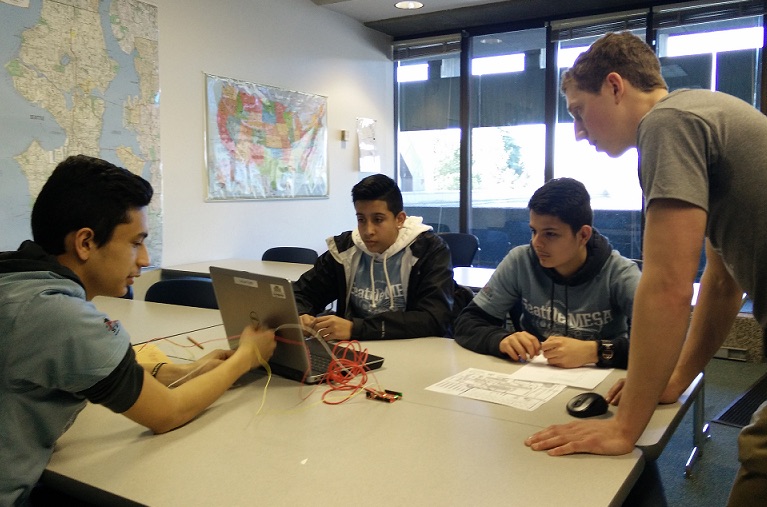
MESA Day brought high school and middle school students from the Seattle area to North Seattle College for a morning of competitions and STEM activities, put on by volunteers in the community. Gaurav and Michael developed an activity using electromyography (EMG) sensors to teach students about neural control of muscles, how we quantify muscle activity, and how we can use that knowledge to improve quality of life. Small groups selected a “test subject” and hooked up an EMG sensor to a muscle of their choice. They then picked tasks to perform, generated corresponding hypothetical muscle activation curves, and experimentally tested their hypotheses. The attendees were impressive. Students, ages 13-18, surprised our PhD students with their curiosity, knowledge, and ability to generate hypotheses and explain their results. Overall, the students seemed to enjoy the event and we hope that we helped them think about how understanding the mechanisms of the human body can be used to improve lives.


AWIS Presents Innovations in 3D Printing

Capture


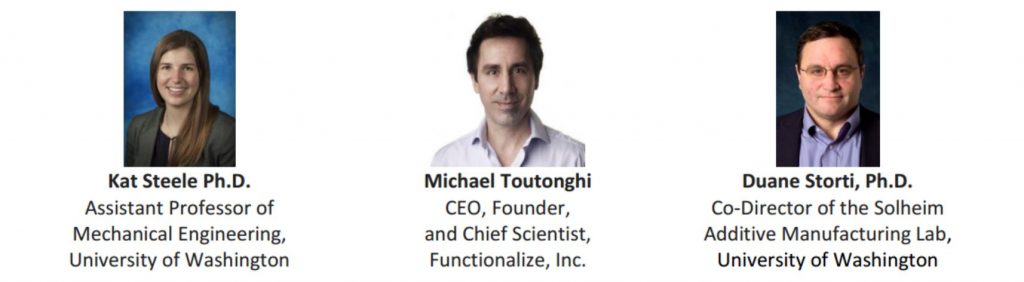
Join us at the Fred Hutchinson Cancer Research Center to learn about innovations and research involving 3D printing. The panelists for this monthly series include our lab director, Kat Steele, along with Duane Storti from the Solheim Additive Manufactoring Lab.

What: The panelists will cover many aspects of 3D printing including: 3D printing material systems and filament, 3D printing design, analysis of 3D scan data, applications of 3D printing in medicine and other fields, and possibilities for the future from innovations in the 3D printing space. In addition to our panelists, there will be a live demonstration of 3D printing technology.

Where: Fred Hutchinson Cancer Research Center – Pelton Auditorium 1100 Fairview Ave. N., Seattle, WA 98109 – Free visitor parking

When: Wednesday – February 17, 2016 – 6:00 PM

This event is possible through the Association for Women in Science. Click here for more details about this even.