IdeaGen: Inclusive Design

Dr. Kat Steele and lab alumni, Dr. Heather Feldner, were on the The Accessible Technologies & Inclusive Design Panel at the IdeaGen Global Innovation Summit hosted by Micrsofot on June 7, 2019. Scott Saponas served as the moderator, asking tough questions about how to encourage and expand inclusive design. A large portion of the summit celebrated the increasing inclusion of women in tech and entrepreneurial fields, while also highlighting the remaining barriers and challenges. We hope our panel also sparked reflection on ability as an important dimension of diversity that has important implications for the design and engineering of inclusive products, environments, and experiences.
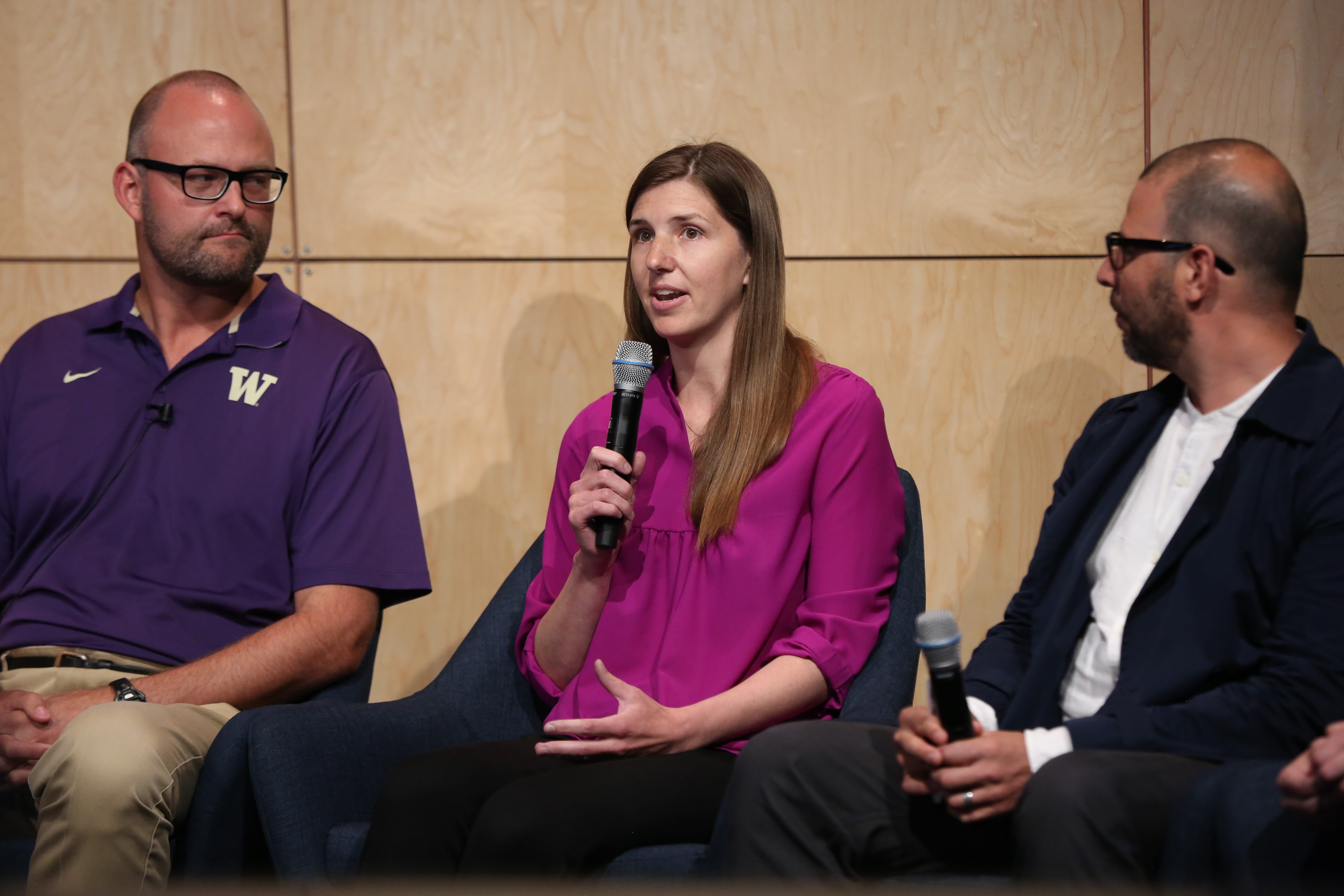
Kat Steele with microphone seated next to Jacob Wobbrock and Oscar Murillo on the panel.

The panel also included Dr. Jacob Wobbrock from UW and Oscar Murillo from Microsoft. This was another reminder of the powerhouse of accessibility researchers at UW and in the Seattle-area. An artist was capturing the summit through illustration – the whole day (it looked amazing and exhausting):
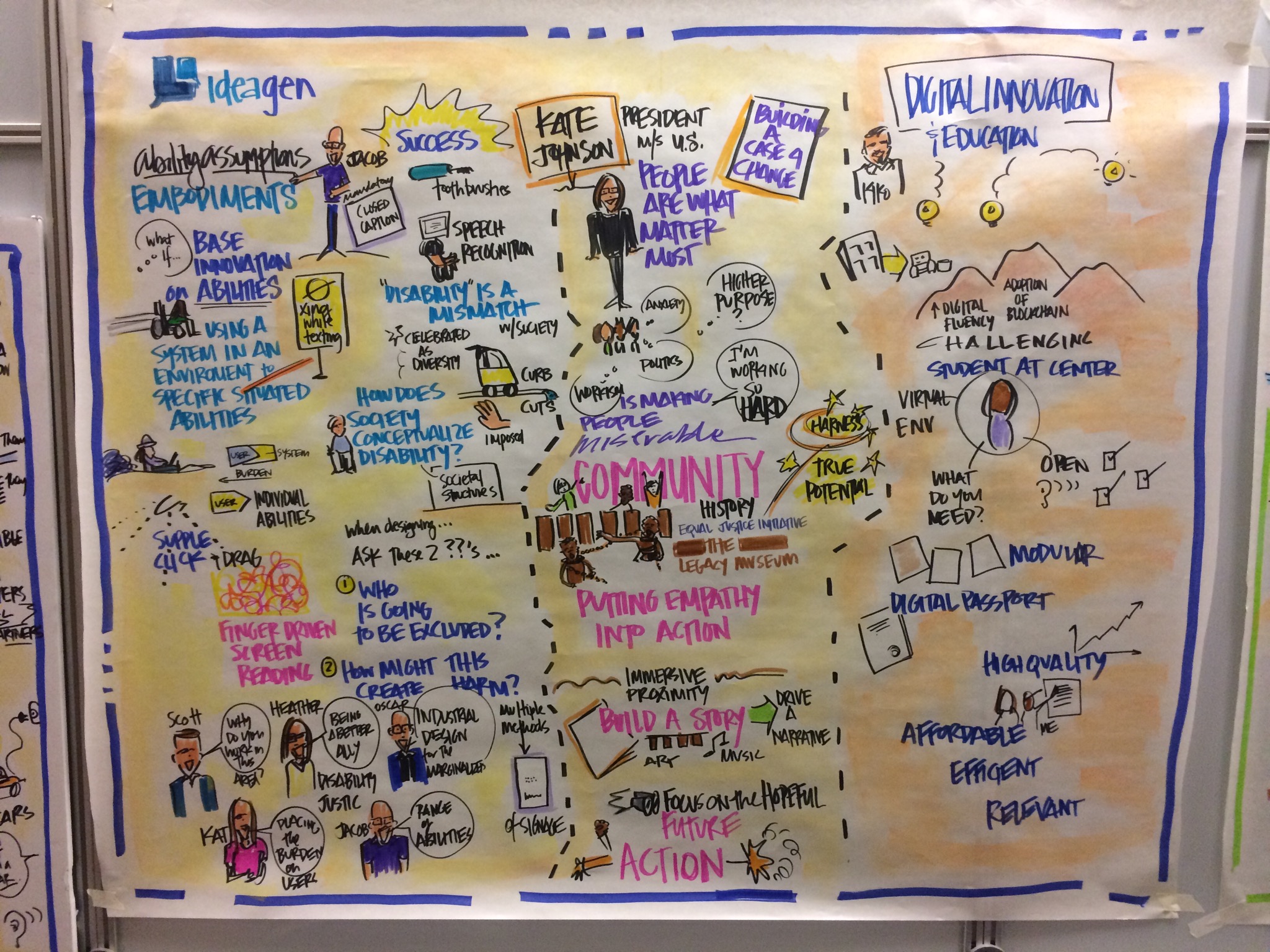
A white poster board covered with sketches of the speakers, quotes, and notes from IdeaGen. The bottom left corner includes sketches of the panel.

One of the challenging questions Scott asked was our favorite examples of successful inclusive design. I still find it disappointing that this is a challenging question. We have our classic examples – curb cuts, closed captioning, power toothbrushes, Oxo products – that have made life easier for many, but were originally conceptualized through the inclusion of individuals with diverse abilities.

There should be many more examples of success. This should be an easy question where we can quickly call to mind all of the outstanding examples in the world that celebrate the inclusion of individuals with diverse abilities in the design process and make our daily life more inclusive.

What are your favorite examples of inclusive design?

What technologies make you excited for a more inclusive world?

You can learn more, find resources, and join the community through AccessEngineering.
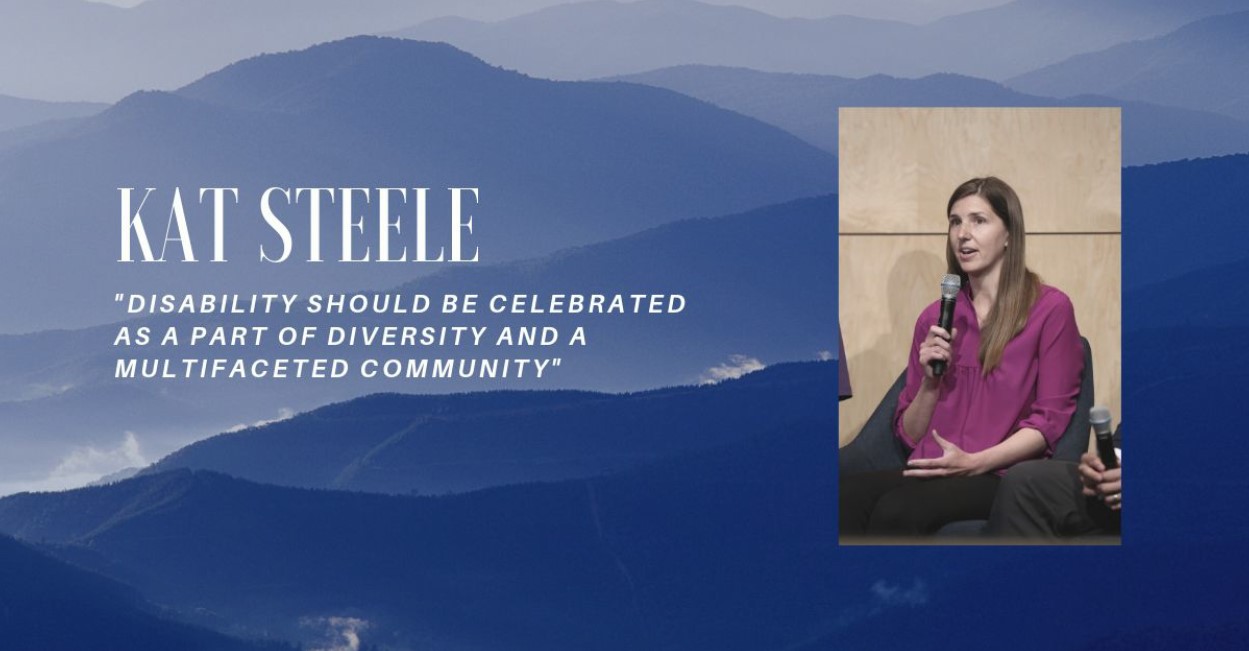
Kat Steele speaking on panel with microphone and a pink shirt. Quote reads: "Disability should be celebrated as a part of diversity and a multifaceted community."

The fancy graphic from IdeaGen for serving on the panel.
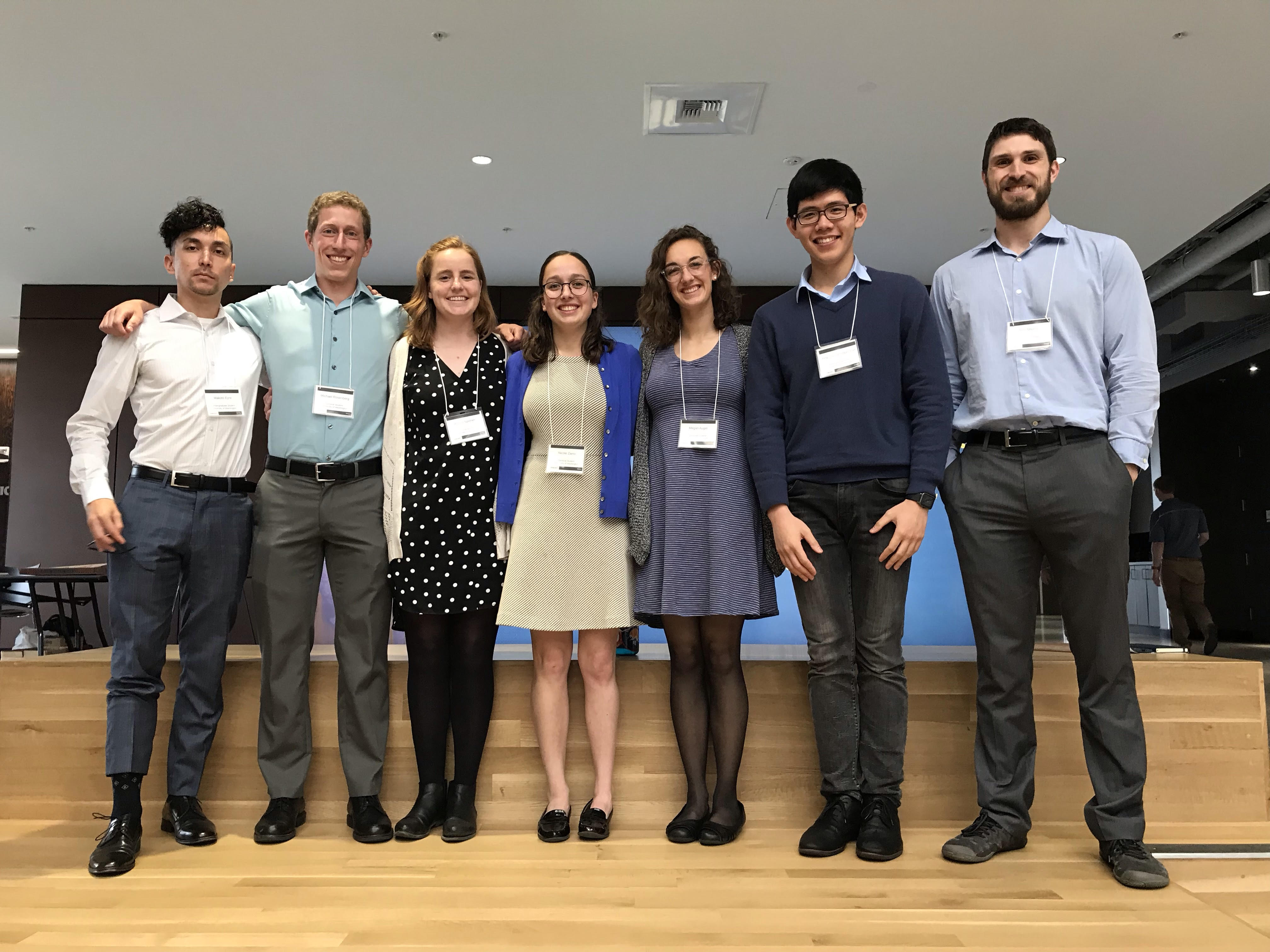
Steele Lab presents at Northwest Biomechanics Symposium!

The Steele Lab had a great time presenting their research at the Northwest Biomechanics Symposium (NWBS) on May 17-18, 2019 in Bozeman, MT. Preston Pan, Ben Shuman, Nicole Zaino, Megan Auger, and Mokoto Eyre all gave podium presentations during the conference, and Michael Rosenberg and Alyssa Spomer gave poster presentations.

Congratulations to Preston Pan for winning the best undergraduate podium presentation award!

NWBS is a student-friendly conference and incorporates research labs from all of the Northwest, including Canada. Thank you to Scott Monfort, James Beckert, and their students for putting on a great event.

Alyssa Spomer and Momona Yamagami Present at a Neurorehabilitation Conference in Spain

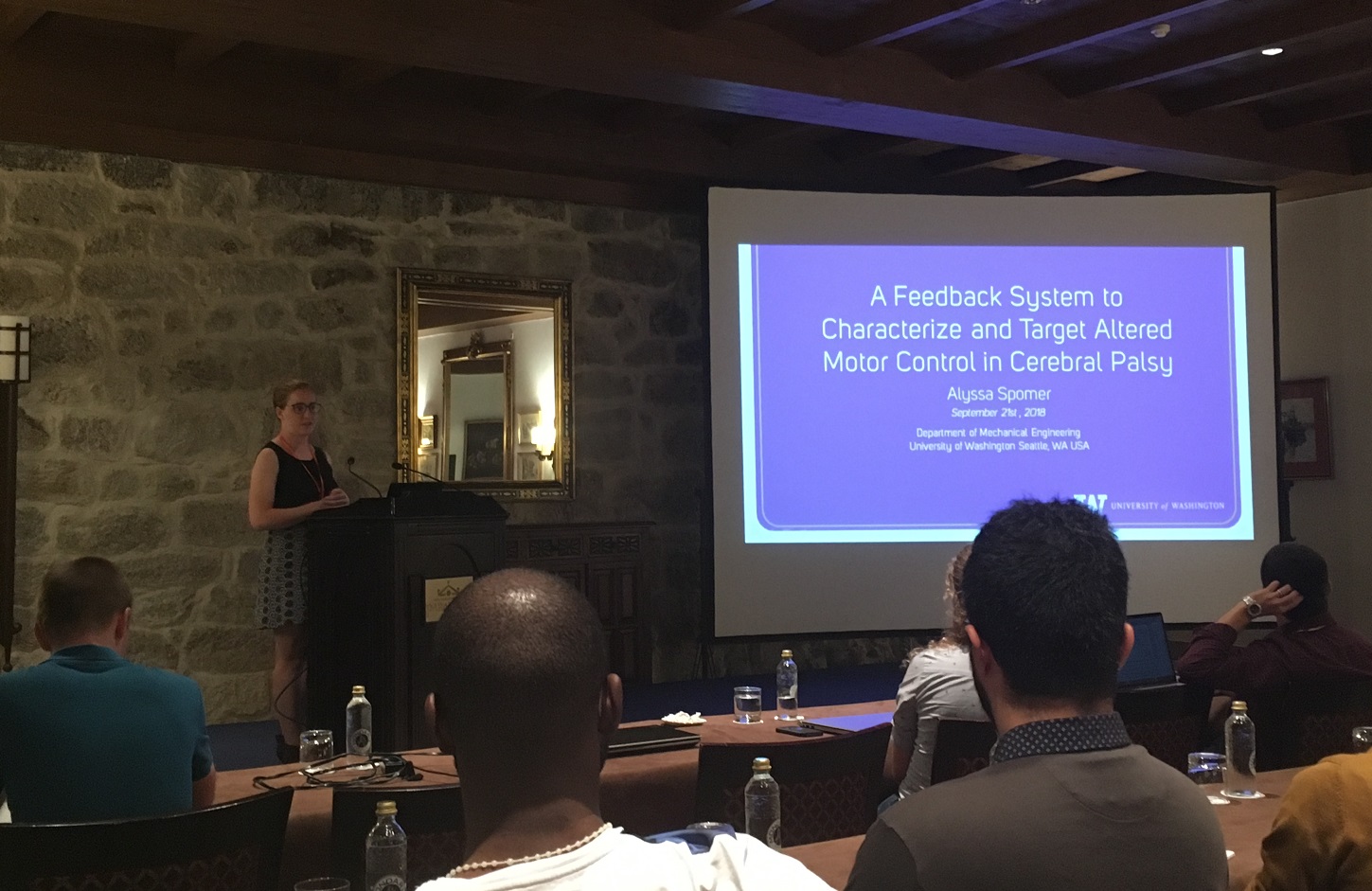
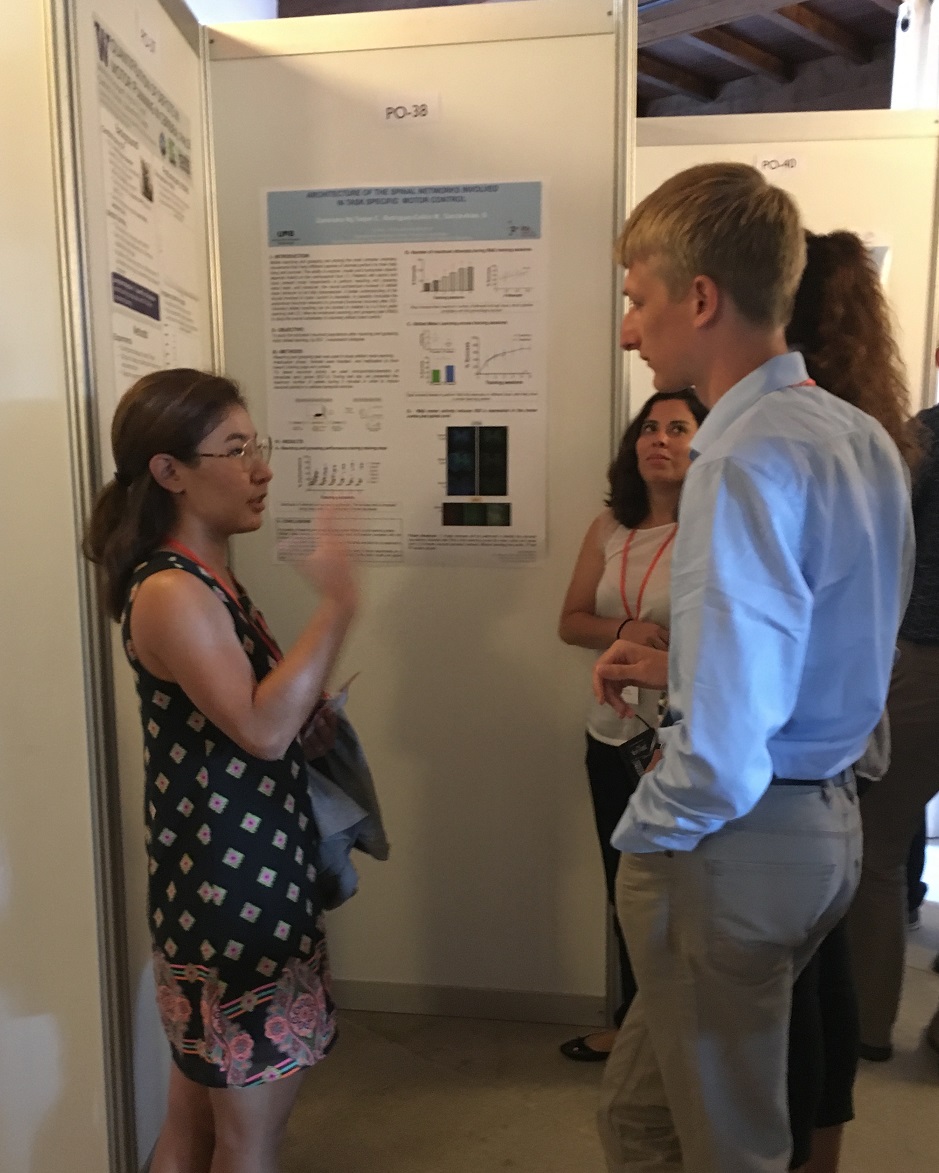
Alyssa and Momona attended the Summer School on Neurorehabilitation (SSNR) in Baiona, Spain from September 16th to the 21st. Alyssa gave a podium presentation on a feedback system she is developing that aims to characterize and target altered motor control in cerebral palsy. Momona gave a poster presentation to share her recent quantifications of deficits in motor planning in cerebral palsy. Nice work, Alyssa and Momona!Alyssa at podium presenting "A Feedback System to Characterize and Target Altered Motor Control in Cerebral Palsy".


Monoma stands in front of her poster "Quantification of Deficits in Motor Planning in Cerebral Palsy", discussing with interested colleagues.


Research Experience Undergraduates Present at CSNE

This summer the Steele Lab had the pleasure of hosting three undergraduate researchersJulia Costacurta from Johns Hopkins, Joe Lawler from the University of Washington, and Preston Pan from the University of Washington.

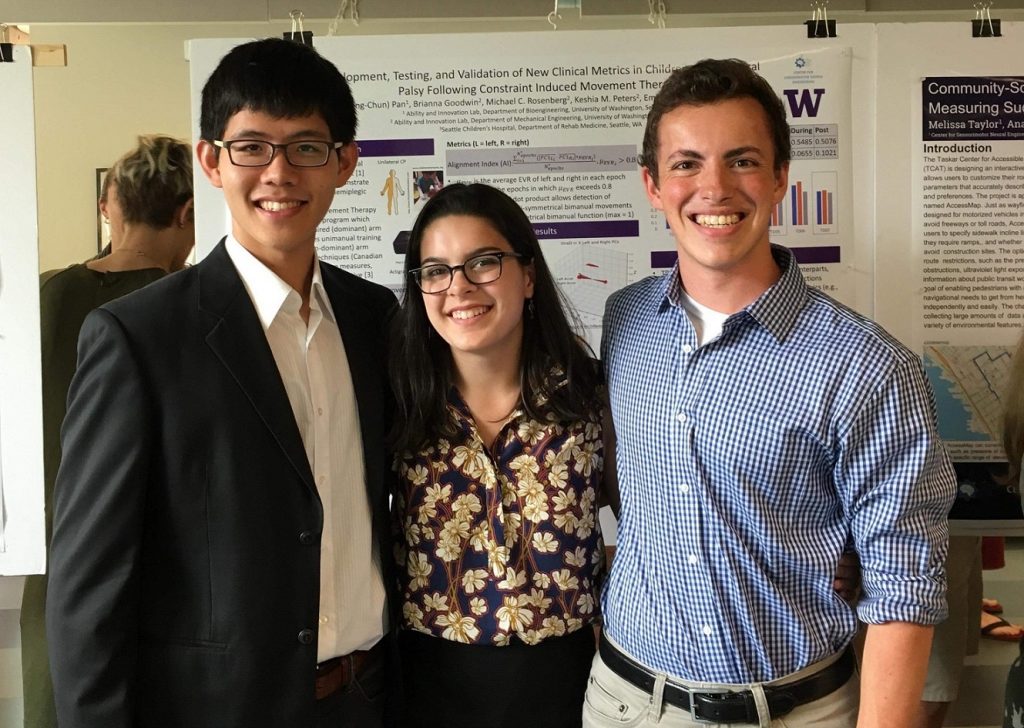
After a competitive selection process, students are offered a 10-week internship here at the University to work directly with a research lab on campus. One of the program’s final deliverables is a presentation of their work, both in podium and poster format, to members of the local and scientific community. Congratulations to Julia, Joe, and Preston for their successful time here in the lab, and for giving polished presentations.

Three undergraduates, in their early twenties, stand arm in arm as they smile for the photo. They are dressed in business casual attire and behind them hangs a series of scientific posters on biomechanics.

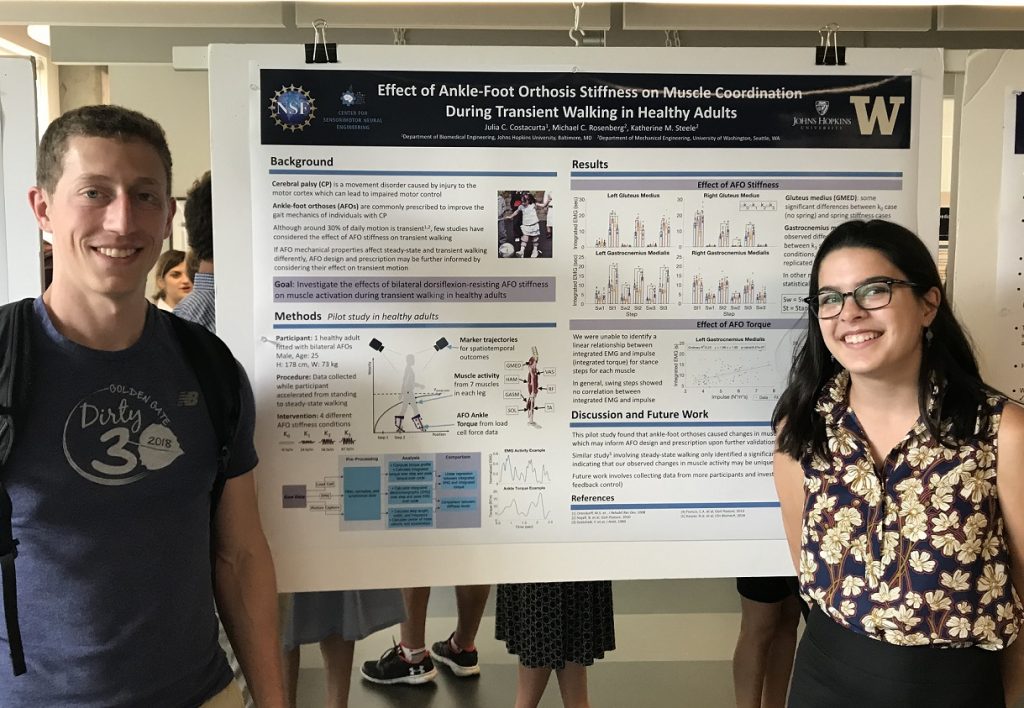
Julia’s work explored the impacts of Ankle-Foot Orthoses on transient gait, a period of walking where little is currently known about device dynamics.

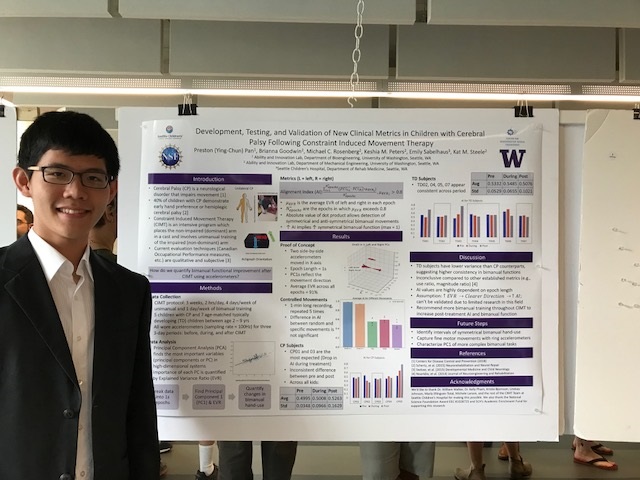
Julia Costacurta and her mentor for the 2018 summer, Michael Rosenberg, stand in front of her scientific poster evaluating the impact of ankle foot orthosis stiffness on transient walking.Preston worked directly with Seattle Children’s Hospital to implement algorithms for detecting bimanual hand movement before, during, and after a common therapy used to promote improved motor skills for children with hemiplegic cerebral palsy.

Preston Pan, in a white collared shirt and blazer, stands in front of his scientific poster evaluated a proposed motion tracking algorithm for bimanual movement.

Joe’s focus this summer involved working with the University of Washington HuskyADAPT program. HuskyADAPT is a student-run program in its second year and stands for Accessible Design and Play Technology. Joe’s research question asked, how we can improve upon and further promote an inclusive and sustainable program for assistive technology?