2020 Center for Translational Muscle Research

How can we decipher human movement?

CTMR: White text on purple background, UW Center for Translational Muscle ResearchOur skeletal muscles have amazing structure. They provide elegant and efficient actuation to move and explore our worlds. But how do we understand how muscles produce movement?

Dr. Steele presents at the inaugural research symposium for the University of Washington Center for Translational Muscle Research. Her presentation shares examples for how we can use musculoskeletal simulation as a tool to connect muscle biology, dynamics, and mobility.

Slides | Transcript

M Yamagami, KM Steele, SA Burden (2020) “Decoding Intent With Control Theory: Comparing Muscle Versus Manual Interface Performance”

Journal Article in ACM Conference on Human Factors in Computing Systems (CHI) 2020 Preceedings:

These results suggest that control theory modeling can provide a platform to successfully quantify device performance in the absence of errors arising from motor impairments
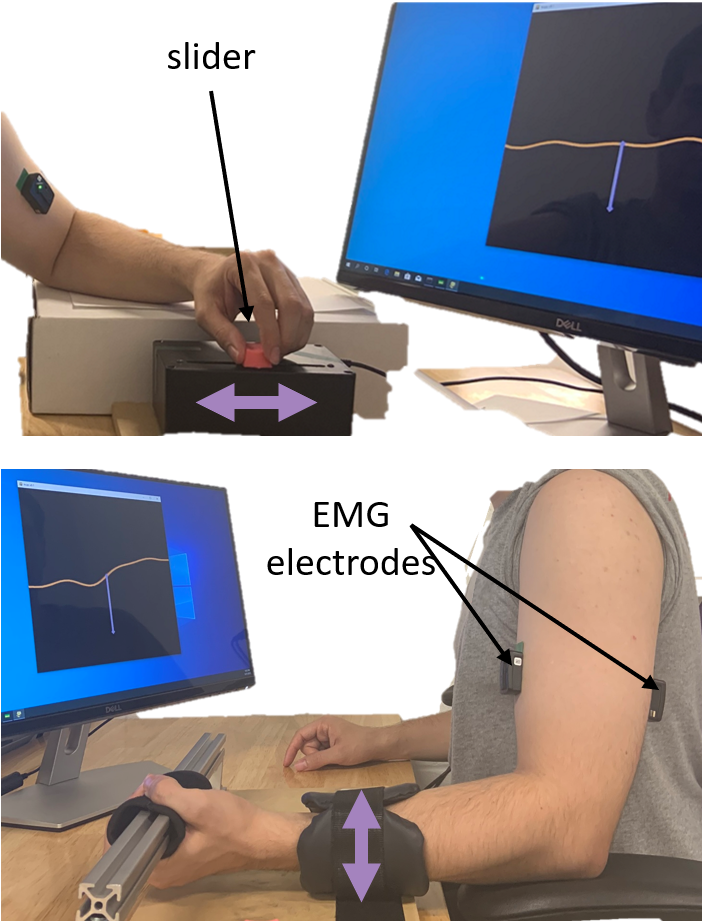
Split image of upper body of user holding rod and slider with computer screen

Photo (top and bottom) of a user using a slider (top) and muscles (bottom) to control a cursor on the screen.
(Top image) Side image of user. User rests their elbow and pinches the slider and moves the slider towards and away from their body to control the cursor.
(Bottom image) Side image of user. User is strapped to a rigid device holding a bar with hands supinated towards the ceiling, with the forearms at a 90 degree angle from the upper arms.
Electrodes are placed on the biceps and triceps and labelled. Arrows pointing up and down indicate that users move their arm up and down to control the cursor.


Background: Manual device interaction requires precise coordination which may be difficult for users with motor impairments. Muscle interfaces provide alternative interaction methods that may enhance performance, but have not yet been evaluated for simple (eg. mouse tracking) and complex (eg. driving) continuous tasks. Control theory enables us to probe continuous task performance by separating user input into intent and error correction to quantify how motor impairments impact device interaction

Aim:  Propose and extend an experimental and analytical method to guide future development of accessible interfaces like muscle interfaces using control theory

Method: We compared the effectiveness of a manual versus a muscle interface for eleven users without and three users with motor impairments performing continuous tasks.

Results: Both user groups preferred and performed better with the muscle versus the manual interface for the complex continuous task.

Interpretation: Results suggest muscle interfaces and algorithms that can detect and augment user intent may be especially useful for future design of interfaces for continuous tasks.


Momona also gave a phenomenal talk on this paper last week in the University of Washington’s ‘DUB Shorts’ series (video posted below). Nice job Momona!

Research Experience Undergraduates Present at CNT

This summer the Steele Lab had the pleasure of hosting three undergraduate researchers – Robin Yan from University of Washington, Ava Lakmazaheri from Olin College of Engineering, and Katherine Chamblin from University of Washington.

After a competitive selection process, students are offered a 10-week internship here at the University to work directly with a research lab on campus. One of the program’s final deliverables is a presentation of their work, both in podium and poster format, to members of the local and scientific community. Congratulations to Robin, Ava, and Katherine for their successful time here in the lab, and for giving polished presentations.

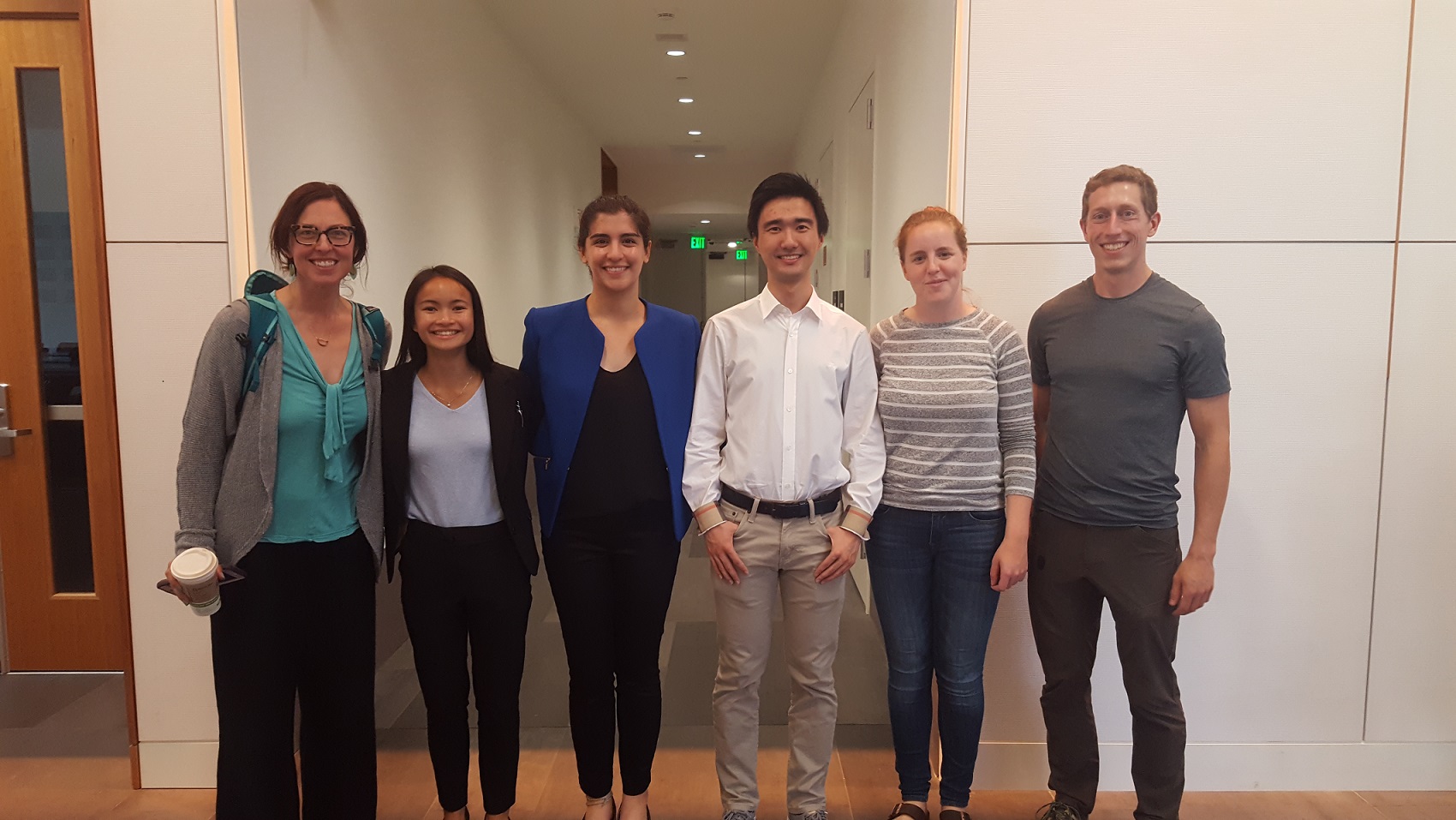
Group of six individuals standing shoulder to shoulder and smiling in front of white wall
REU Students with their lab mentors

Robin examined biomechanical analyses of typically developing individuals during emulation of cerebral palsy gait and Ava worked on optimizing musculoskeletal models for children with cerebral palsy.

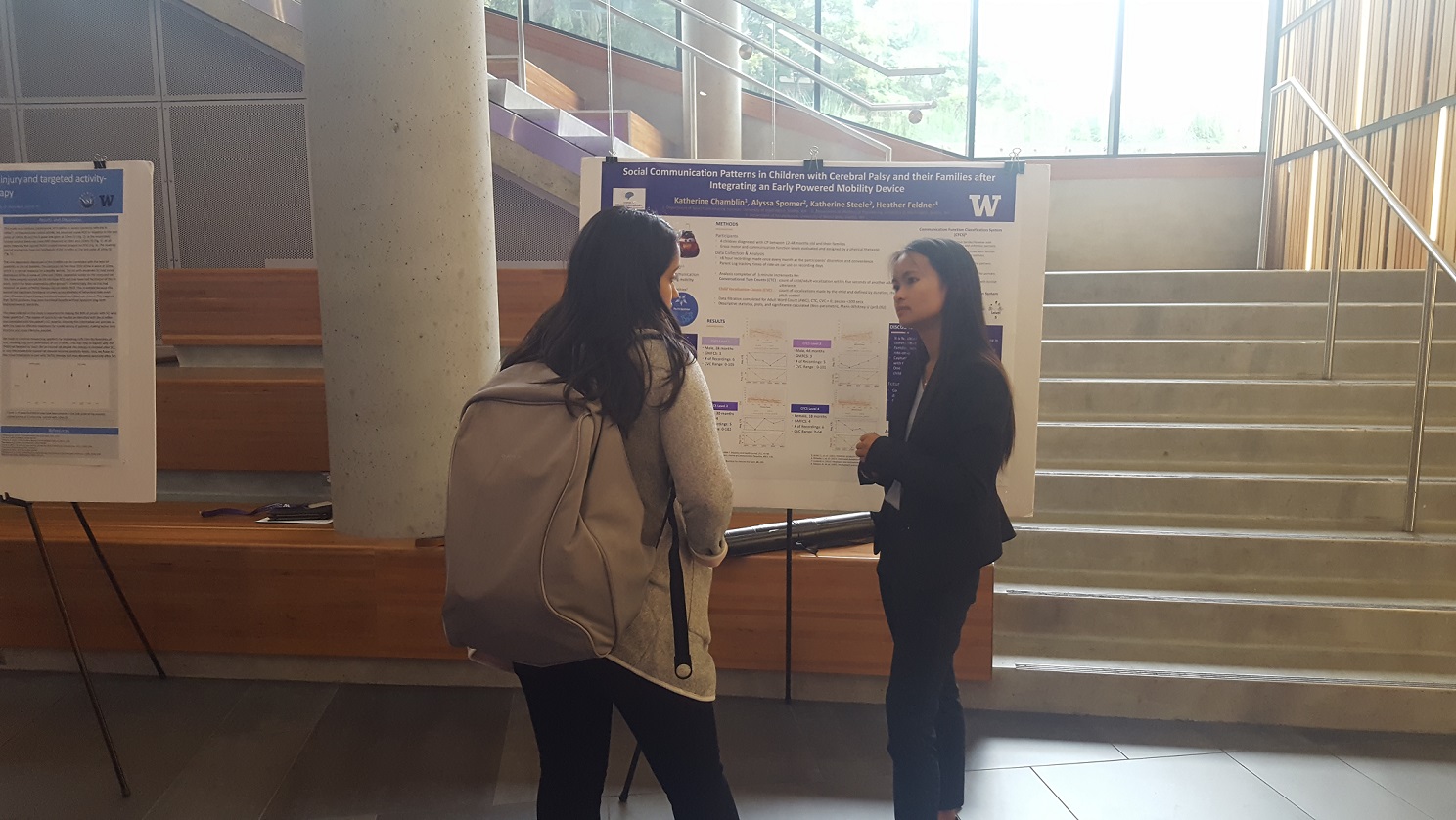
Sun shinning down on young woman in business attire talking to another woman in front of a white and purple poster board
Katherine discussing her work with an interested student

Katherine investigated social communication patterns of children with cerebral palsy and their families after integrating an early-powered mobility device

ISB 2019 Recap

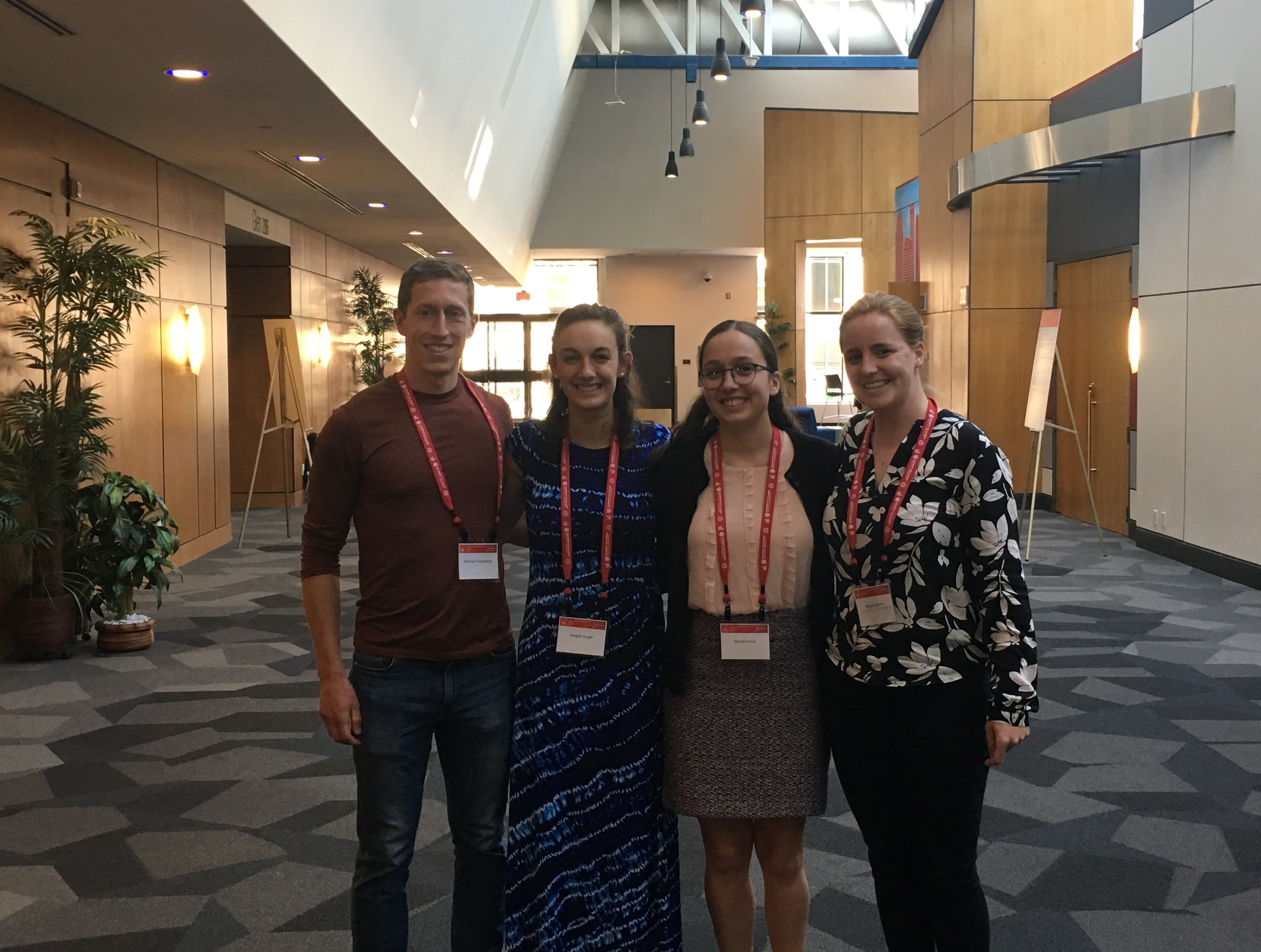
Five members of our lab – Kat, Michael, Alyssa, Megan, & Nicole – attended ISB 2019 in Calgary, Canada. The International Society of Biomechanics promotes and supports international contacts amongst scientists, the dissemination of knowledge, and the activities of national organizations in the field of biomechanics.

Four individuals stand in hallway smiling at conference.

Our work at the conference included:

Kat Steele: ISB presentation on in-clinic EMG monitoring for muscle activity and movement in acute care in the initial days after stroke.
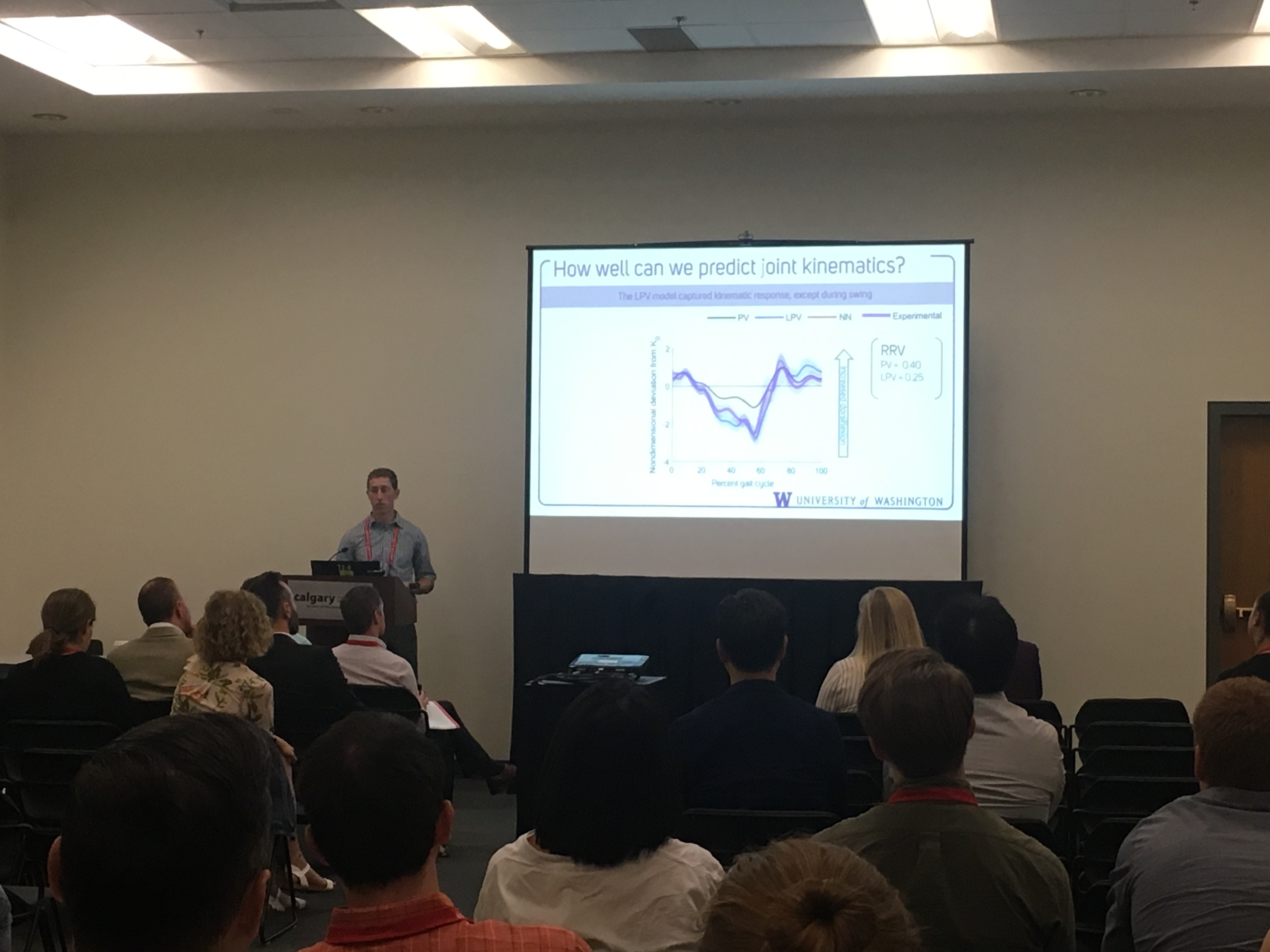
Michael Rosenberg: ISB poster showcasing how individuals’ kinematics and muscle activity change in response to ankle exoskeleton stiffness during acceleration from standing. ISB presentation on open-loop modeling of response to ankle exoskeleton torque during walking.
Alyssa Spomer: ISB poster highlighting how motor control is impacted when typically developing individuals emulate cerebral palsy gait patterns. ISB poster on understanding how individuals can alter motor control expression using visual biofeedback.
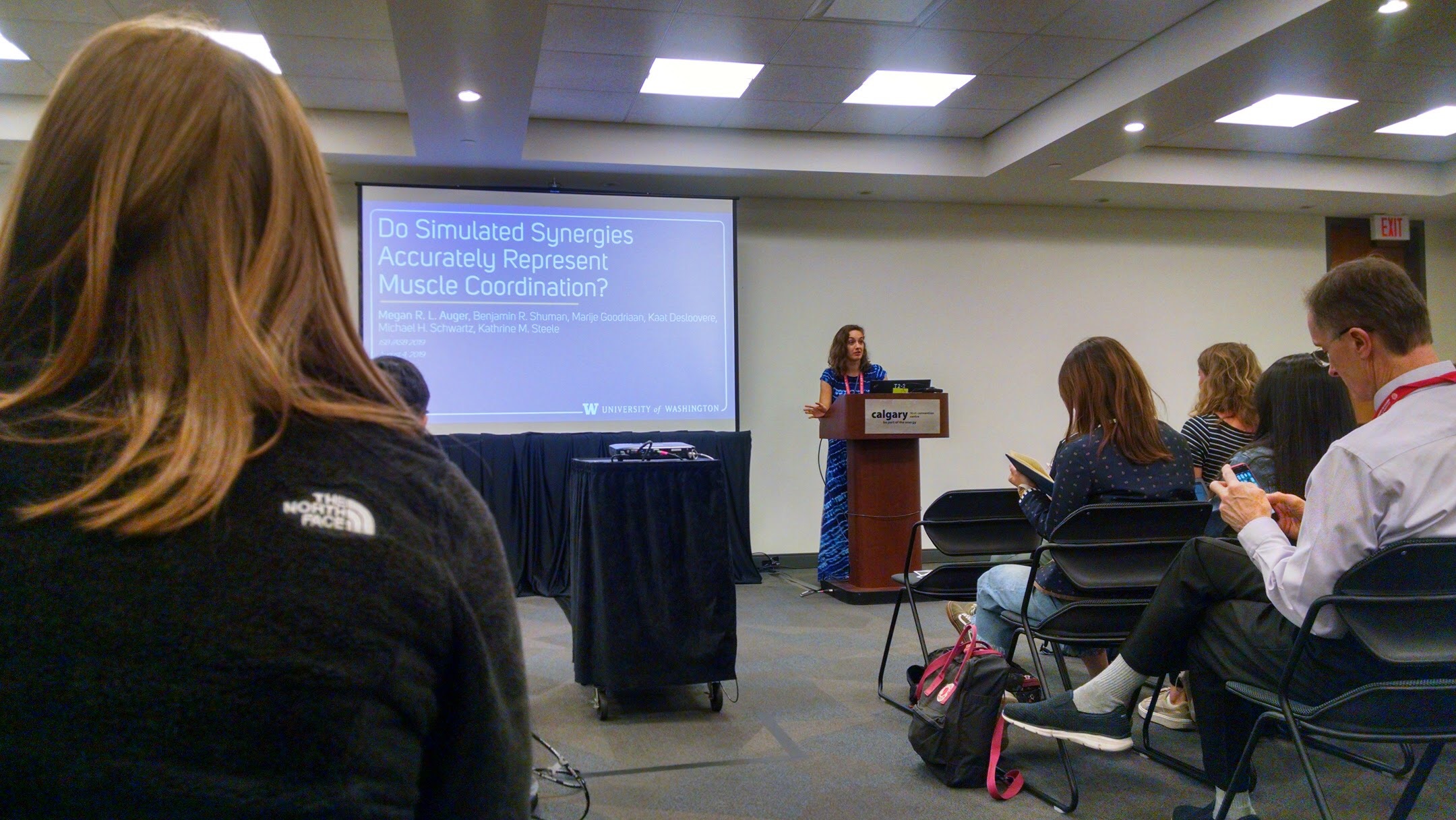
Megan Auger: ISB presentation on how muscle coordination strategies in typically developing children and children with cerebral palsy are not accurately captured using standard musculoskeletal modeling optimization algorithms in computer simulation.
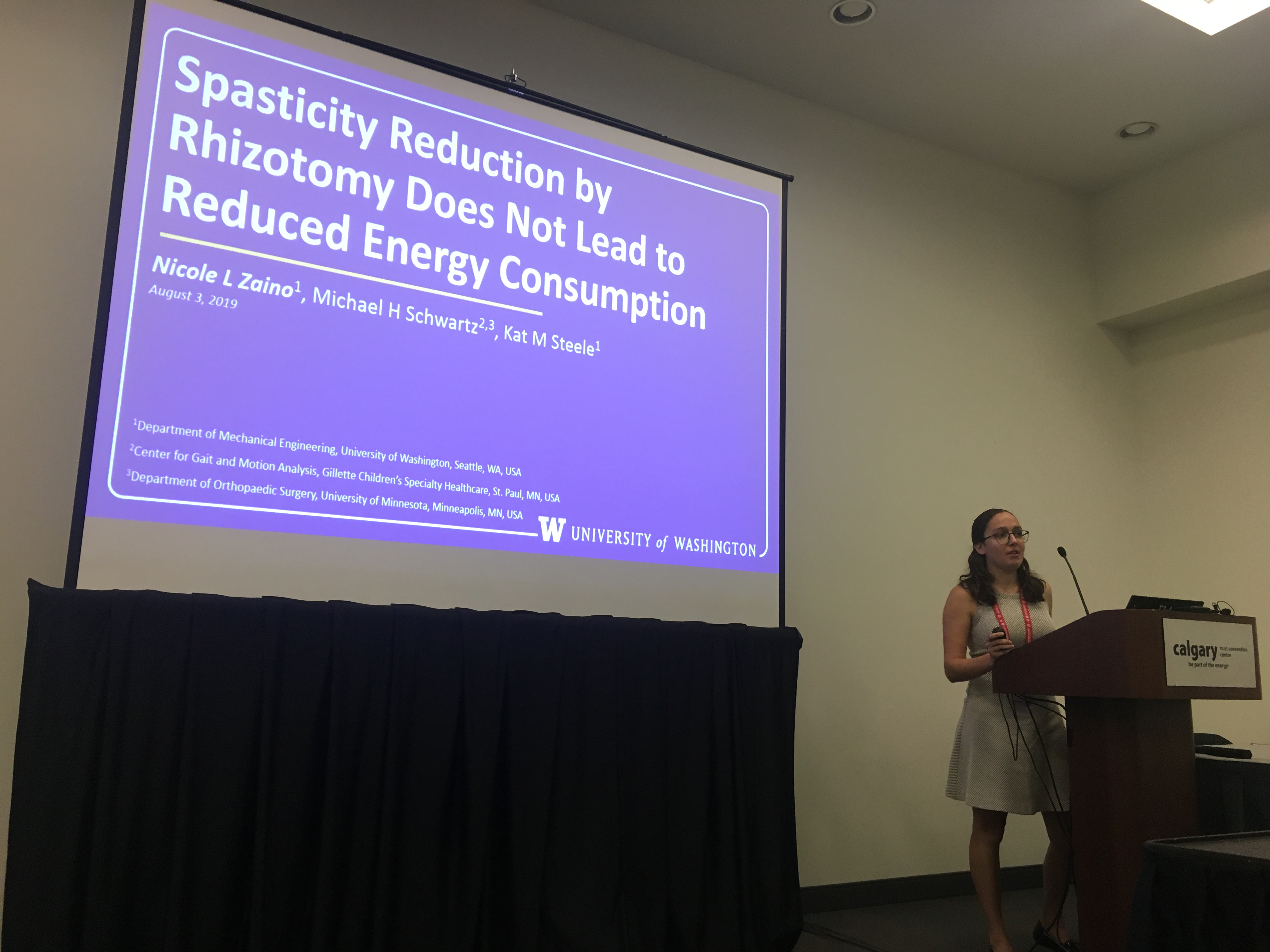
Nicole Zaino: ISB presentation on spasticity reduction via rhizotomy in children with cerebral palsy and how there was no significant difference in the change in energy consumption when compared to a control group of children with cerebral palsy who had no rhizotomy.


TGCS 2019

Additionally, two members of our lab – Michael & Megan – attended TGCS 2019 in Canmore, Canada prior to ISB 2019. The Technical Group on Computer Simulation (TGCS) is a scientific and technical meeting for investigators and students in all areas of computer simulation in biomechanics. This group was a highly-focused subset of the ISB community, primarily focusing on forward simulation of unimpaired and pathological gait patterns, but also touching on multi-scale simulation, diving, cycling, and wheelchair use. 

A mountain view in Canmore, Canada with sharp jagged peaks and a bright blue lake.
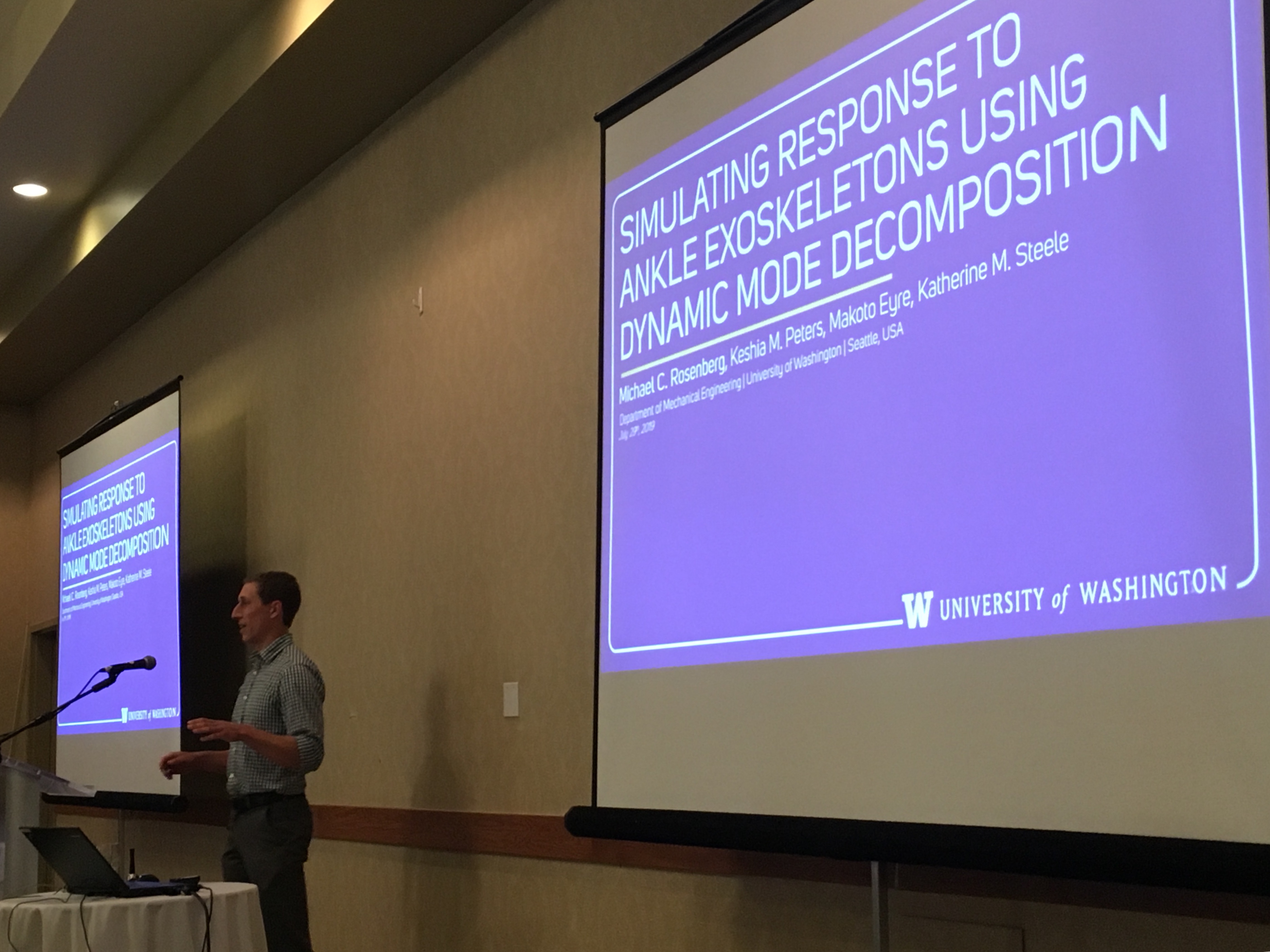
Michael standing in the front of a room in between two screens giving a presentation.
Michael Rosenberg: TGCS presentation on Dynamic Mode Decomposition for modeling response to ankle exoskeletons during gait.