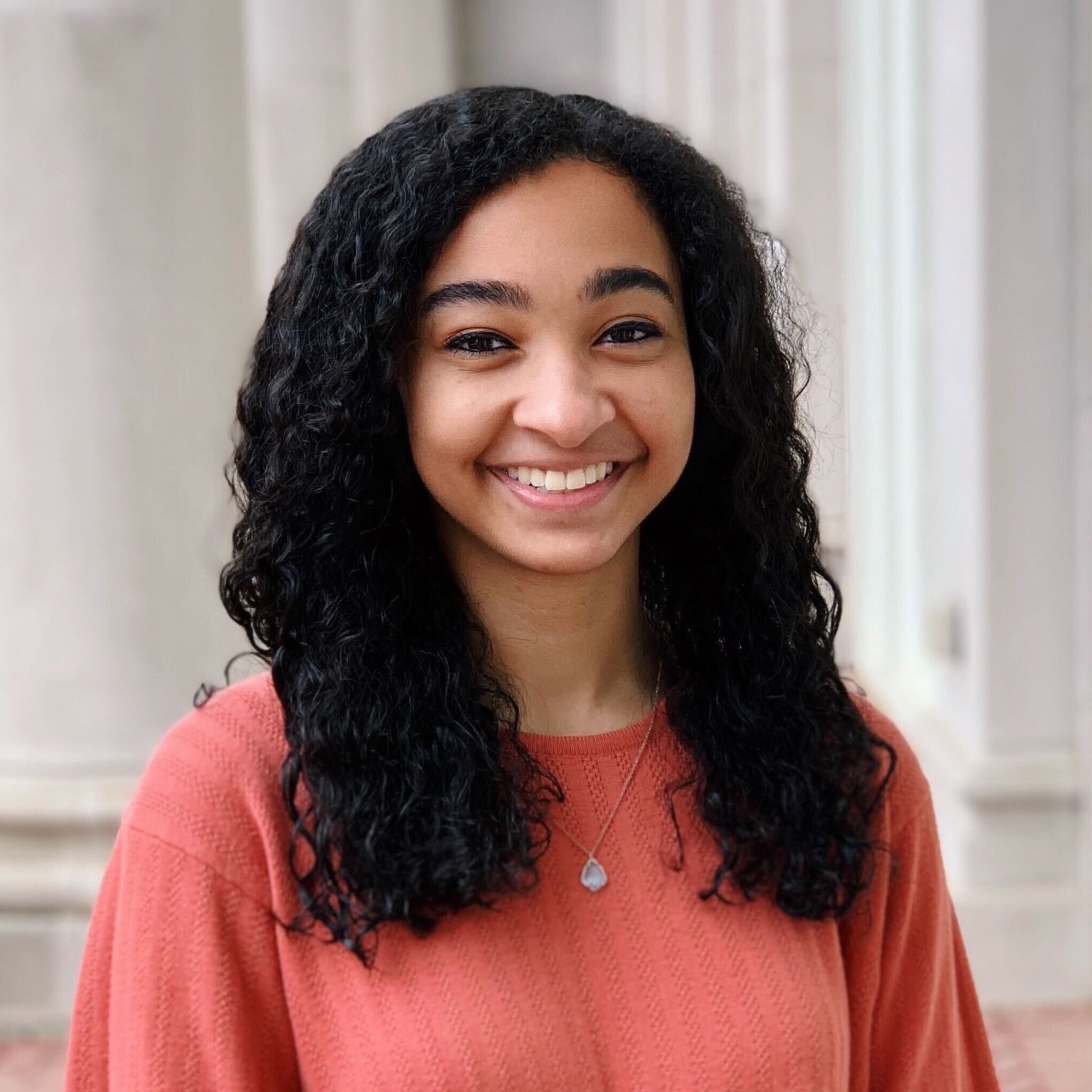
We are excited to announce that PhD Candidate Mackenzie Pitts is a recipient of the 2026-2027 Gatzert Child Welfare Fellowship. This UW fellowship is awarded to doctoral candidates as they write their dissertation on research that supports children with disabilities. With this award that covers one quarter of funding, Mackenzie will be dedicated to improving the quality of her work in preparation for her defense.
Self-initiated mobility experiences are critical for young children with disabilities and may be augmented through powered mobility.
Aim: The purpose of this study was to understand caregiver perceptions of powered mobility intervention following a 12-session trial of a novel powered mobility device.
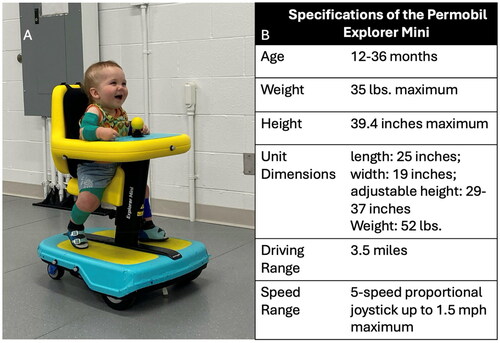
Methods: Ten caregivers (4 M/6F) of children with cerebral palsy (Gross Motor Function Classification System IV-V) and other developmental disabilities (21.8 ± 5.9 months). Children participated in 12 in-lab driving sessions (exploratory or goal directed) using the Explorer Mini (Permobil AB, Sweden). Exit interviews were conducted with caregivers at the final visit, transcribed verbatim, coded inductively, and analysed until themes emerged.
Results: Four themes emerged from the data: (1) Changing views of capability and adaptability; (2) Emerging autonomy; new skills in and out of the device; (3) Clear need and benefit with some drawbacks; and (4) Lingering stigma and uncertainty
Interpretation: PM trial positively shifted caregiver’s perceptions of both PM in general and their child’s capabilities, with a desire for greater access to PM at home to support development. These beliefs remained juxtaposed with lingering stigma for some caregivers about PM devices, and a stated desire for more modifiable PM options for children with different positioning or access needs.
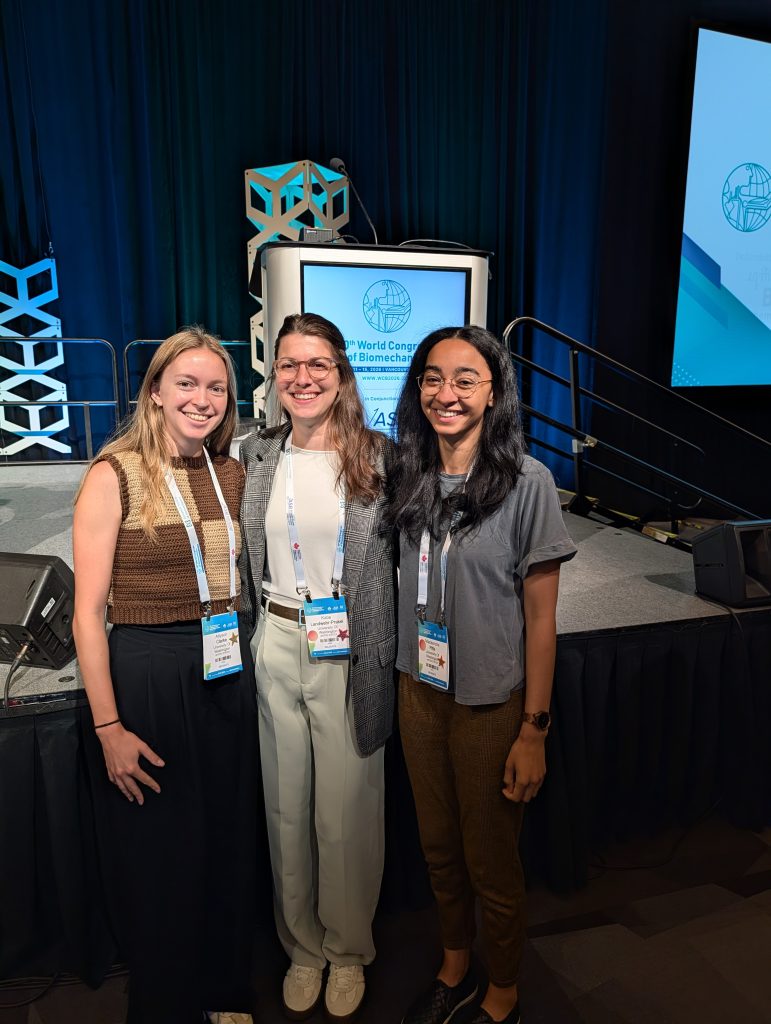
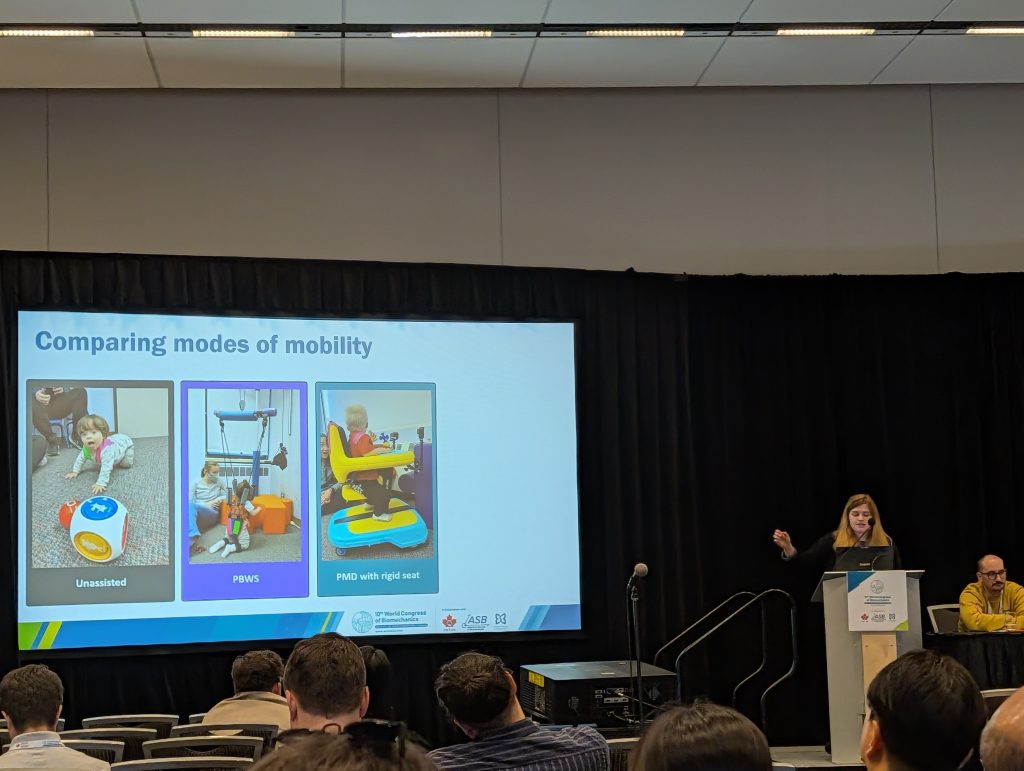
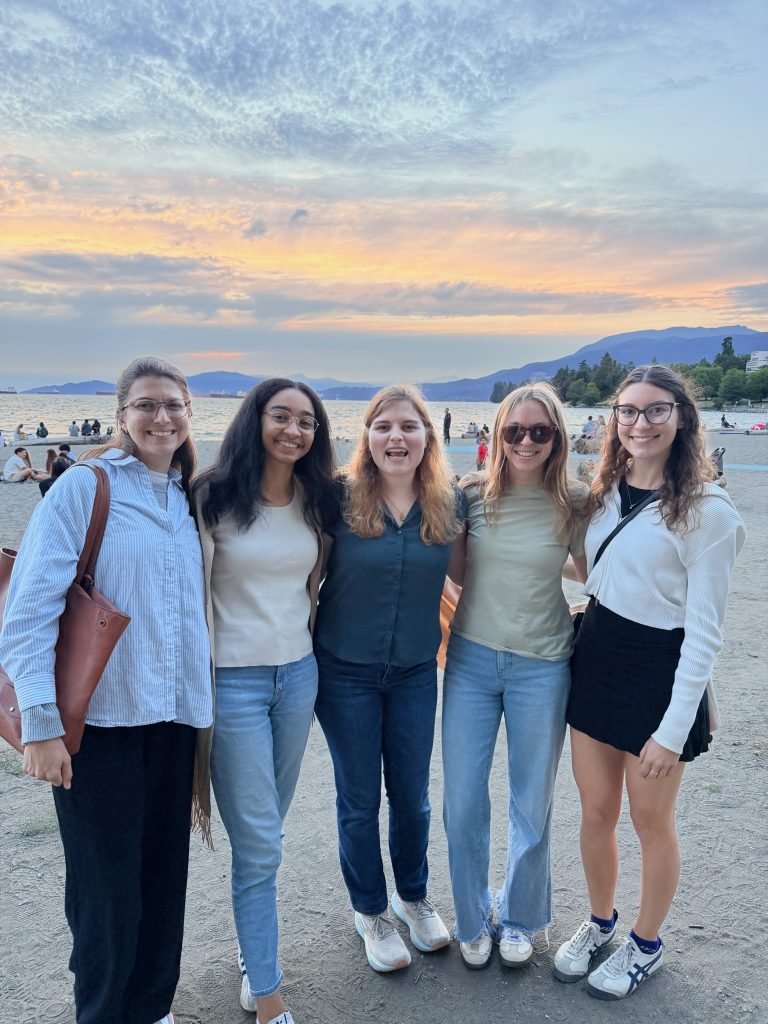
Members of the lab road tripped to Vancouver, Canada for the World Congress of Biomechanics.
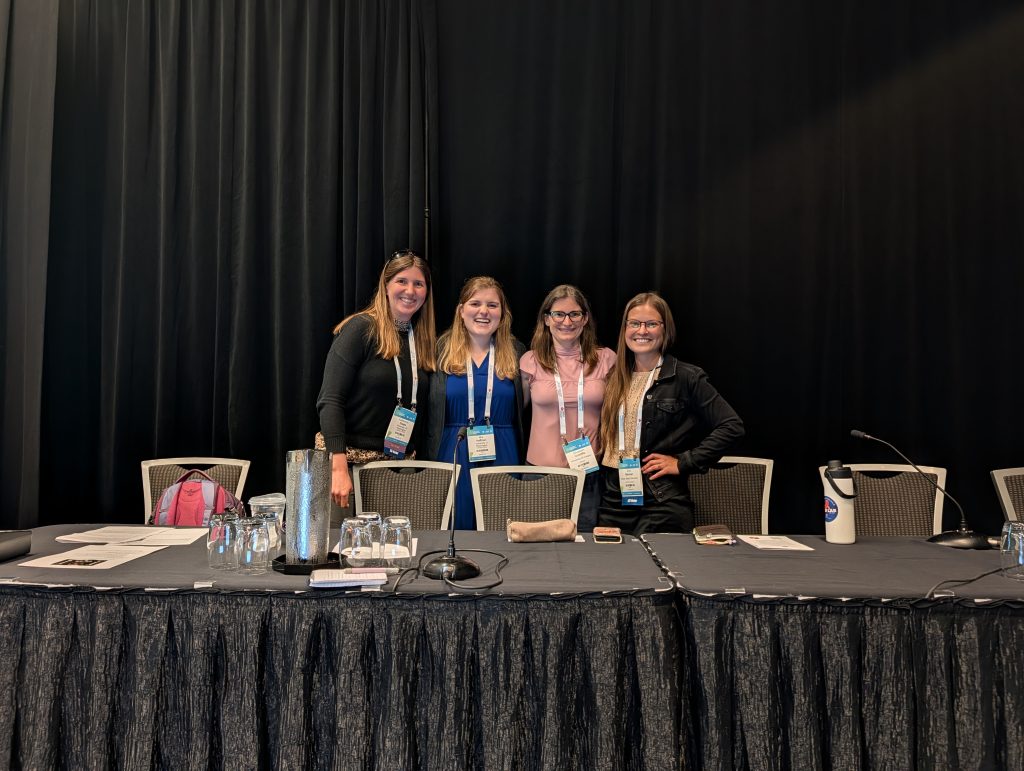
Dr. Kat Steele chaired multiple sessions and gave a presentation, “Evaluation and Optimization of Gait Dynamics Using Exoskeletons.” She and Dr. Mia Hoffman also co-hosted a special session, “Rigor, Repeatability, & FUN in Pediatric Biomechanics.”
PhD student Ally Clarke gave an oral presentation “Mediolateral Forces and Walking Stability in Children with Cerebral Palsy.” PhD student Mackenzie Pitts orally presented “Comparing Split Belt Treadmill Adaptation Rates Between Children with Cerebral Palsy and Typically Developing Peers Using Bayesian Models.” Research Scientist Engineer Katie Landwehr-Prakel had her first oral presentation, discussing “Impacts of Transcutaneous Spinal Cord Stimulation on Muscle Activity and Heart Rate Responses During Walker-Based Exoskeleton Use in Children With Cerebral Palsy.” Dr. Mia Hoffman gave two presentations: “Sit, Stand, Activate! Quantifying Muscle Activity During Mobility Aid Use in Young Children With Developmental Disabilities” and “Quantifying Play Interactions: Implementation of a Digital Switch-Accessible Play Kit for Young Children Receiving Early Intervention Services.” PhD student Maddie McCreary gave a poster presentation, “Effects of Transcutaneous Spinal Cord Stimulation Amplitude on Gait in Children with Cerebral Palsy.” Dr. Kat Steele was honored as a 2026 ASB fellow.
We’re excited to share that Madeleine McCreary was selected as a recipient of the ASB student travel award for her abstract titled “Effects of Transcutaneous Spinal Cord Stimulation Amplitude on Gait in Children with Cerebral Palsy.” Her work was recognized by the ASB community for its contribution to pediatric neuromodulation research. Congratulations, Madeleine!
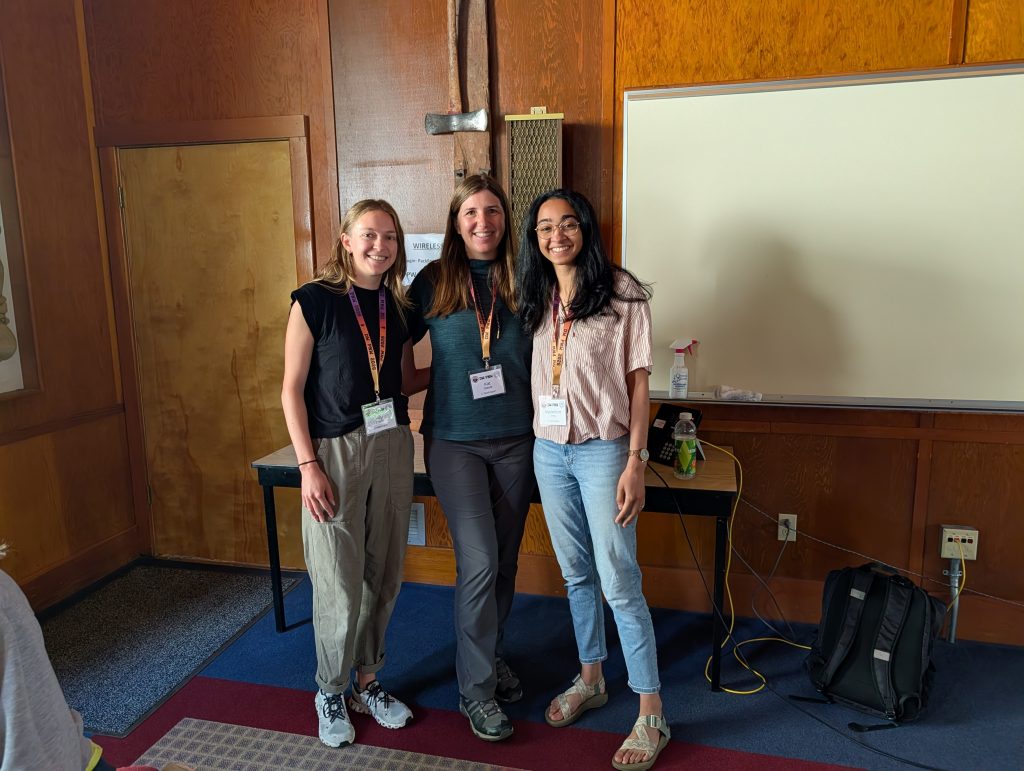
Members of the lab traveled to the base of Mt. Rainier for the Dynamic Walking Conference, where conversations ranged from hummingbird drumming to exoskeletons and robotics.
Dr. Kat Steele was selected to give a 20-minute talk, “Bayesian methods for individualized modeling with wearable data.” PhD student Ally Clarke gave a 5-minute talk on energy savings from bodyweight support in children with cerebral palsy, sharing results from our Cerebral Palsy Energetics study . PhD student Mackenzie Pitts also gave a 5-minute talk on her work from the Dynamic Motor Control study, discussing the mechanical strategies children with cerebral palsy use to adapt step length during split-belt treadmill walking.
We loved reconnecting with former lab members Dr. Michael Rosenberg, Dr. Momona Yamagami, and Tori Landrum.