Congrats to Mia Hoffman, Named to the Husky 100

We were excited to celebrate Mia Hoffman, who was named to the University of Washington Husky 100, recognizing students who made an exceptional impact during their time at UW.

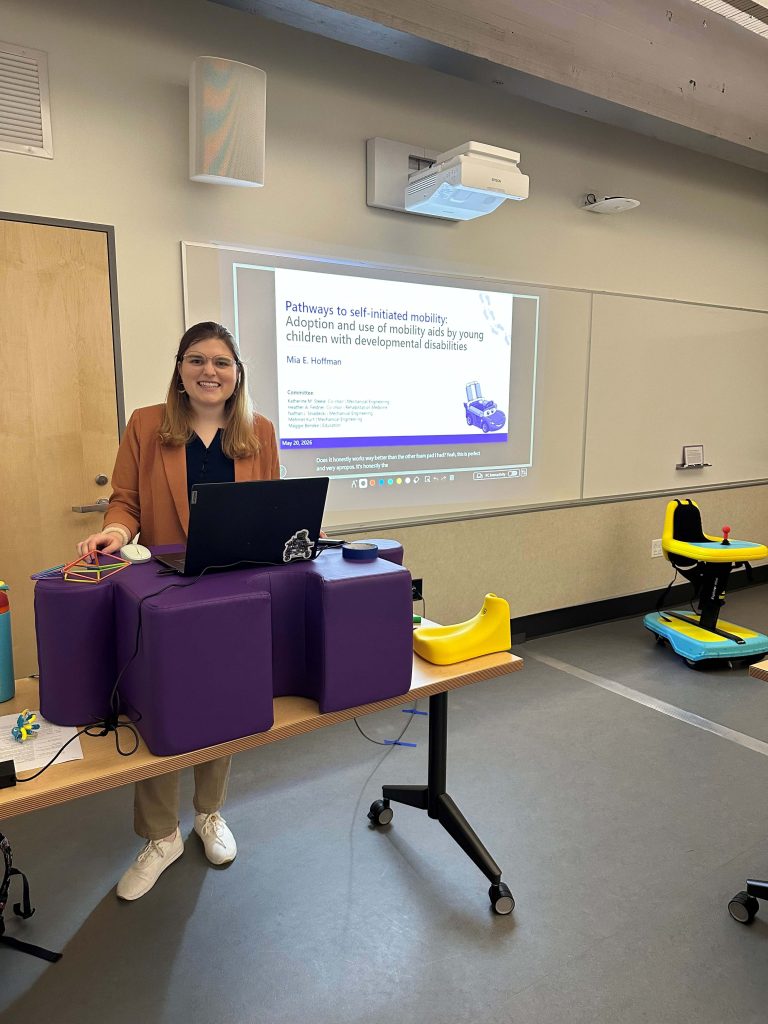
Mia was honored for work focused on accessibility, mobility, and play for children with disabilities, combining impactful research with community‑engaged advocacy. As a member of the Neuromechanics & Mobility community, Mia exemplified leadership, innovation, and a commitment to inclusive design.

Congratulations, Mia, on this well‑deserved recognition!

  • Studio portrait shows Mia Hoffman standing in a black blazer and blue dress against a gold gradient background; the Husky 100 logo is visible at the bottom of the image.
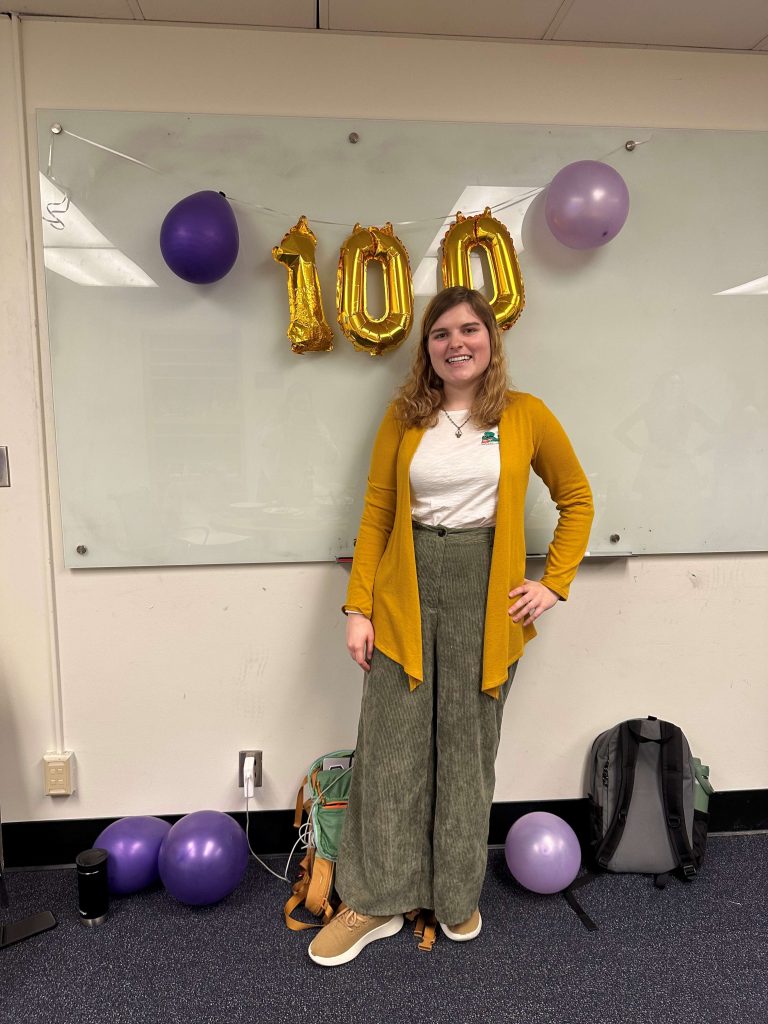
  • Person stands in a classroom in front of gold “100” balloons and purple balloons, posing for a photo to celebrate Husky 100 recognition.
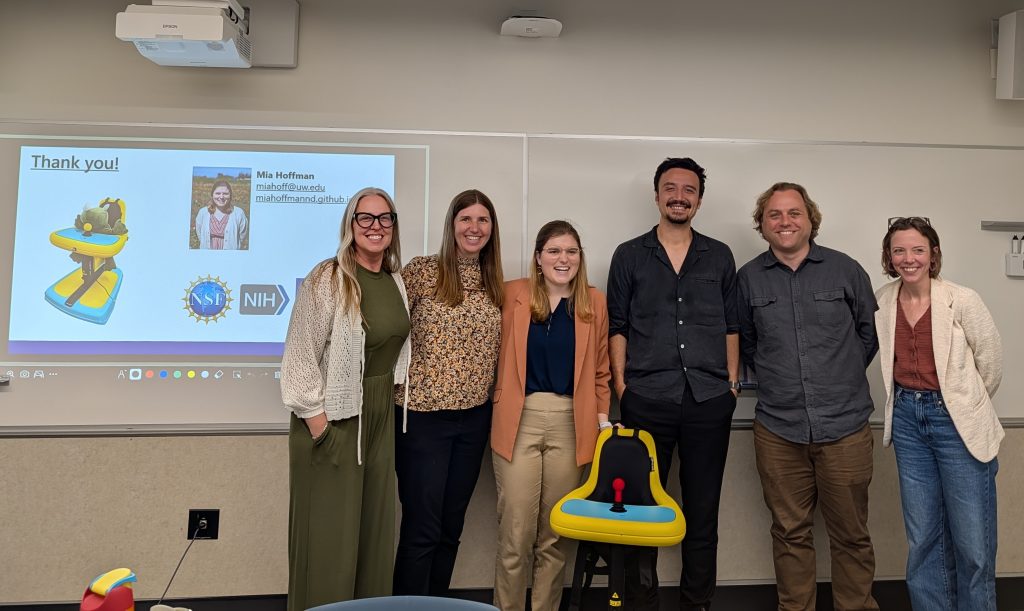
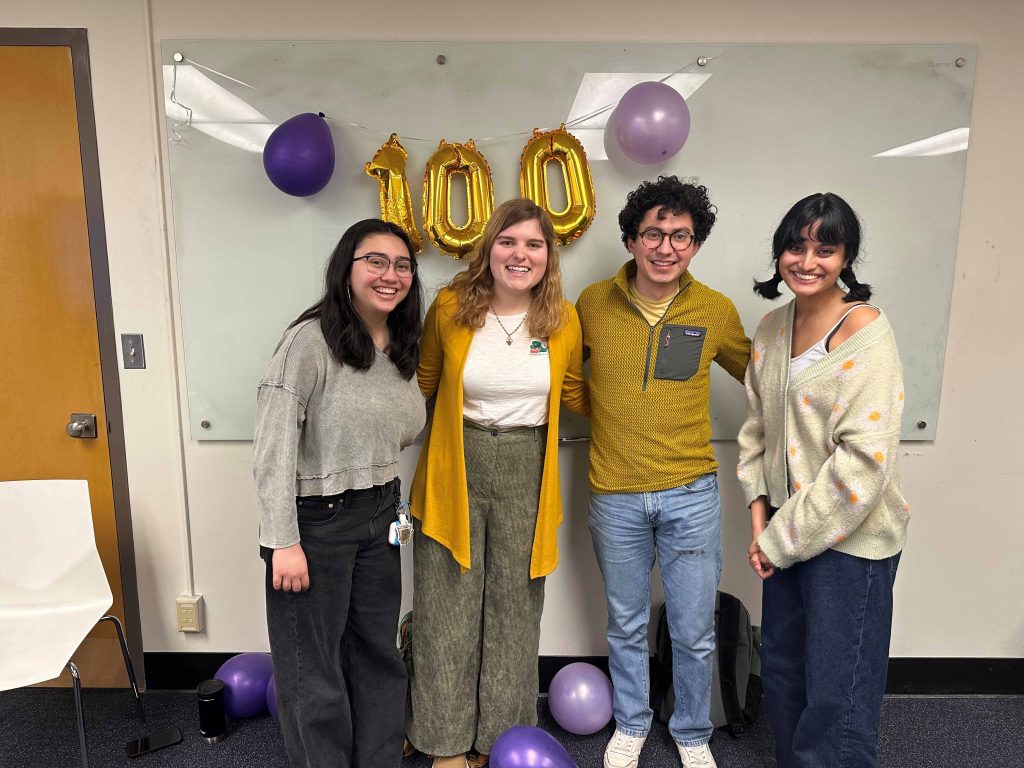
  • Five people stand together in a conference room, smiling for a group photo in front of gold “100” balloons and purple balloons, celebrating Husky 100 recognition.

Spencer Hensley awarded Mary Gates Research Scholarship

Congratulations to Spencer Hensley, who has been selected for a Mary Gates Research Scholarship! This highly competitive University of Washington program supports undergraduate students as they deepen their engagement in research while working closely with faculty mentors.

The Mary Gates Research Scholarship is designed to enhance students’ educational experiences by giving them the resources to devote more time and focus to their research. With reduced financial pressure, scholars are able to pursue more ambitious questions, develop new skills, and contribute meaningfully to their fields.

In the Neuromechanics and Mobility Lab, Spencer supports Mia Hoffman’s research on mobility aids for children with Down syndrome and other gross motor delays, contributing to efforts to understand how early access to mobility devices supports participation and development.

Please join us in celebrating this achievement – way to go, Spencer!

A young man smiles. He has dark brown hair, and is wearing glasses and a plaid jacket.

Reimagining Mobility Aids: Mia Hoffman Presents at APTA Pediatrics 2025

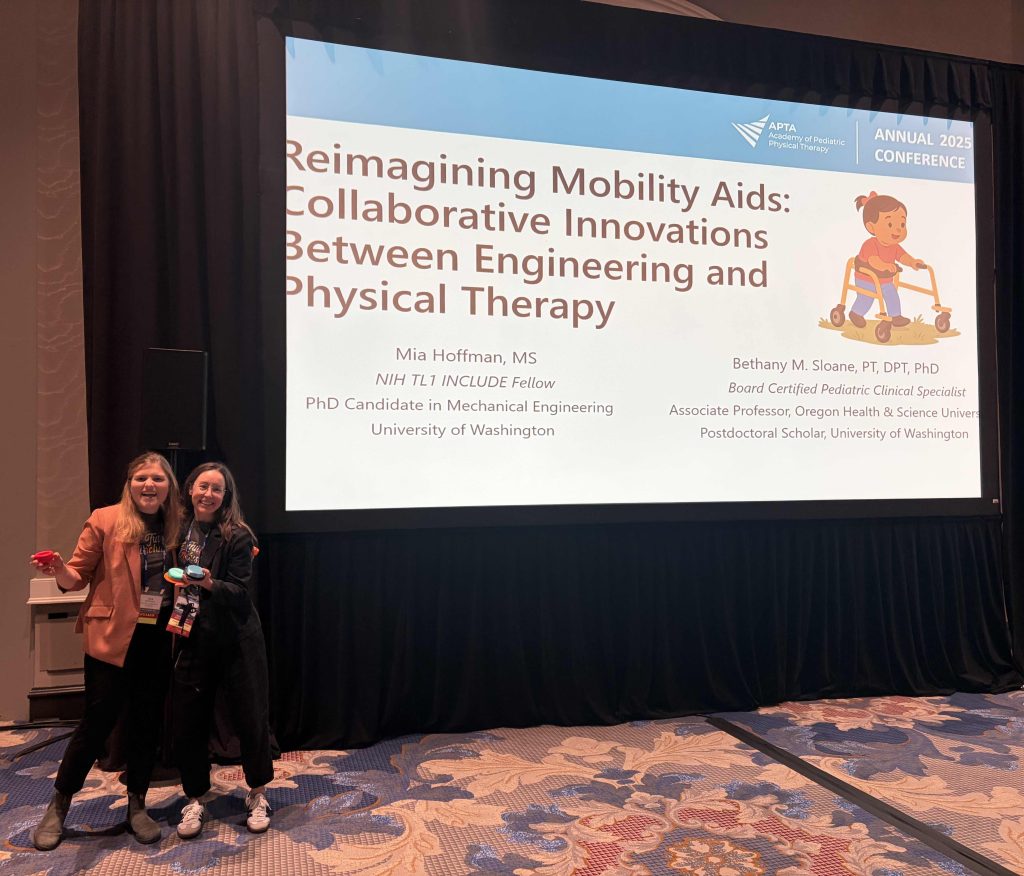
  • Two presenters stand in front of a large projection screen displaying the session title “Reimagining Mobility Aids: Collaborative Innovations Between Engineering and Physical Therapy” at the APTA Pediatrics 2025 Conference. The slide includes names, credentials, and affiliations for Mia Hoffman and Bethany M. Sloane. The background shows patterned carpet and a dark curtain framing the screen.
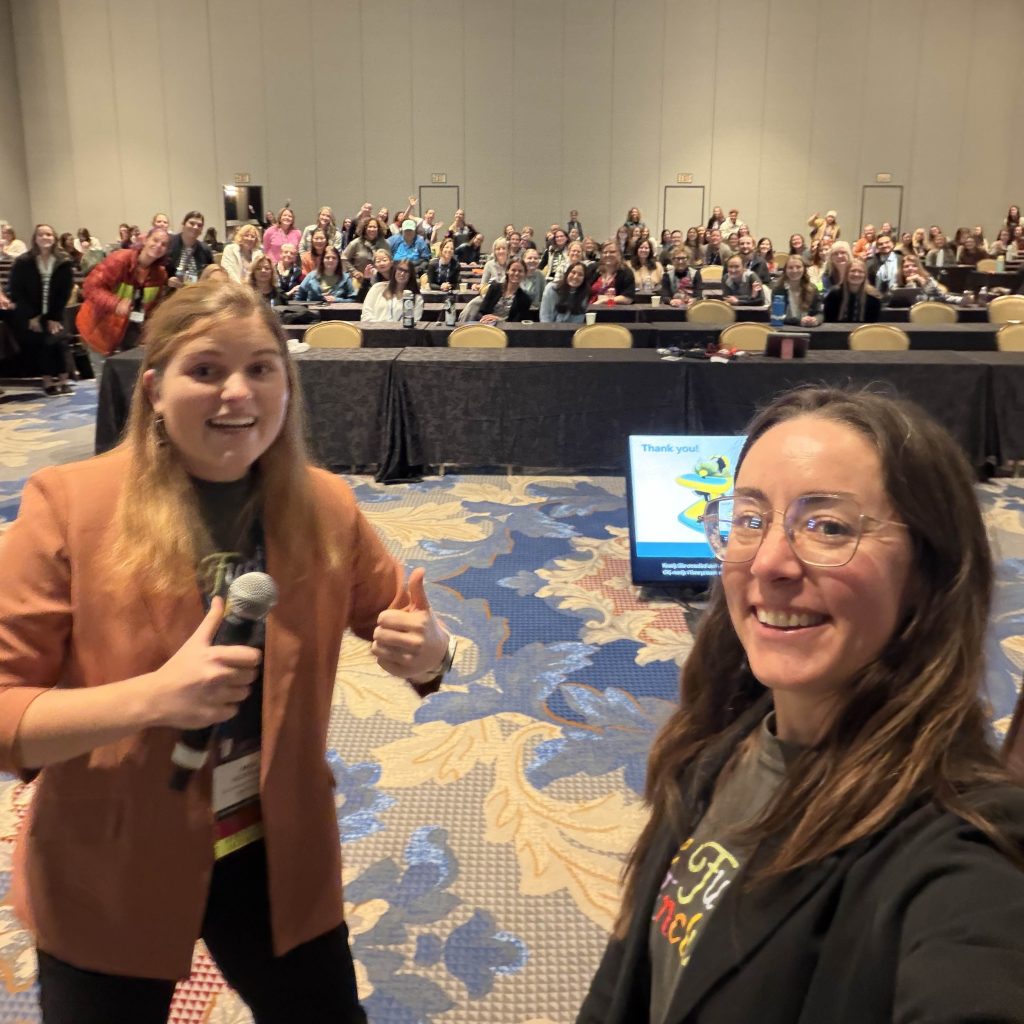
  • A selfie-style photo taken from the front of a large conference room, showing two presenters in the foreground and a large seated audience in the background.
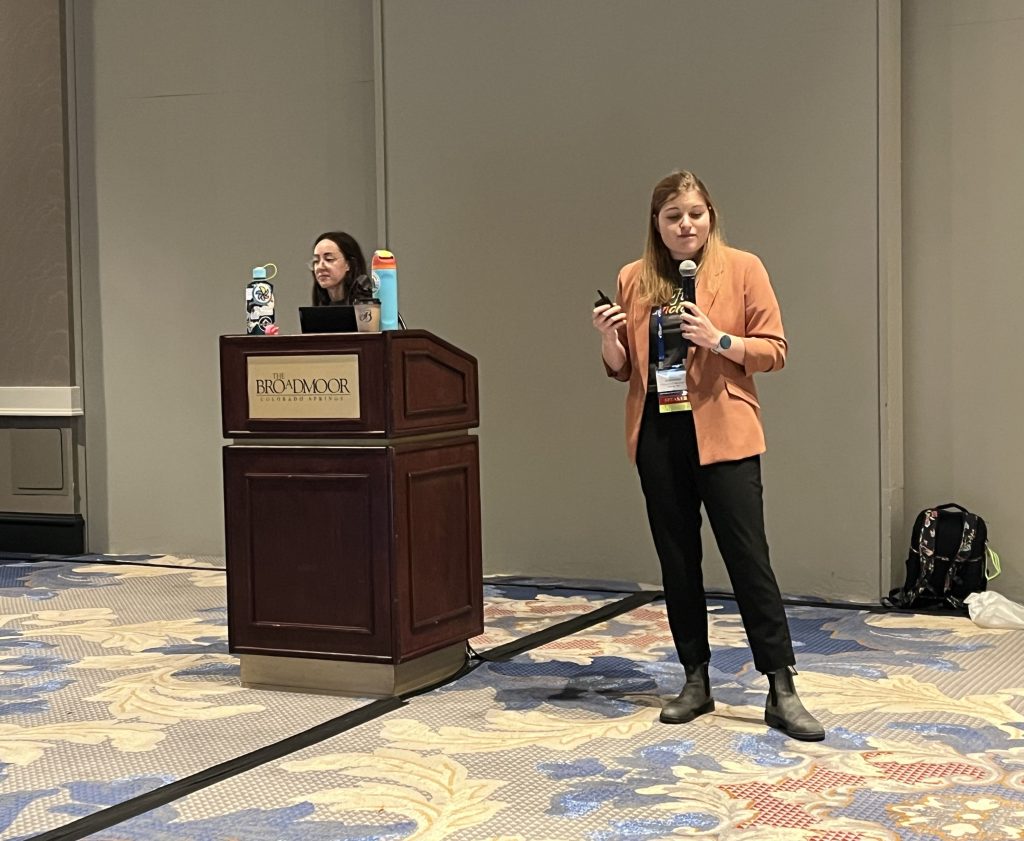
  • A presenter stands beside a podium with a laptop and water bottles, holding a microphone and a small device while speaking. The podium has “Broadmoor” signage, and the background shows a patterned carpet and plain wall.
  • Two presenters stand at the front of a conference room. One is holding a microphone and a colorful book while speaking to the audience. The other stands near a podium with a laptop. The room has patterned carpet and neutral walls.

Mia Hoffman of the Neuromechanics & Mobility Lab, along with Bethany M. Sloane, Postdoctoral Scholar at the University of Washington’s Center for Research and Education on Accessible Technology and Experiences (CREATE), presented a session at the APTA Pediatrics 2025 Conference titled “Reimagining Mobility Aids: Collaborative Innovations Between Engineering and Physical Therapy.”

The session explored how interdisciplinary partnerships can transform traditional mobility aids into creative, user-centered solutions. Real-world examples included 3D-printed joystick adaptations, sensor-integrated systems, and community loaner programs. Attendees engaged in design thinking activities and left with practical tools to reimagine mobility for young children.

2025 CREATE Research Showcase Highlights Inclusive Innovation

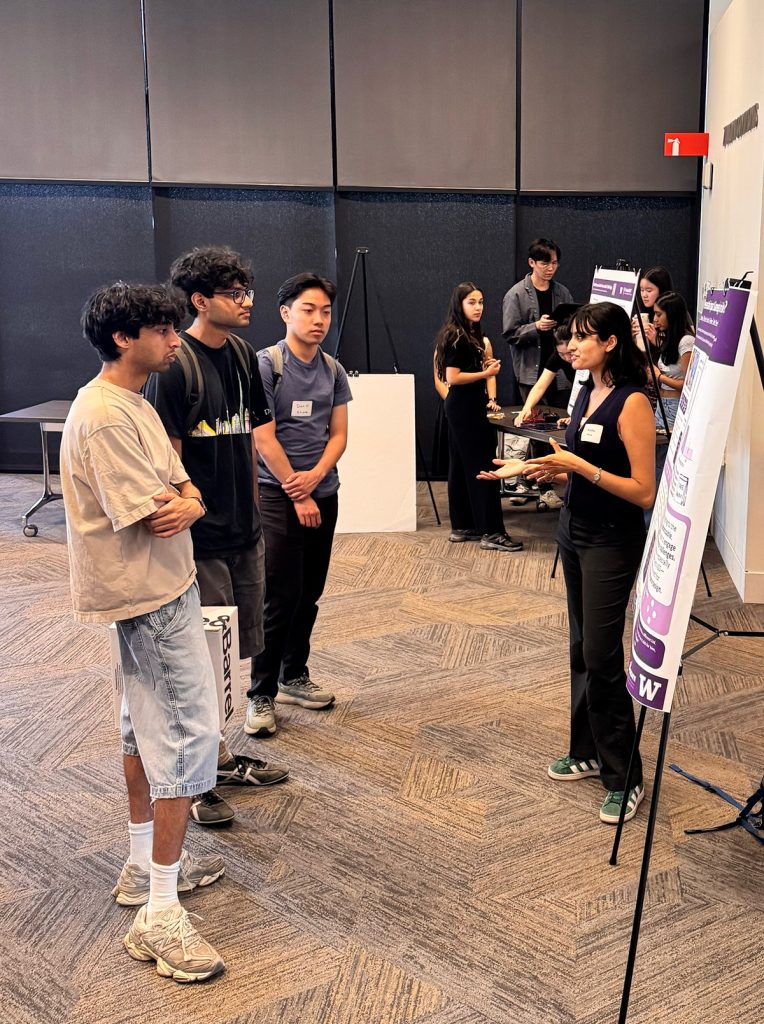
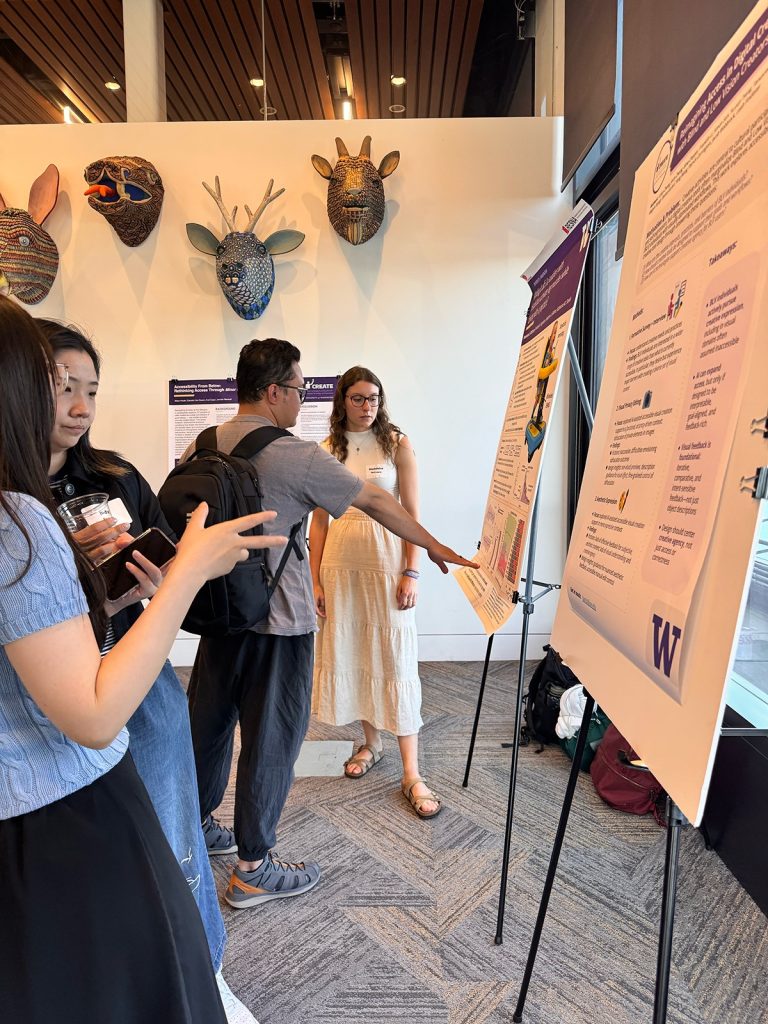
  • A group of people standing and conversing at an indoor research showcase. Some attendees are viewing posters or displays.
  • A group of people viewing academic posters displayed on easels at a research showcase.
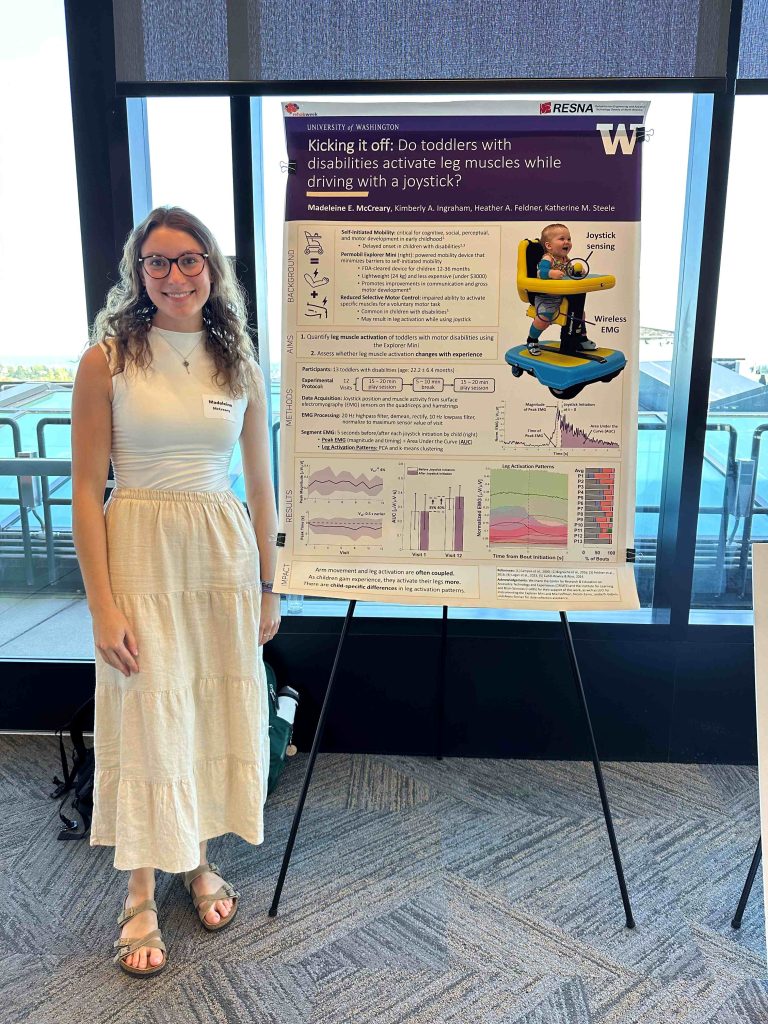
  • A person standing next to a scientific poster presentation titled "Kicking it off: Do toddlers with disabilities activate leg muscles when driving with a joystick?" featuring graphs, charts, and images.
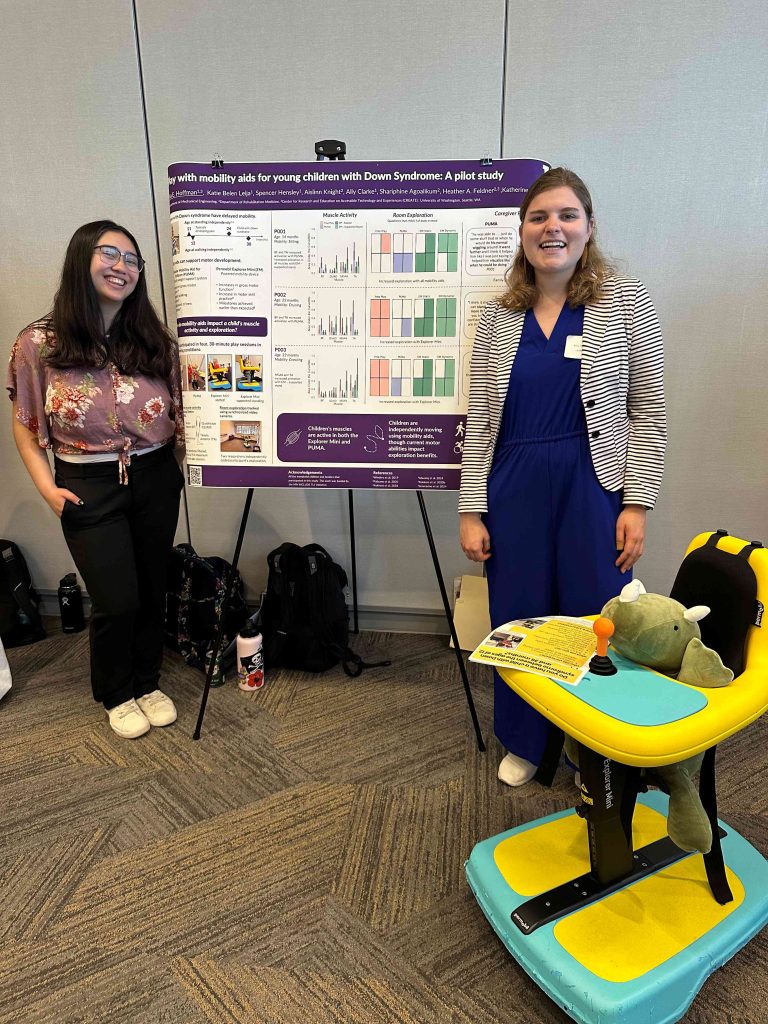
  • Two individuals standing in front of a research poster titled “Mobility aids to support independent play for young children with Down Syndrome” which includes graphs and charts. A small powered wheel chair with a stuffed dinosaur is set up in front of the poster.
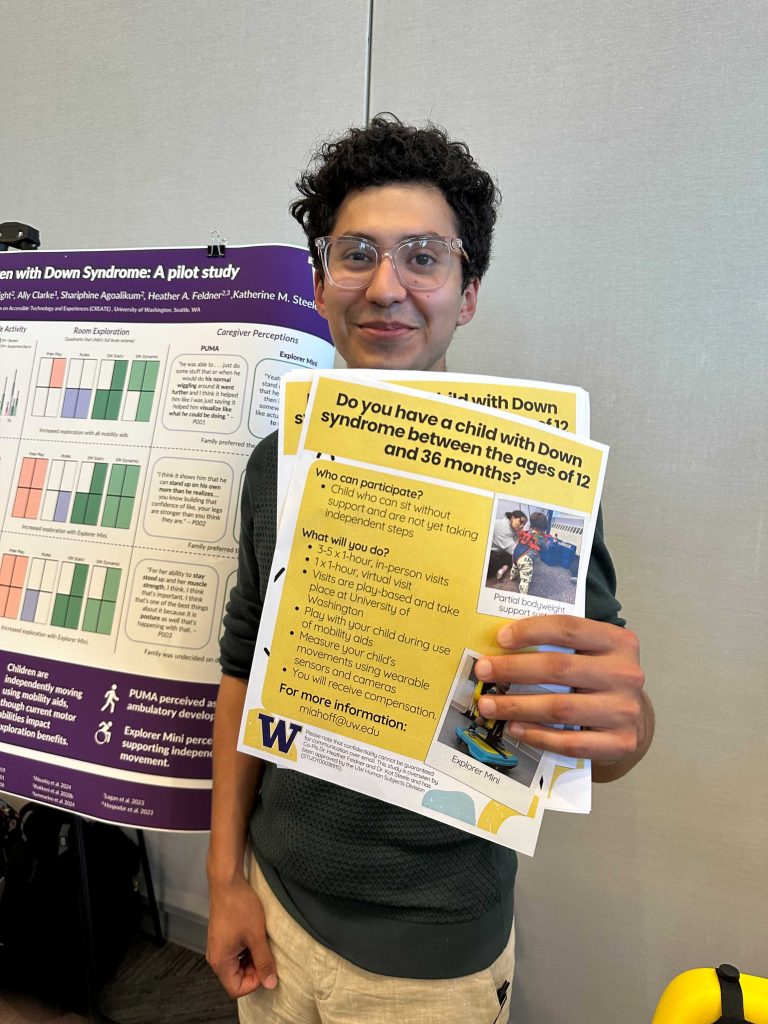
  • A person holding a flyer in front of a research poster about Down syndrome. The flyer invites families with children aged 12–36 months with Down syndrome to participate in a study at the University of Washington.
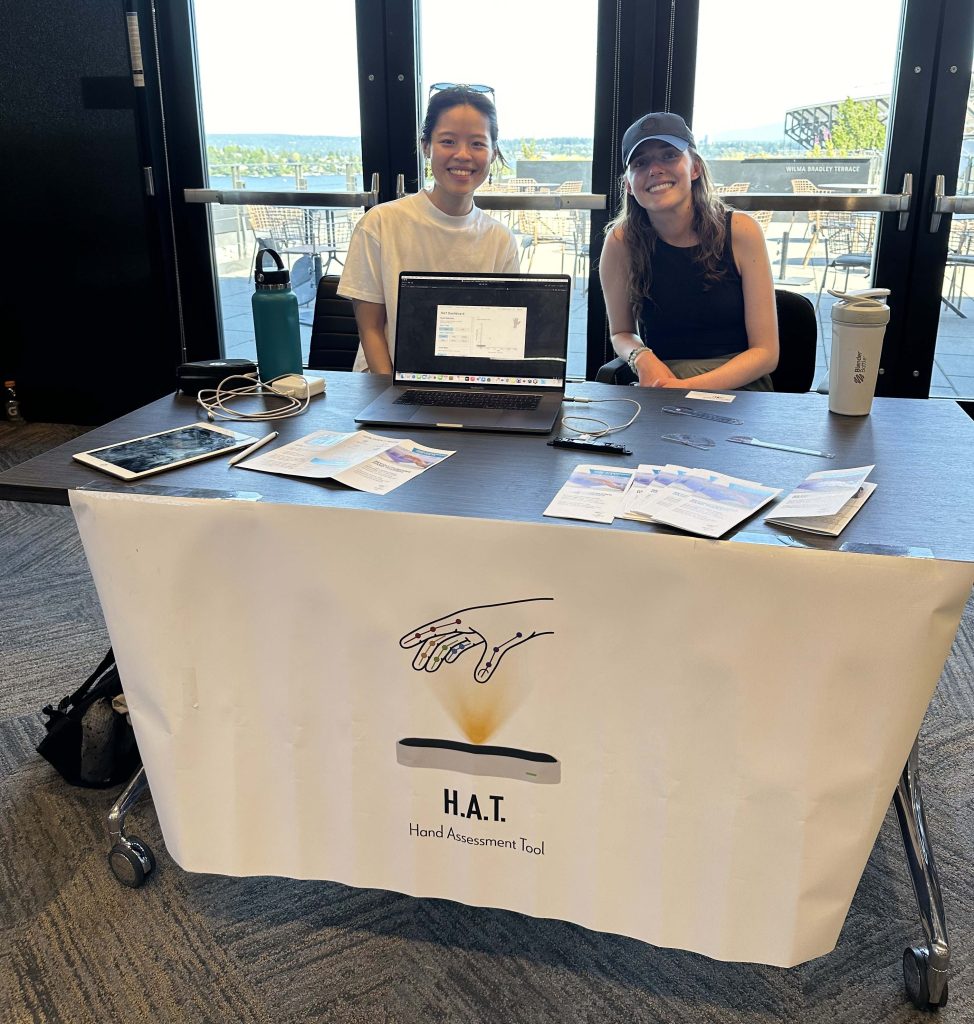
  • Two people seated behind a table displaying materials for the H.A.T. Hand Assessment Tool. A banner with an illustrated hand and the tool’s name is draped across the front of the table.

The Center for Research and Education on Accessible Technology and Experiences (CREATE) recently hosted its Spring 2025 Research Showcase and Community Day, bringing together researchers, industry leaders, and community members dedicated to advancing accessibility. Co-sponsored by HuskyADAPT, the event highlighted cutting-edge work that bridges technology and inclusion.

Our lab was proud to be part of the showcase, with several students and collaborators presenting their research. Alisha Bose presented a poster on How Does Clinical Presentation Impact Gameplay in Early Intervention? This project explored how children’s unique needs influence their interaction with accessible play tools like the Switch Kit.

Madeleine McCreary presented Kicking it Off: Do Toddlers with Disabilities Activate Leg Muscles When Driving with a Joystick? This study examined leg muscle activation in toddlers using powered mobility devices to inform interventions that support play and development.

Mia Hoffman, Spencer Hensley, and Katie Belen Leija presented Mobility Aids to Support Independent Play for Young Children with Down Syndrome. Their work evaluated how mobility devices support early movement and play in children with Down Syndrome.

Alexandra (Sasha) Portnova showcased the H.A.T. – Hand Assessment Tool, a camera-based tool that measures finger range of motion to support hand therapy practices.

These projects reflect CREATE’s mission: to make technology accessible and to make the world accessible through technology.

Celebrating Our Research Trainees at the 2025 UW Undergraduate Research Symposium

The University of Washington Undergraduate Research Symposium is an annual, day-long celebration of undergraduate achievement in research, scholarship, and creative expression. This year, we are proud to highlight the outstanding contributions of our lab’s research trainees who shared their innovative work with the broader academic community.

Alisha Bose delivered a compelling podium presentation titled “How Does Clinical Presentation Impact Gameplay in Early Intervention?” Her research explores how different clinical profiles may influence the way children engage with therapeutic play, contributing valuable insights to the field of accessible design.

Katie Leija presented a poster on “Impact of Powered Mobility Device Seat Design on a Young Child’s Exploration,” examining how adaptive seating affects mobility and interaction in young children using powered mobility devices.

Spencer Hensley shared his work through a poster presentation titled “Effects of Mobility Aids on Muscle Activity in Kids with DS,” which investigates how different mobility aids influence muscle engagement during play in children with Down syndrome.

We are incredibly proud of Alisha, Spencer, and Katie for their dedication and creativity. Their projects reflect the core mission of the Neuromechanics & Mobility Labengineering to enhance human mobility, play, and exploration. Through their work, they are helping to advance inclusive design and accessible technology that empowers individuals of all abilities.

  • A person stands at a podium giving a presentation. Behind them, a large screen displays the title slide: “HOW DOES CLINICAL PRESENTATION IMPACT GAMEPLAY IN EARLY INTERVENTION?” by Alisha Bose.
  • A person stands next to a research poster titled “Impact of Powered Mobility Device Seat Design on a Young Child's Exploration,” featuring the University of Washington logo.
  • A person stands beside a scientific poster titled “Effects of Mobility Aids on Muscle Activity in Kids with DS.”