World Congress of Biomechanics 2026

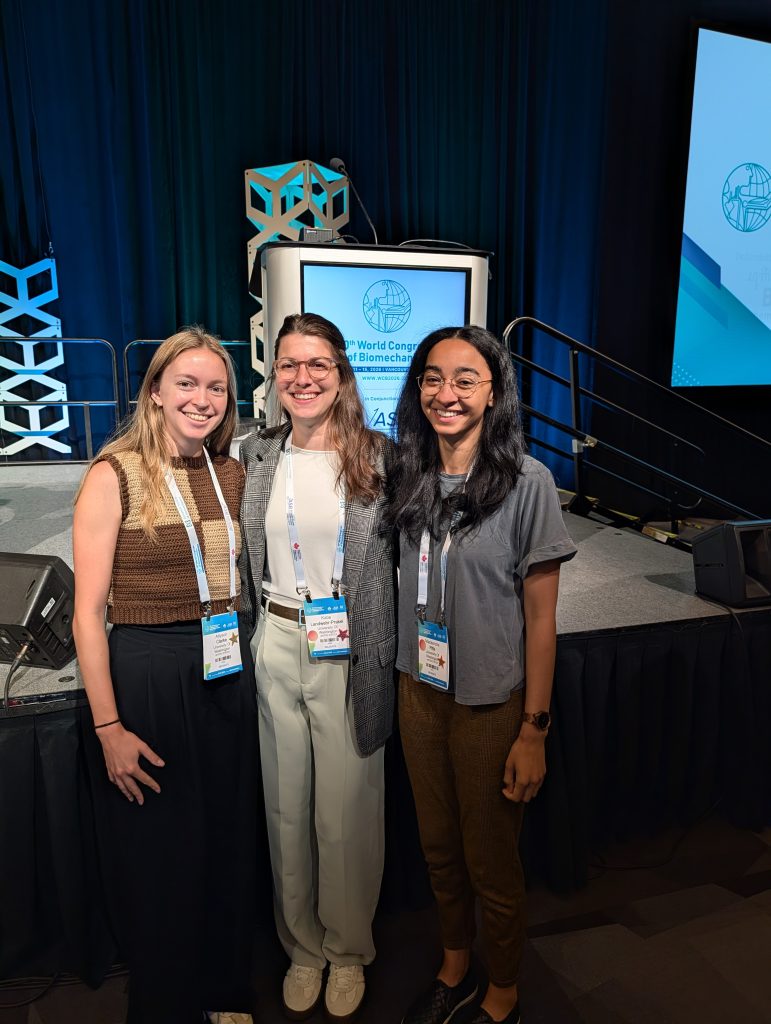
  • Ally, Katie, and Mackenzie stand together after giving podium presentations. Ally stands to the left, and is wearing a brown sweater and has blonde hair. Katie stands in the middle, wearing a white shirt with grey suit jacket and has brown hair. Mackenzie stands to the right wearing a grey t-shirt and dark brown hair.
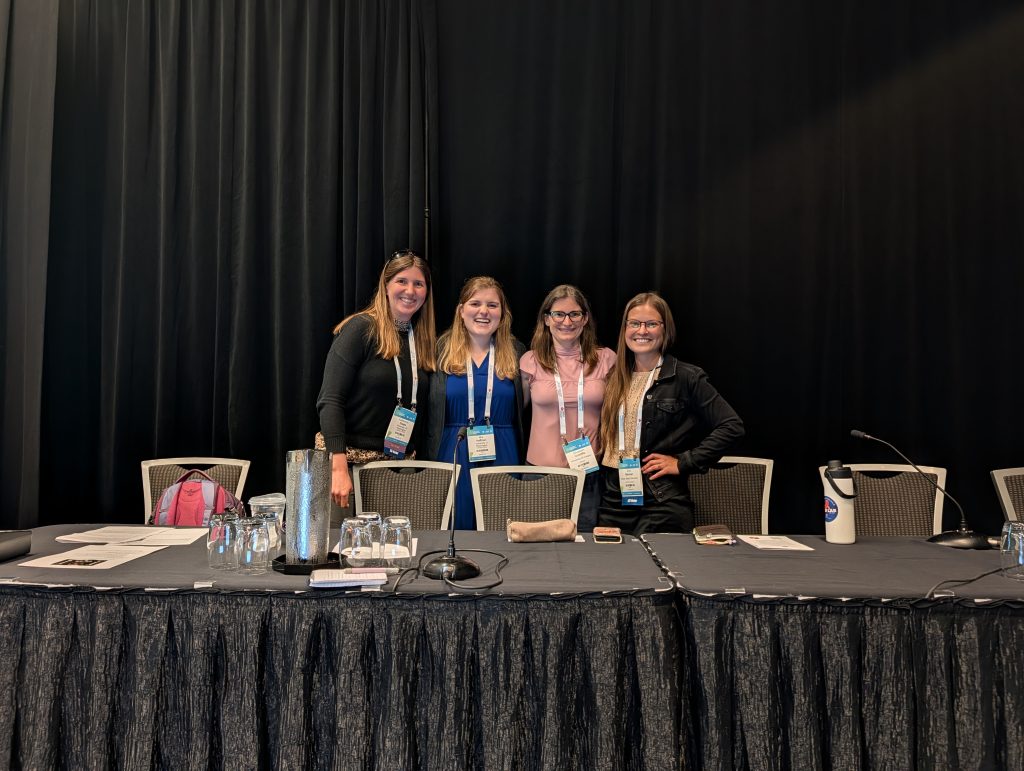
  • Kat and Mia stand with Elizabeth Condliffe and Erin Mannen. All women are wearing professional clothing and standing behind the presenter's table.
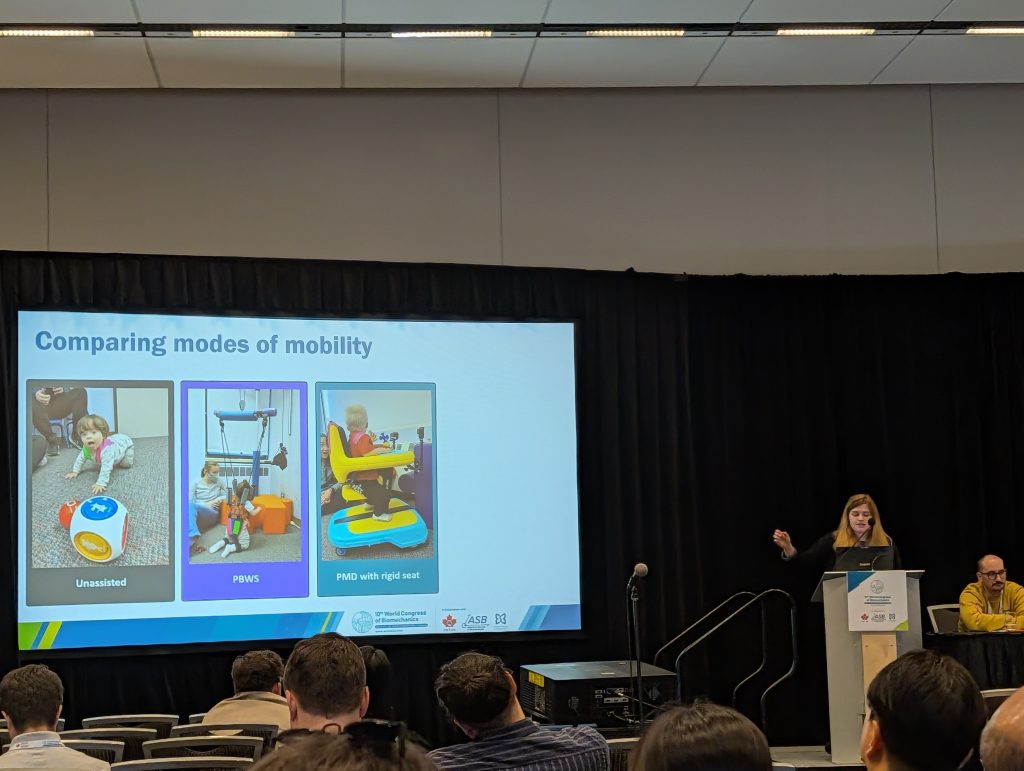
  • Mia stands to the right of a powerpoint slide during her presentation. The powerpoint slide depicts young children using mobility devices
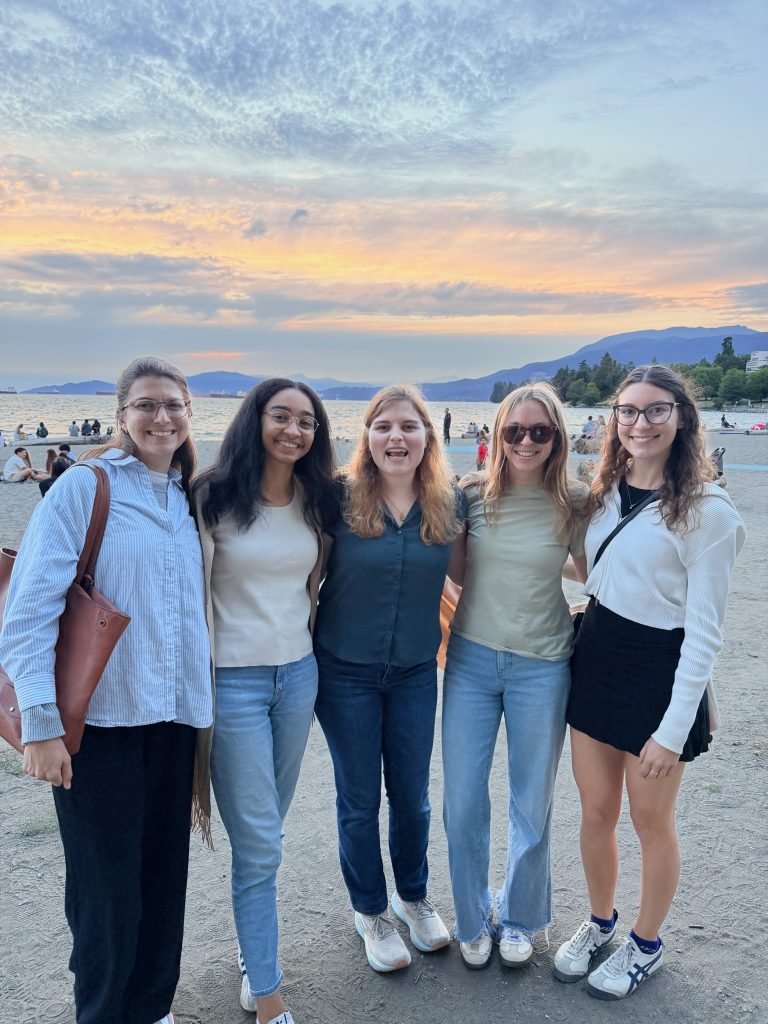
  • Ally, Mackenzie, Mia, Ally, and Maddie stand on a beach at sunset.

Members of the lab road tripped to Vancouver, Canada for the World Congress of Biomechanics.

Dr. Kat Steele chaired multiple sessions and gave a presentation, “Evaluation and Optimization of Gait Dynamics Using Exoskeletons.” She and Dr. Mia Hoffman also co-hosted a special session, “Rigor, Repeatability, & FUN in Pediatric Biomechanics.”

PhD student Ally Clarke gave an oral presentation “Mediolateral Forces and Walking Stability in Children with Cerebral Palsy.” PhD student Mackenzie Pitts orally presented “Comparing Split Belt Treadmill Adaptation Rates Between Children with Cerebral Palsy and Typically Developing Peers Using Bayesian Models.” Research Scientist Engineer Katie Landwehr-Prakel had her first oral presentation, discussing “Impacts of Transcutaneous Spinal Cord Stimulation on Muscle Activity and Heart Rate Responses During Walker-Based Exoskeleton Use in Children With Cerebral Palsy.” Dr. Mia Hoffman gave two presentations: “Sit, Stand, Activate! Quantifying Muscle Activity During Mobility Aid Use in Young Children With Developmental Disabilities” and “Quantifying Play Interactions: Implementation of a Digital Switch-Accessible Play Kit for Young Children Receiving Early Intervention Services.” PhD student Maddie McCreary gave a poster presentation, “Effects of Transcutaneous Spinal Cord Stimulation Amplitude on Gait in Children with Cerebral Palsy.” Dr. Kat Steele was honored as a 2026 ASB fellow.

Successful road trip!

Congratulations – Madeleine McCreary receives ASB travel award!

Maddie has long brown wavy hair. She is wearing a green blazer and standing elegantly by a fireplace.

We’re excited to share that Madeleine McCreary was selected as a recipient of the ASB student travel award for her abstract titled “Effects of Transcutaneous Spinal Cord Stimulation Amplitude on Gait in Children with Cerebral Palsy.” Her work was recognized by the ASB community for its contribution to pediatric neuromodulation research. Congratulations, Madeleine!

Neuromechanics & Mobility Lab presents at NCM 2026

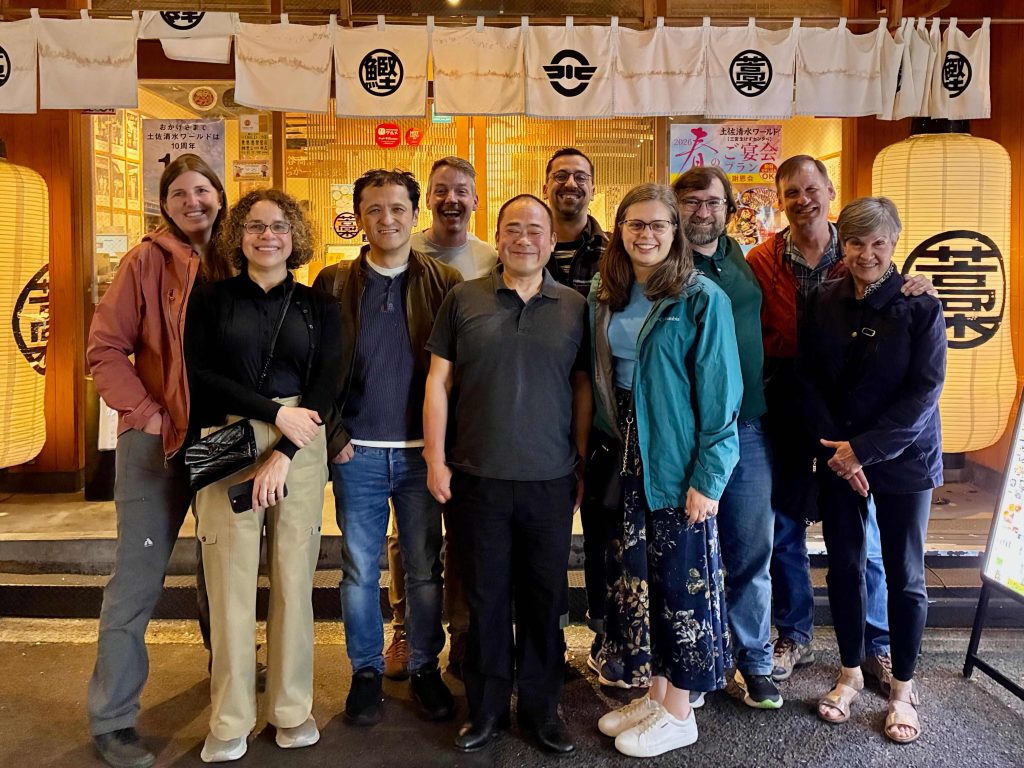
Members of the lab attended the Neural Control of Movement (NCM) conference in Kobe, Japan, bringing together an international community focused on understanding how the brain controls movement.

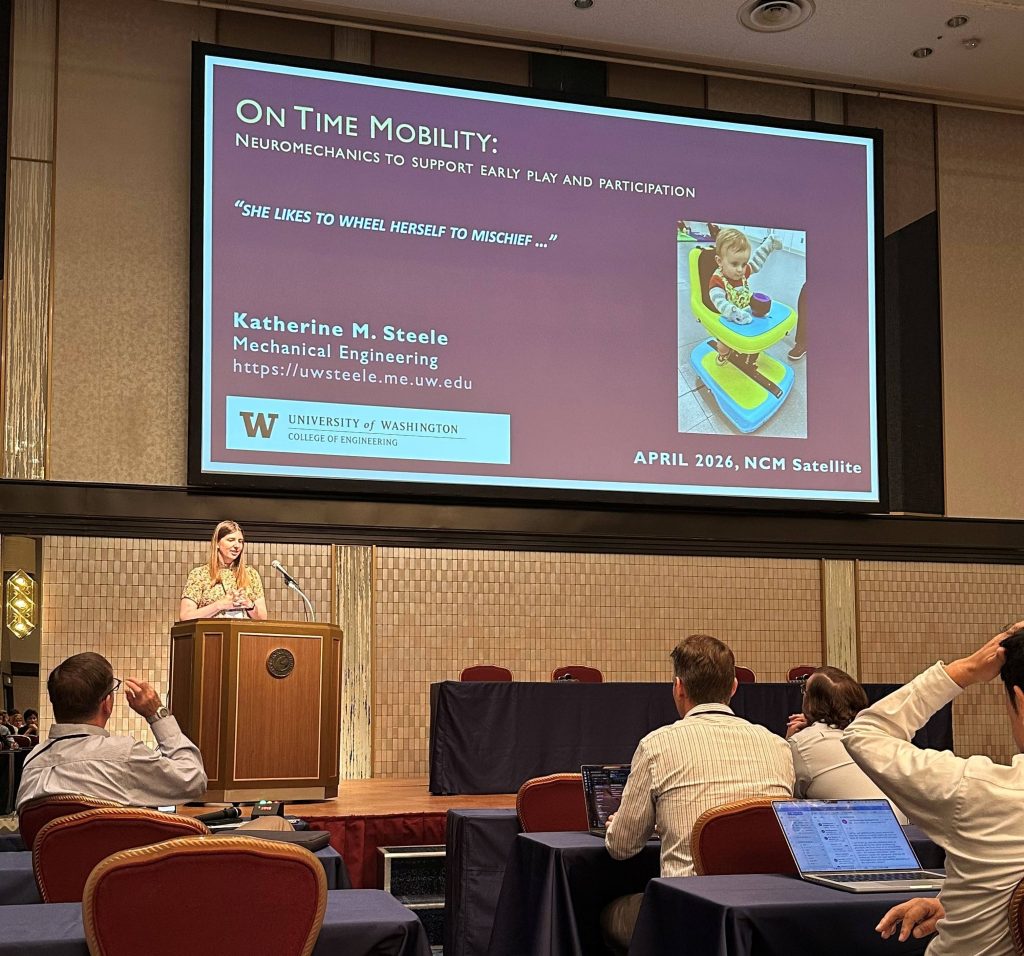
Dr. Kat Steele presented at the satellite meeting on “Precision neurorehabilitation for movement disorders: Integrating technology, neuroscience, and clinical practice,” where she also organized a session on gait and mobility. Her talk, “On time mobility: Neuromechanics to support early play and participation,” highlighted the lab’s work at the intersection of biomechanics and neurorehabilitation.

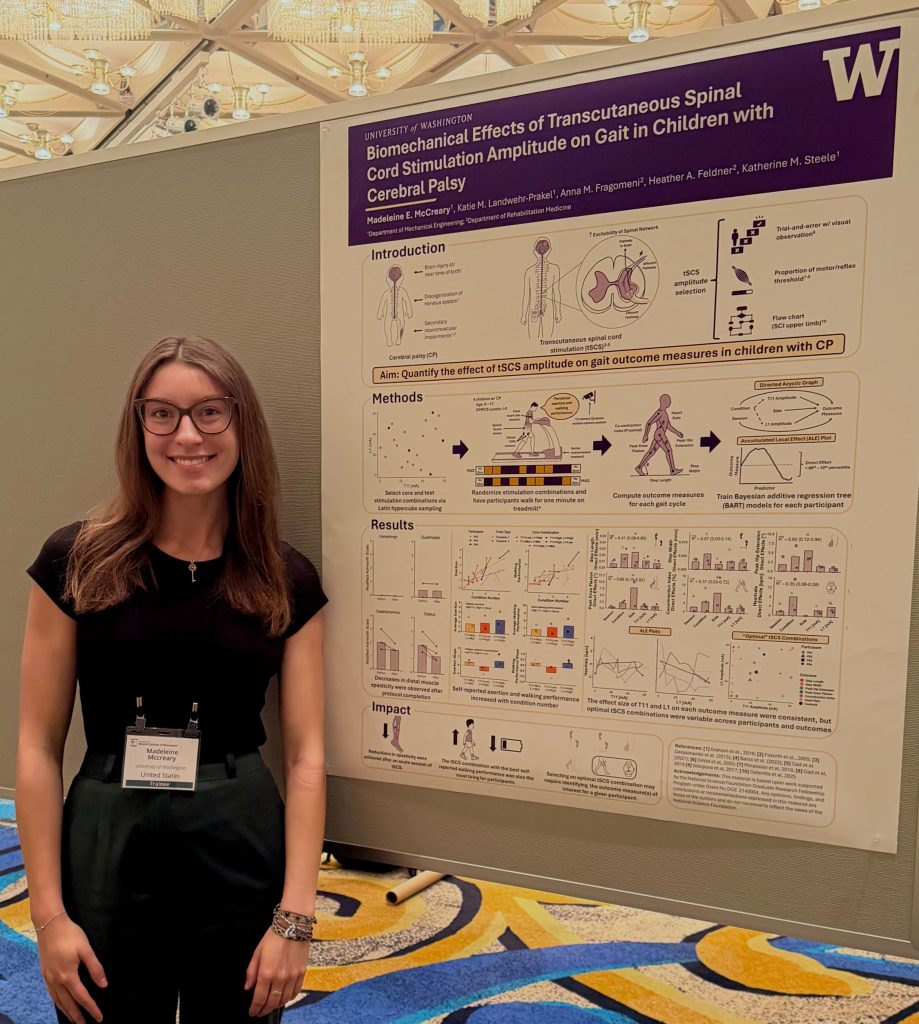
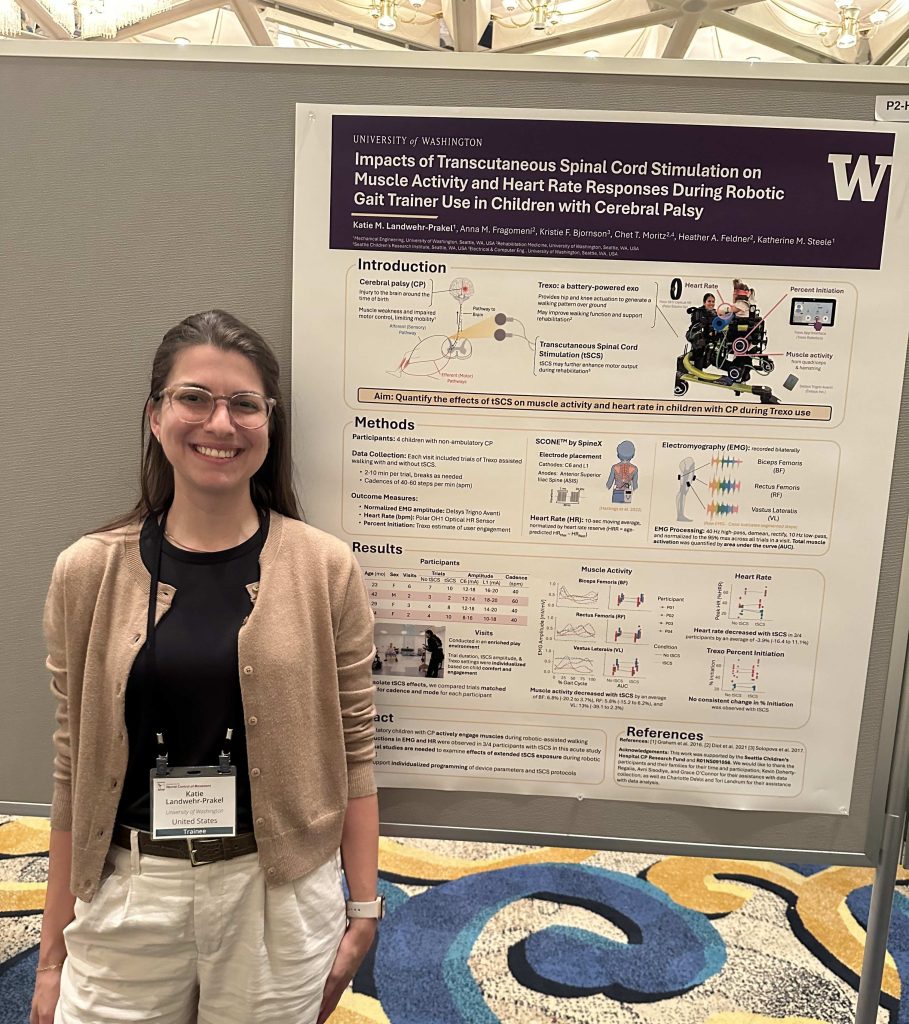
Madeleine McCreary presented a poster on “Biomechanical effects of transcutaneous spinal cord stimulation amplitude on gait in children with cerebral palsy.” And Katie Landwehr‑Prakel also presented a poster on “Impacts of transcutaneous spinal cord stimulation on muscle activity and heart rate responses during robotic gait trainer use in children with cerebral palsy.”

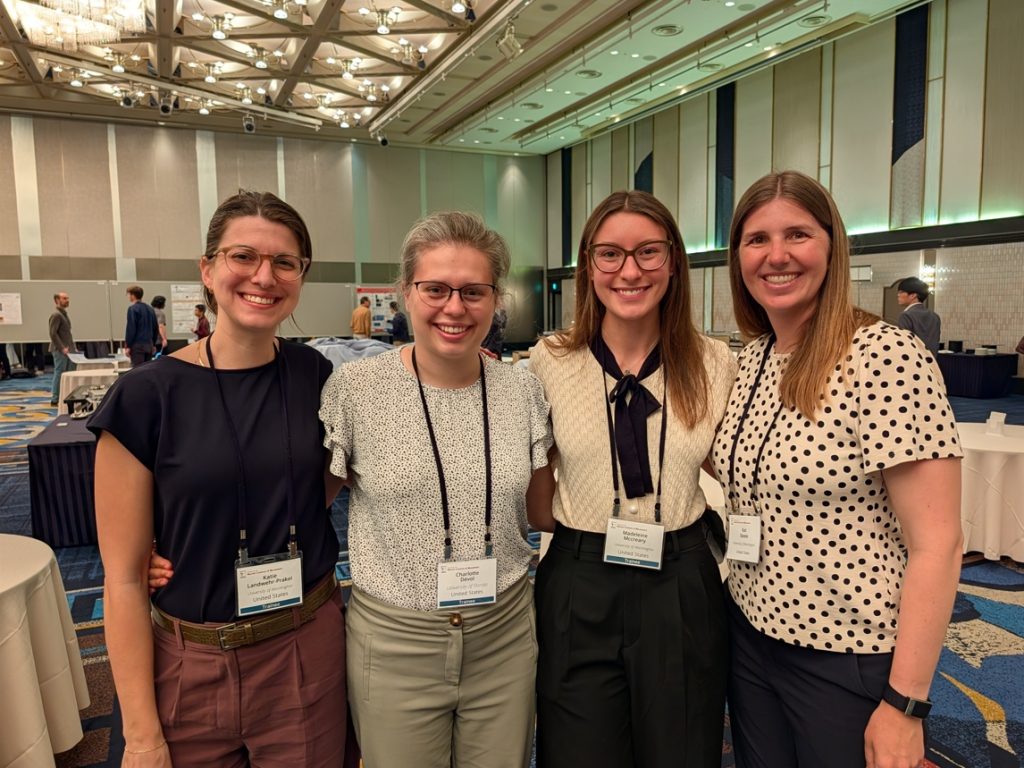
We were also excited to connect with lab alum and collaborator Dr. Charlotte DeVol, highlighting the strong ongoing collaborations within our broader research community.

It was an exciting opportunity to share research, connect with collaborators, and engage with the global NCM community.

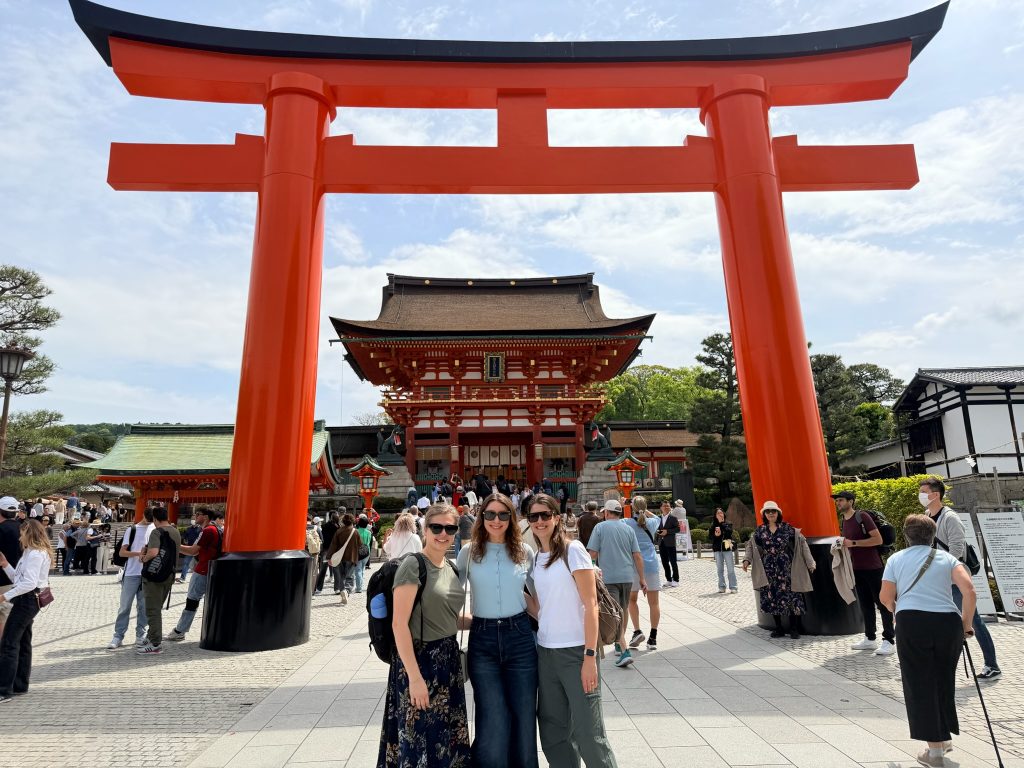
  • Three people pose in front of a large red torii gate at a busy shrine in Japan, with a traditional temple building and visitors in the background.
  • Dr. Kat Steele stands at a podium presenting to an audience, with a large slide reading “On Time Mobility: Neuromechanics to support early play and participation” displayed on a screen at an NCM conference session.
  • Katie stands in front of a scientific poster titled “Impacts of Transcutaneous Spinal Cord Stimulation on Muscle Activity and Heart Rate Responses During Robotic Gait Trainer Use in Children with Cerebral Palsy” at a poster session.

Congratulations, Madeleine! Madeleine McCreary passes her Ph.D. Qualifying Exam

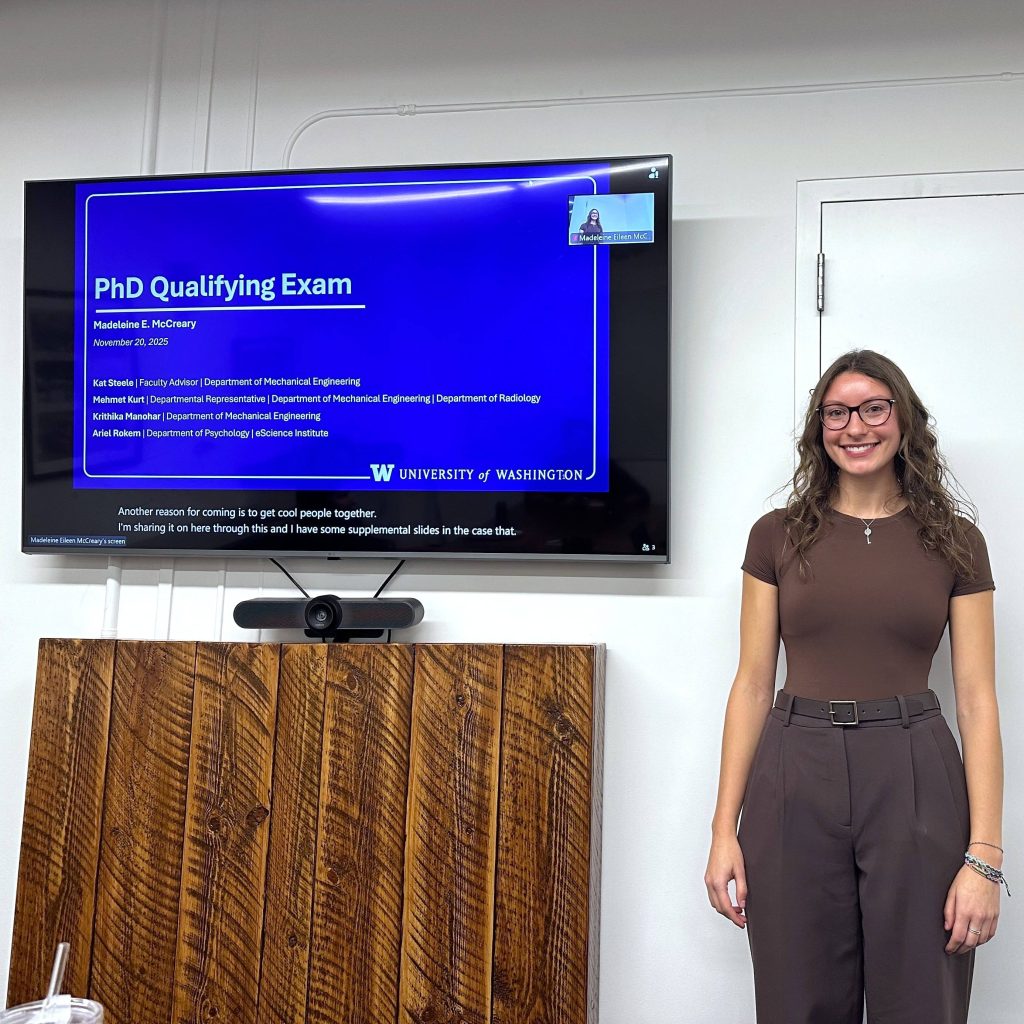
A person standing next to a large wall-mounted screen displaying a presentation slide titled ‘PhD Qualifying Exam

We’re excited to share that Madeleine (Maddie) McCreary has successfully passed her Ph.D. Qualifying Exam! 🎉

This milestone marks an important step toward her doctoral degree, and we’re thrilled to celebrate her hard work and dedication.

Congratulations, Maddie – We can’t wait to see the impact of your research in the years ahead!

CR DeVol, SR Shrivastav, VM Landrum, KF Bjornson, D Roge, CT Moritz, KM Steele (2025) “Effects of spinal stimulation and short-burst treadmill training on gait biomechanics in children with cerebral palsy”

Journal article in Gait & Posture

Children with cerebral palsy (CP) have an injury to the central nervous system around the time of birth that affects the development of the brain and spinal cord. This injury leads to changes in gait neuromechanics, including muscle activity and joint kinematics. Transcutaneous spinal cord stimulation (tSCS) is a novel neuromodulation technique that may improve movement and coordination in children with CP when paired with targeted physical therapy.

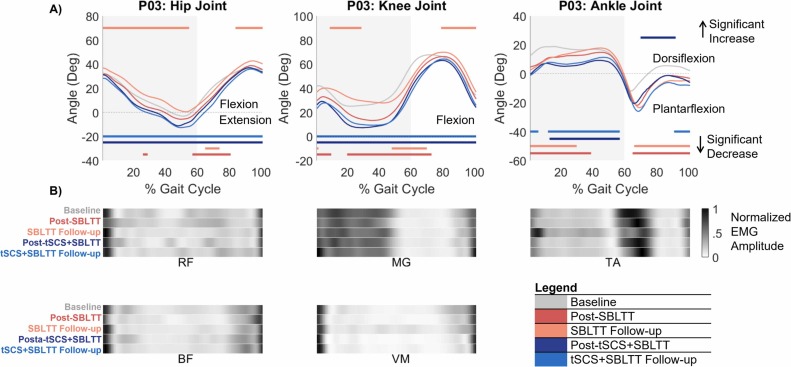
Example kinematics and muscles activity at each assessment timepoint for P03’s more-affected side. A) Sagittal-plane hip, knee, and ankle kinematics over the gait cycle. Horizontal colored lines indicate where there were significant changes in kinematics over each phase of the study based on statistical parametric mapping (p Aim: How does the combination of tSCS and short-burst interval locomotor treadmill training (SBLTT) affect individual gait neuromechanics in children with CP?

Methods: Four children with CP (4–13 years old), received 24 sessions each of SBLTT only and SBLTT with tSCS (tSCS+SBLTT). Clinical assessments of spasticity and passive range of motion (PROM), as well as biomechanical assessments of joint kinematics, musculotendon lengths, and muscle activity were recorded during overground, barefoot walking. Assessments were taken before and after each intervention, and 8-weeks later.

Results: The combination of tSCS+SBLTT led to greater increases in hip and knee extension than SBLTT only for three participants. Three children also became more plantarflexed at the ankle during stance after tSCS+SBLTT compared to SBLTT only. While tSCS+SBLTT reduced spasticity, these changes were only weakly correlated with changes in musculotendon lengths during gait or PROM, with the largest correlation between change in gastrocnemius operating musculotendon length during fast walking and gastrocnemius spasticity (R2 = 0.26) and change in plantarflexor PROM and gastrocnemius spasticity (R2 = 0.23).

Interpretation: Children with CP used a more upright, less crouched posture during gait after tSCS+SBLTT. Large reductions in spasticity after tSCS+SBLTT were only weakly correlated with changes in kinematics and PROM. Understanding the mechanisms by which tSCS may affect gait for children with CP is critical to optimize and inform the use of tSCS for clinical care.