This summer the Steele Lab had the pleasure of hosting three undergraduate researchers – Robin Yan from University of Washington, Ava Lakmazaheri from Olin College of Engineering, and Katherine Chamblin from University of Washington.
After a competitive selection process, students are offered a 10-week internship here at the University to work directly with a research lab on campus. One of the program’s final deliverables is a presentation of their work, both in podium and poster format, to members of the local and scientific community. Congratulations to Robin, Ava, and Katherine for their successful time here in the lab, and for giving polished presentations.
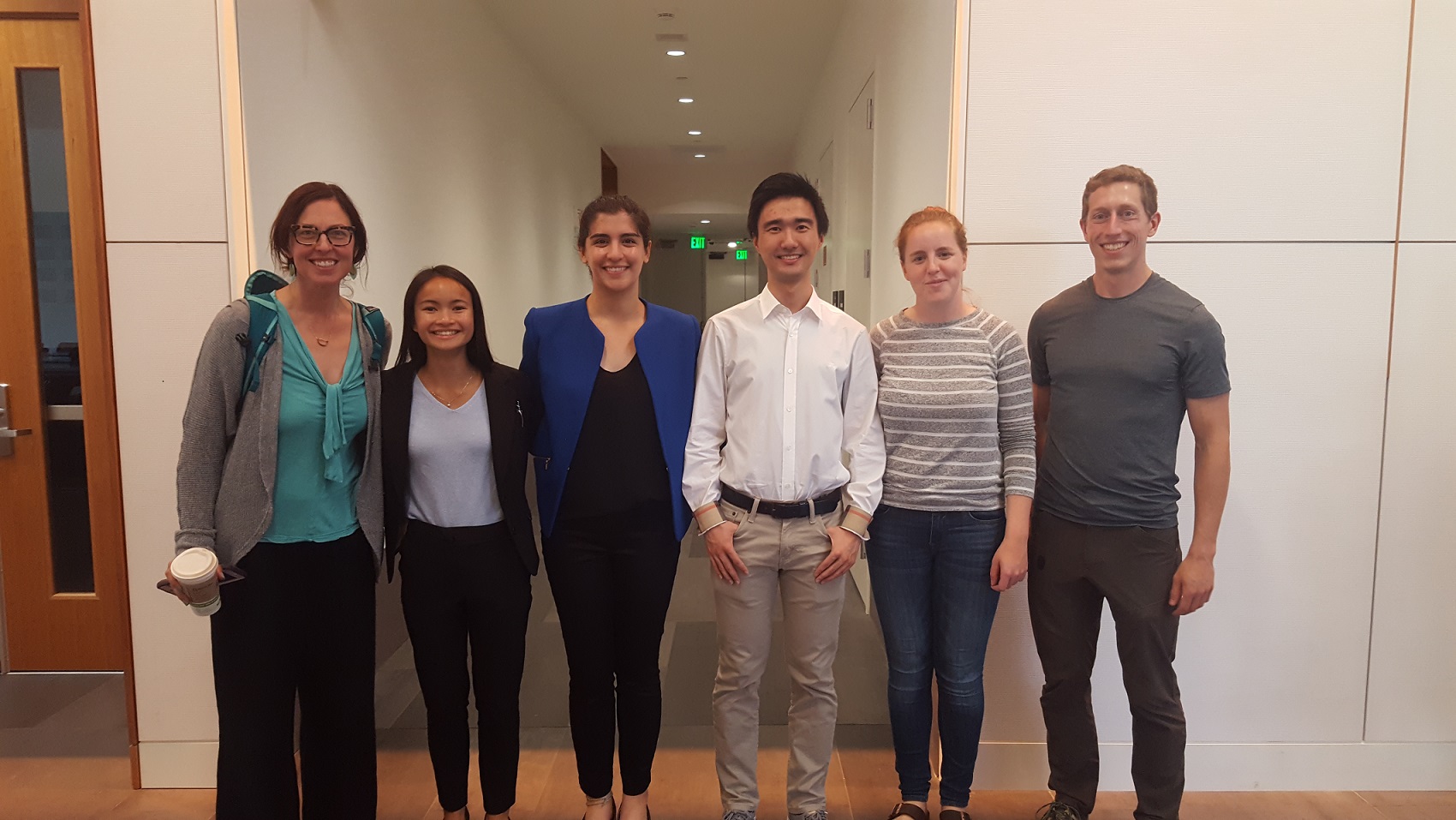
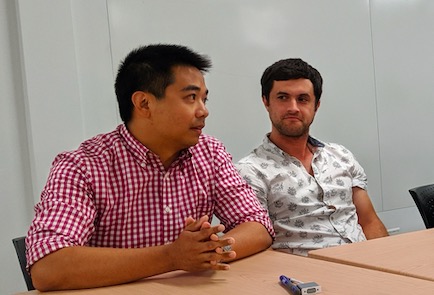
REU Students with their lab mentors
Robin examined biomechanical analyses of typically developing individuals during emulation of cerebral palsy gait and Ava worked on optimizing musculoskeletal models for children with cerebral palsy.
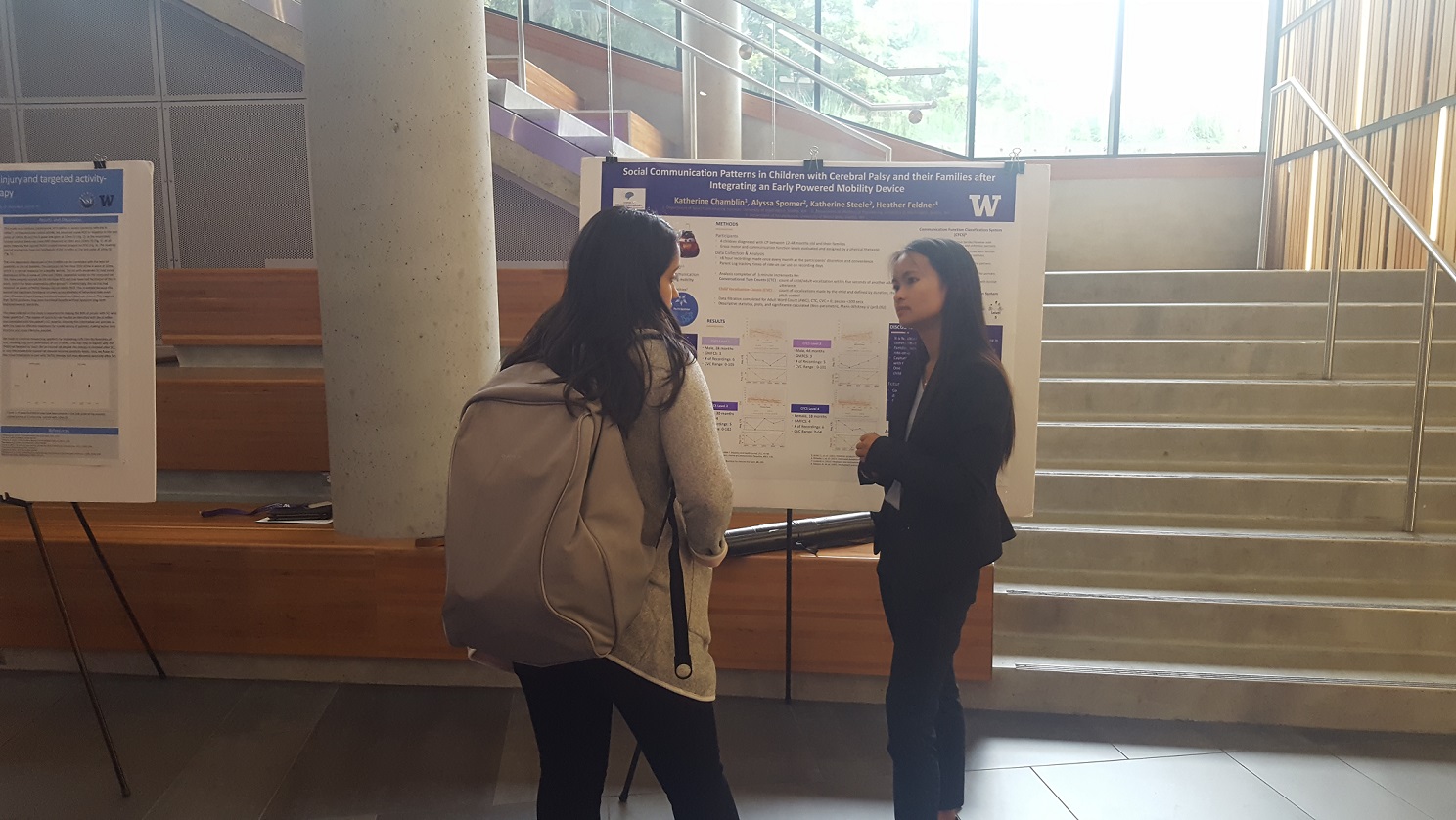
Katherine discussing her work with an interested student
Katherine investigated social communication patterns of children with cerebral palsy and their families after integrating an early-powered mobility device
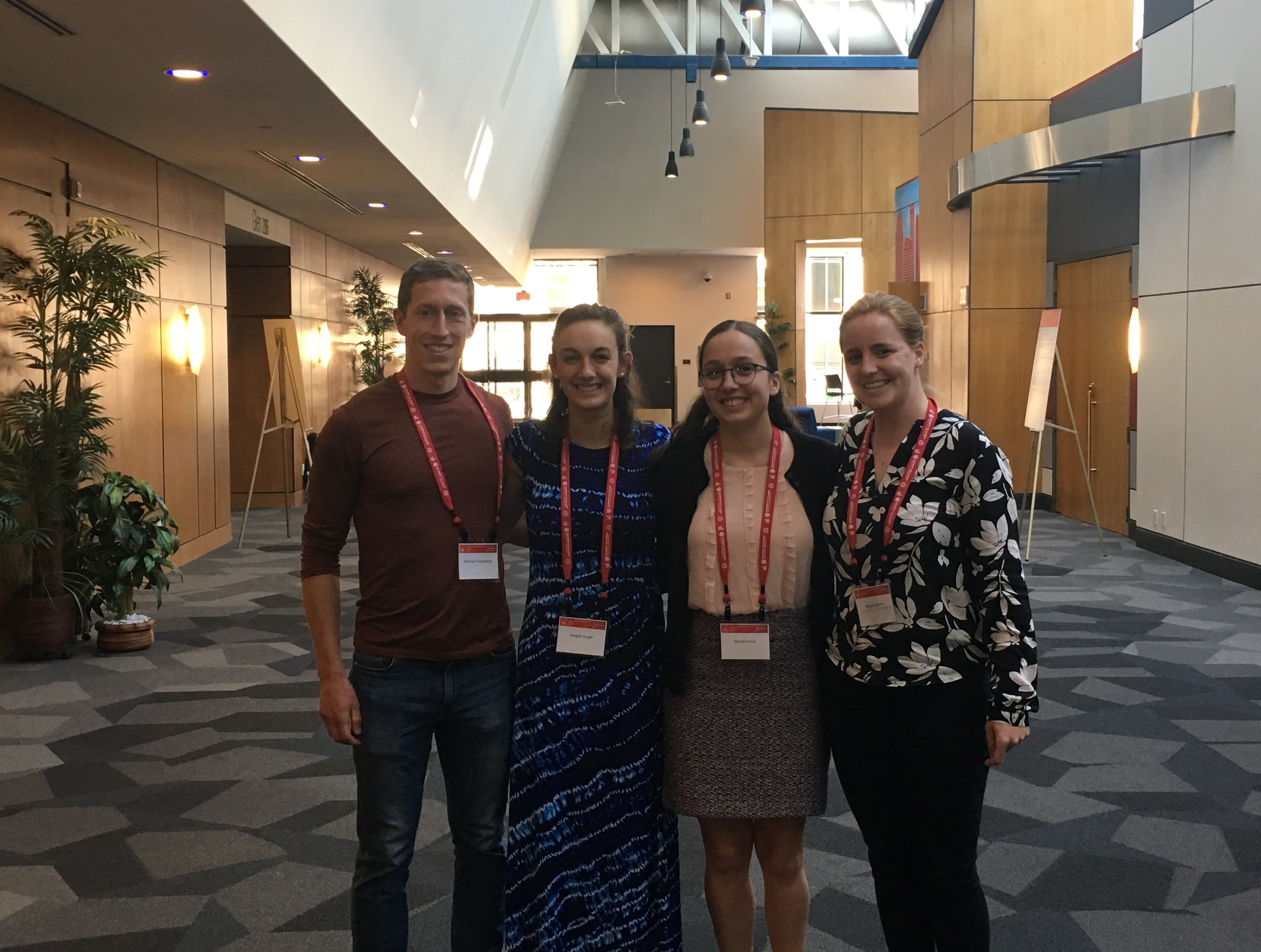
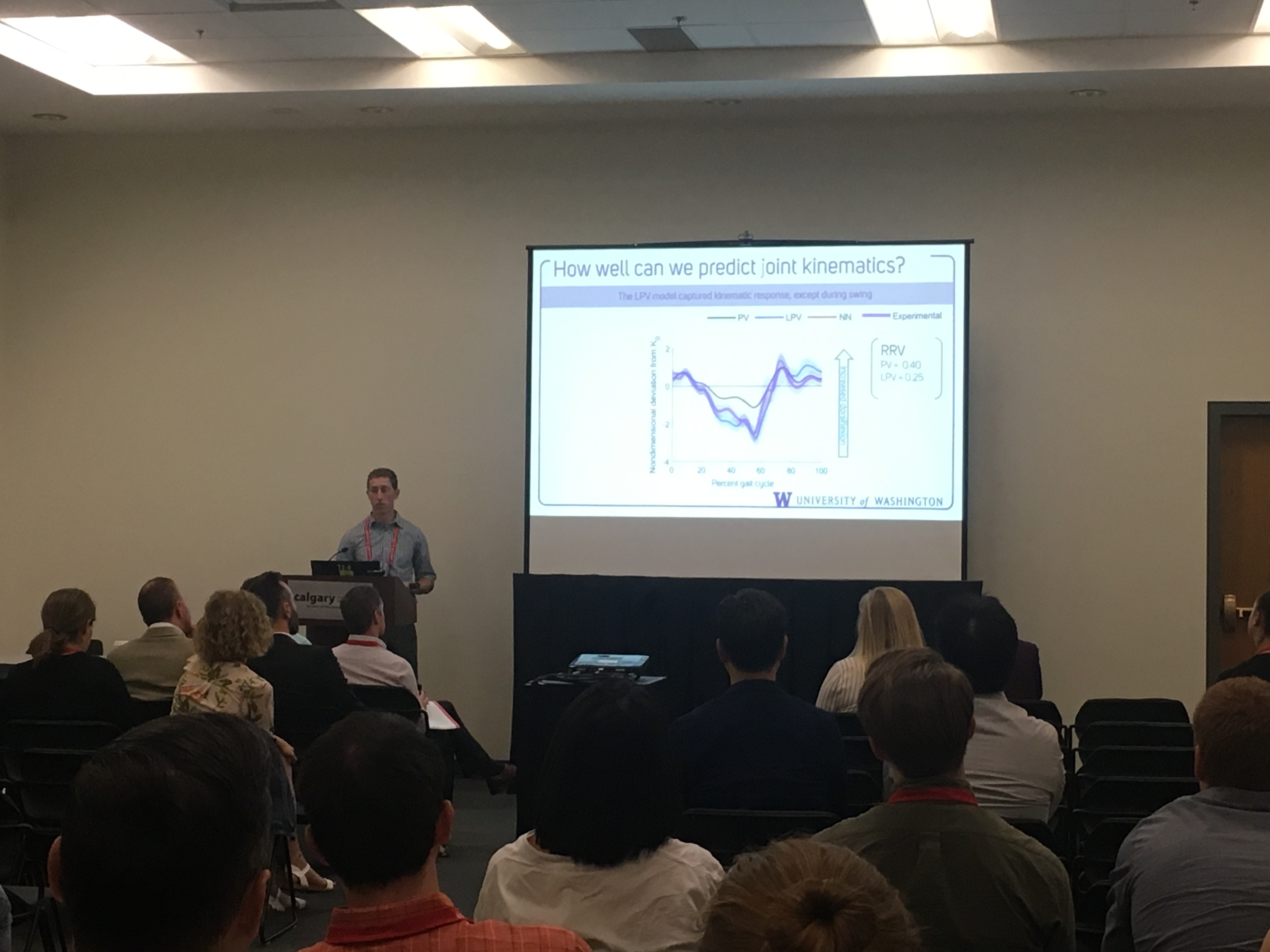
Five members of our lab – Kat, Michael, Alyssa, Megan, & Nicole – attended ISB 2019 in Calgary, Canada. The International Society of Biomechanics promotes and supports international contacts amongst scientists, the dissemination of knowledge, and the activities of national organizations in the field of biomechanics.
Our work at the conference included:
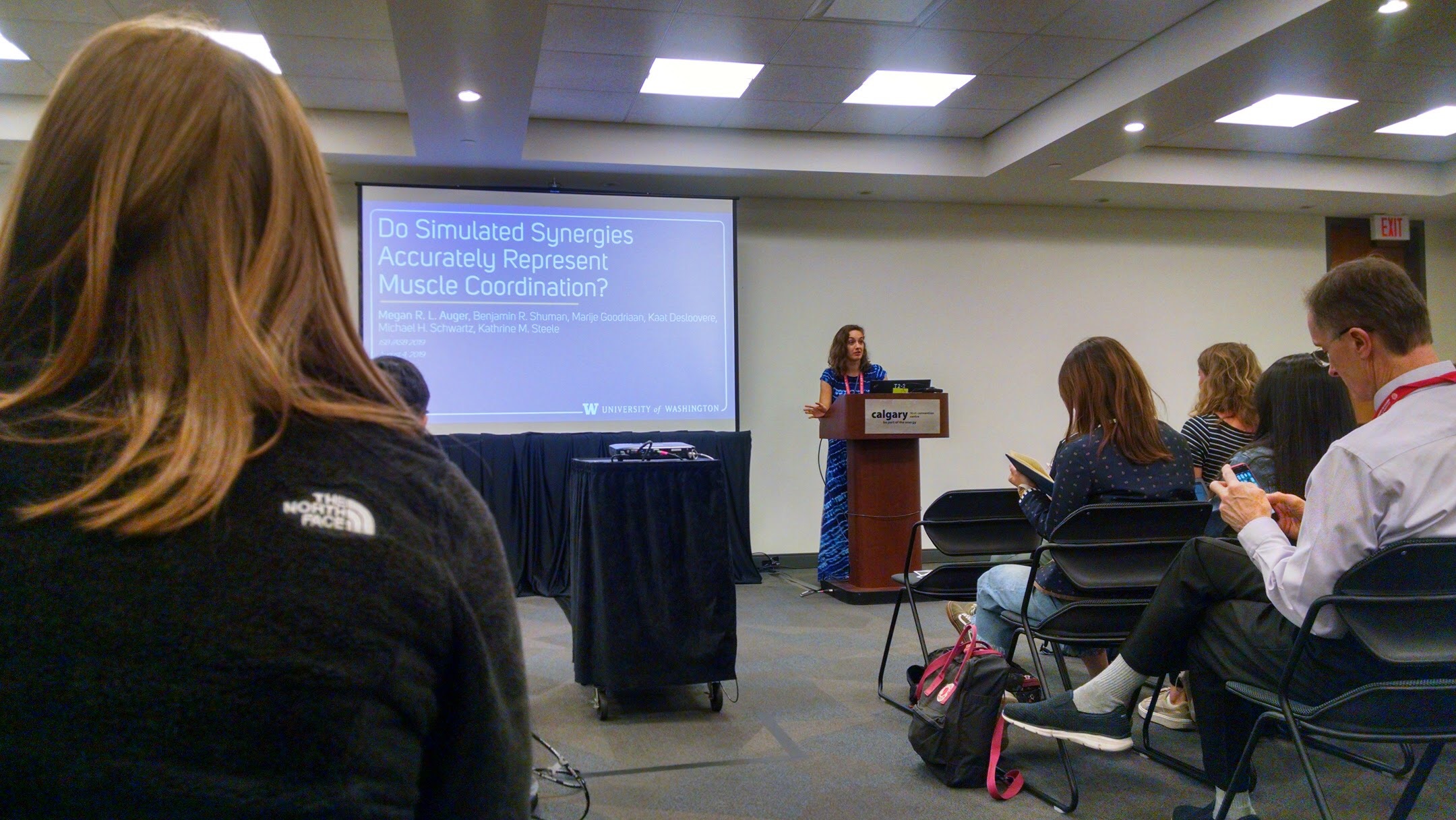
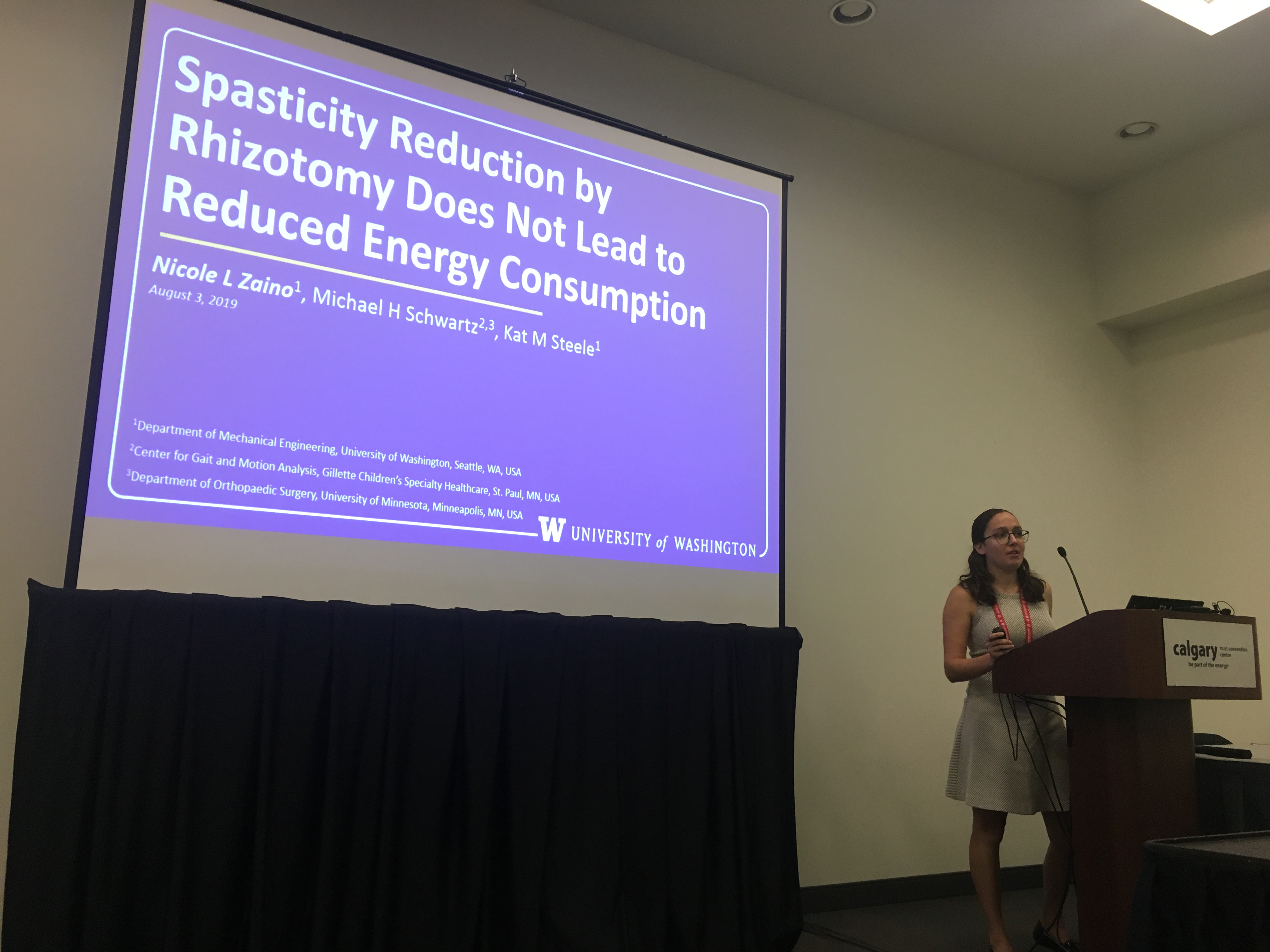
Kat Steele: ISB presentation on in-clinic EMG monitoring for muscle activity and movement in acute care in the initial days after stroke. Michael Rosenberg: ISB poster showcasing how individuals’ kinematics and muscle activity change in response to ankle exoskeleton stiffness during acceleration from standing. ISB presentation on open-loop modeling of response to ankle exoskeleton torque during walking. Alyssa Spomer: ISB poster highlighting how motor control is impacted when typically developing individuals emulate cerebral palsy gait patterns. ISB poster on understanding how individuals can alter motor control expression using visual biofeedback. Megan Auger: ISB presentation on how muscle coordination strategies in typically developing children and children with cerebral palsy are not accurately captured using standard musculoskeletal modeling optimization algorithms in computer simulation. Nicole Zaino: ISB presentation on spasticity reduction via rhizotomy in children with cerebral palsy and how there was no significant difference in the change in energy consumption when compared to a control group of children with cerebral palsy who had no rhizotomy.
TGCS 2019
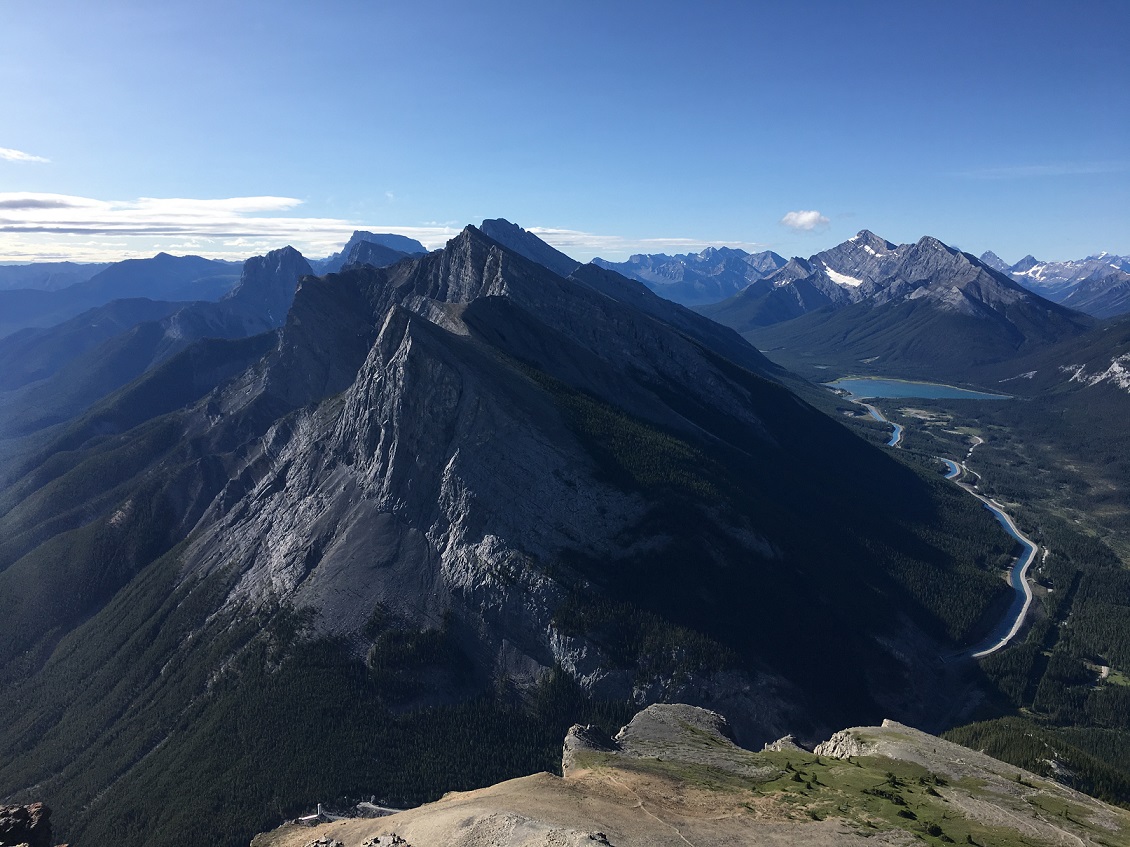
Additionally, two members of our lab – Michael & Megan – attended TGCS 2019 in Canmore, Canada prior to ISB 2019. The Technical Group on Computer Simulation (TGCS) is a scientific and technical meeting for investigators and students in all areas of computer simulation in biomechanics. This group was a highly-focused subset of the ISB community, primarily focusing on forward simulation of unimpaired and pathological gait patterns, but also touching on multi-scale simulation, diving, cycling, and wheelchair use.
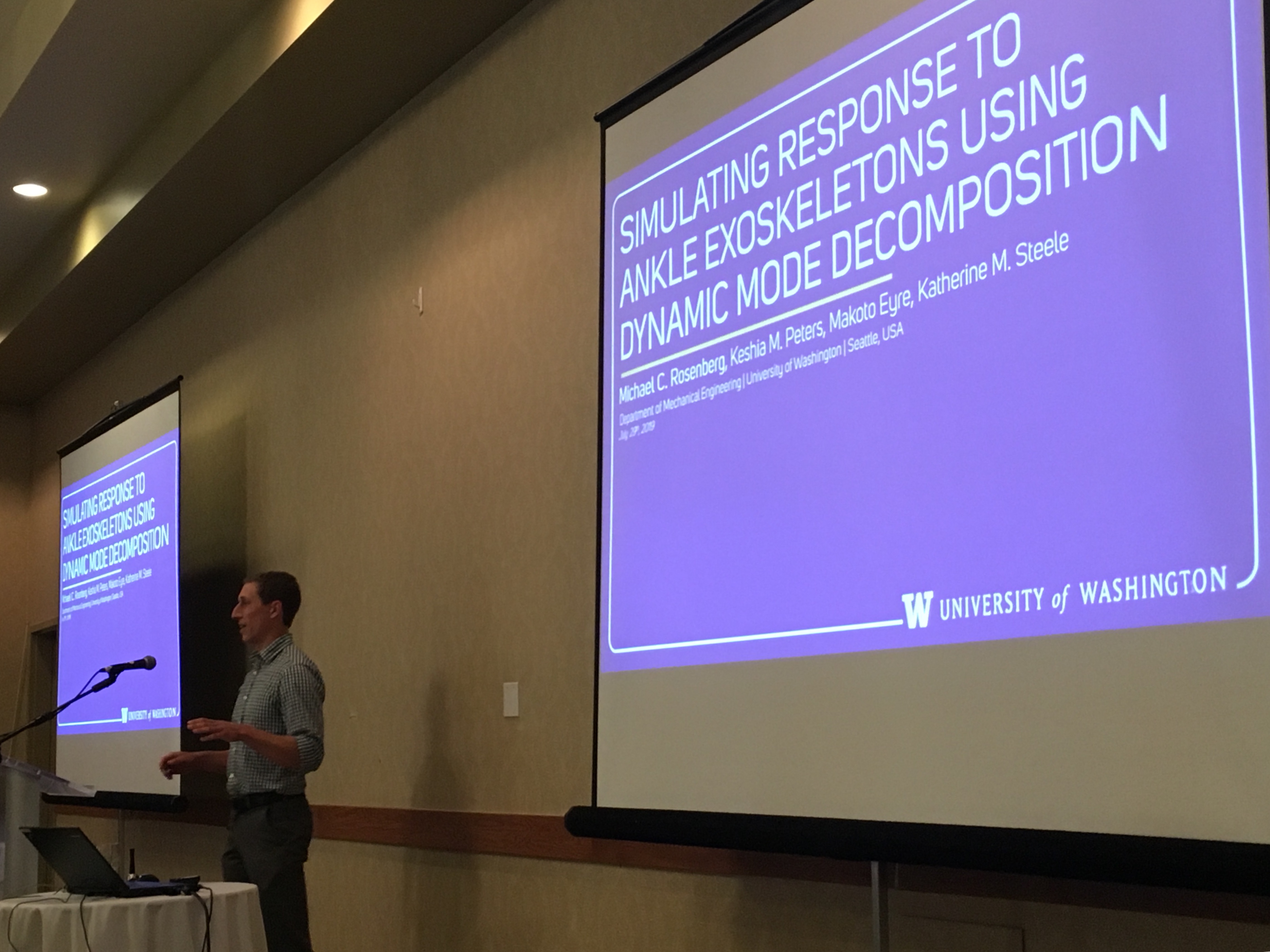
Michael Rosenberg: TGCS presentation on Dynamic Mode Decomposition for modeling response to ankle exoskeletons during gait.
Patent examiners spend their days critically evaluating the latest innovations, to determine if they are useful, novel, and non-obvious. When one of our students asked them what daily life is like as a patent examiner they responded, we basically write a 10-15 page report every 2-3 days.
Thankfully the patent office lets them escape from behind their computers a few times a year to meet with companies, research labs, and other entities. These visits help them see what is new and exciting in their specialty area.
We were lucky enough to host one of these teams this past week in the AMP Lab. Tim Stanis, a primary examiner from Art Unit 3786 that specializes in exoskeletons, orthoses, passive motion rehabilitation devices, and biomechanical technology led the visit. He was joined by nine other examiners.
Our lab demoed our latest creations in orthoses, biofeedback systems, and smartphone sensing. Patrick Aubin from the VA Hospital, Murray Maitland from Rehab Medicine, Chet Moritz from Electrical Engineering, and Tapo Bhattacharjee also shared their latest work.
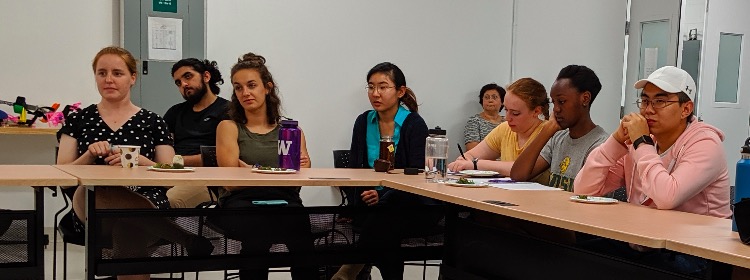
We ended the session with a Q&A Panel for summer students to learn about career opportunities as a patent examiner and advice for new innovators. Most of the examiners had an undergraduate or master’s degree in engineering. They emphasized that working for the patent office is a great, flexible career path. As a patent examiner they are able to work remotely, have flexible hours, and enjoy other benefits such as having law school paid for.
For new innovators, they emphasized the importance of understanding the patent landscape. They recommended using Google Patents! Patents can seem intimidating. They recommended starting with the pictures and focusing on the claims. They also emphasized the importance of having a team. Translating technology requires team members with technical, business, and clinical backgrounds.
For our part, we were excited to meet real, live patent examiners. We appreciated seeing their faces and enjoyed sharing our work with them.
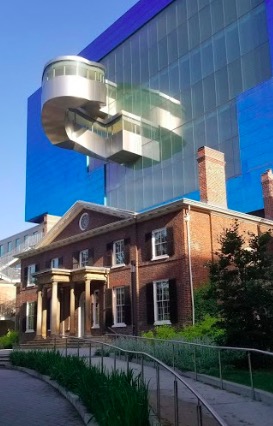
Five members of our lab – Brandon, Christina, Nick, Michael, & Kat – attended RehabWeek 2019 in Toronto, Canada. This is a unique mega-conference where multiple conferences (ICORR, ACRM, ISPO, RESNA, etc) are hosted at the same time in the same location. Everyone attended common keynotes, poster sessions, and meals. In the morning and afternoon, each conference had their own scientific sessions.
While it was a bit overwhelming to figure out which sessions to attend, it was a great way to get a more diverse audience to provide feedback on your work. For future conferences, I would recommend that students just pick one conference (e.g., ICORR or RESNA) to attend and not bounce between sessions. This lets you more fully engage with a community, have long discussions, and identify common threads across presentations.
Our work at the conference included:
Michael Rosenberg: ISPO presented on how muscle coordination differs when you start to walk compared to steady-state walking. Synergies differ during the first step, but quickly converge to steady-state patterns and there was minimal effect of different AFO stiffnesses.
Christina Papazian: INERS poster demonstrating correlations between FIM scores and muscle activity in acute stroke care.
Brandon Nguyen: ISPO poster on the accuracy and repeatability of using a smartphone to monitor gait for AFO tuning – ISPO Best Student Poster Award
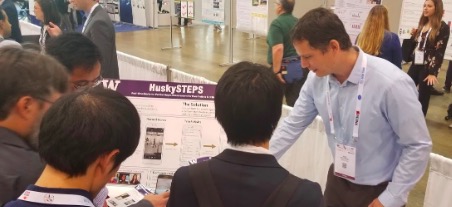
Nick Baicoianu: Developer’s Showcase for HuskySTEPS
Kat Steele: ISPO poster on synergy-based control of predictive simulations of walking.
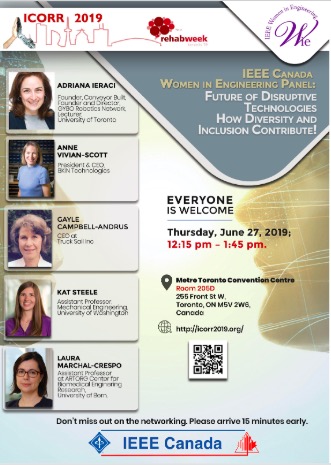
I also served on the IEEE Women in Engineering panel at lunch on Thursday, which focused on new frontiers in technology that could increase accessibility and inclusion. A lot of the discussion focused on the potential of machine learning, wearable technology, and autonomous vehicles.
You can view our notes and take-aways from the conference in these slides.
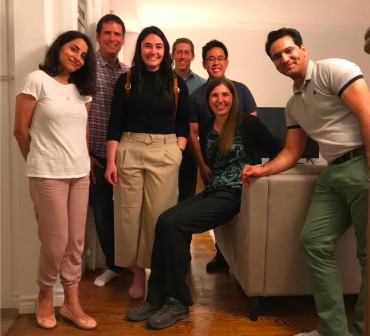
We also got to visit with Naser Mehrabi, a former post-doc in the lab, who now works for General Motors. We took the train just north of downtown to visit with him, his wife, and their 9-week-old son. Not only did we get to enjoy some delicious Iranian food, but we also got to get lots of simulation questions answered.
The next RehabWeek will be 2021 in Rotterdam, Netherlands.
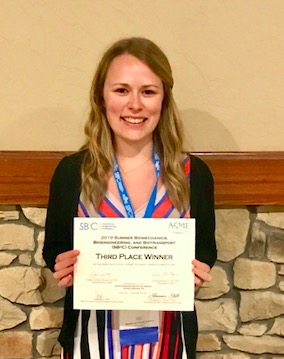
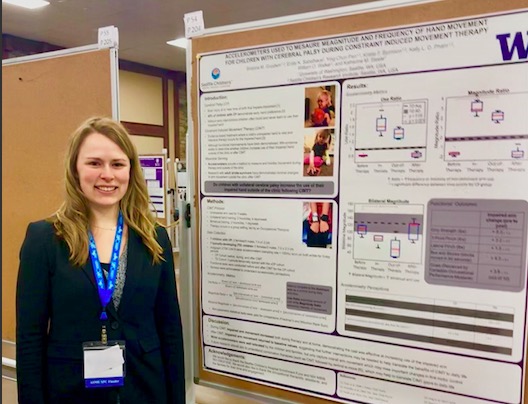
Congratulations to Brianna Goodwin! She placed third in the Masters Student Paper Competition at the 2019 Summer Biomechanics, Bioengineering, & Biotransport Conference. Brianna presented her MS research using accelerometers to track arm movement for kids with cerebral palsy who were receiving constraint induced movement therapy at Seattle Children’s Hospital.
Brianna completed her MS in June 2018. She is currently working at the Mayo Clinic in Minnesota. Congrats Brianna!